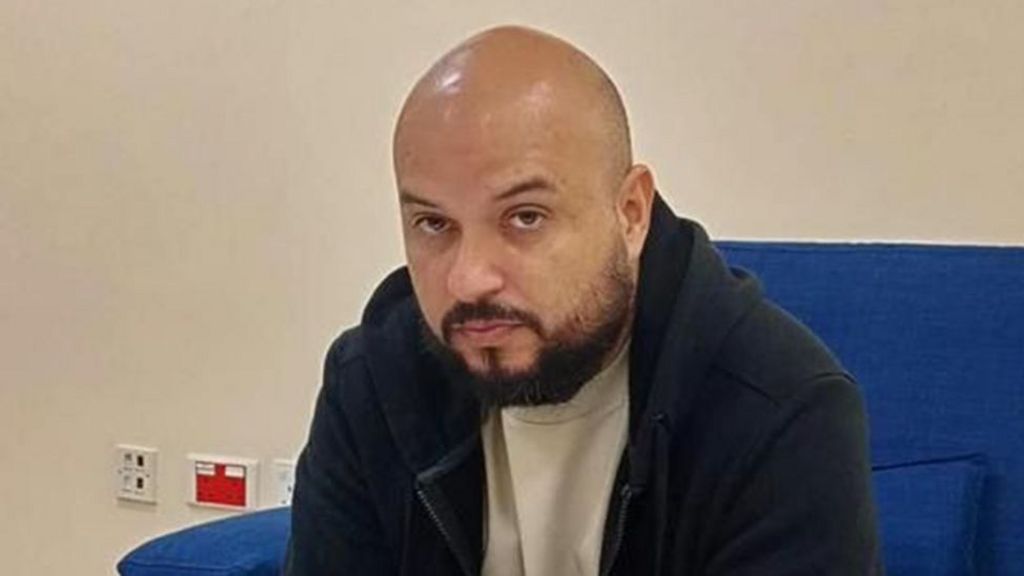
Last month, Nigerian anti-narcotics authorities captured a reputed Mexican drug kingpin at Lagos’ international airport as he attempted to exit the country, a revelation that uncovered the third large-scale suspected methamphetamine lab linked to Mexican criminal networks in just four months, Nigeria’s National Drug Law Enforcement Agency (NDLEA) has confirmed.
The detainee, 40-year-old Arturo Carrera Loaiza, was found in possession of digital photographs showing him wearing a lab coat alongside equipment that matches those used for manufacturing methamphetamine, according to NDLEA officials. Geolocation data embedded in these images guided investigators to a property in Ebonyi State, where they seized a cache of precursor chemicals and specialized drug-making gear.
In an official statement from the agency, Loaiza has refuted all allegations tying him to illegal drug production. He claims he entered Nigeria to pursue a legitimate restaurant business opportunity, invited by a local contact.
Investigators later recovered a CCTV memory card from the Ebonyi suspected lab site. Footage on the card shows an individual matching Loaiza’s description wearing a blue lab coat on the property. The footage also captured a Nigerian man directing workers as they moved chemicals and equipment away from the facility.
NDLEA Chairman General Mohamed Buba Marwa told reporters that additional intelligence led operatives to a secluded residence in a nearby community, where more illicit materials were seized. The recovered items included industrial-grade chemicals, dehydrators, condensers, a large reaction pot, precision weighing scales, industrial mixers, storage drums, gas burners, and a sieve that tested positive for traces of methamphetamine. To date, authorities have not released an estimate of how much methamphetamine the facility was projected to produce. The NDLEA has published photographs of the seized materials following the raid.
Marwa added that investigators have linked Loaiza to a second suspected methamphetamine production lab discovered in a forest in Oyo State, which was raided by authorities back in June. During that operation, four Nigerian suspects were taken into custody, and Loaiza is accused of recruiting another Mexican national to work at that site. The Oyo raid was preceded by another major bust just one month earlier, when NDLEA officers arrested three Mexicans and seven Nigerians at an industrial-scale meth lab hidden in a forest in a different region of the country.
Marwa emphasized that these successive busts highlight a deliberate push by transnational criminal organizations to establish permanent drug production hubs in Nigeria’s remote forested and rural areas.
“Nigeria will never become a safe haven for transnational drug cartels that seek to relocate their manufacturing operations from other regions into our forests and rural communities,” Marwa stated firmly.
The NDLEA says its investigation into the entire criminal network remains active, with a particular focus on identifying local financiers and facilitators who enabled the cartels to operate within Nigeria.
Synthetic drugs like methamphetamine differ fundamentally from plant-derived narcotics such as cocaine and heroin. Unlike those drugs, which require specific geographic and climate conditions for cultivation and processing, methamphetamine can be manufactured anywhere the right precursor chemicals and technical expertise are available. This low barrier to entry allows organized crime groups to rapidly scale up production, making Nigeria and the broader West African region particularly attractive to Mexican syndicates. The extensive, sparsely populated forest landscapes across the region provide ideal secluded sites for hidden production facilities.