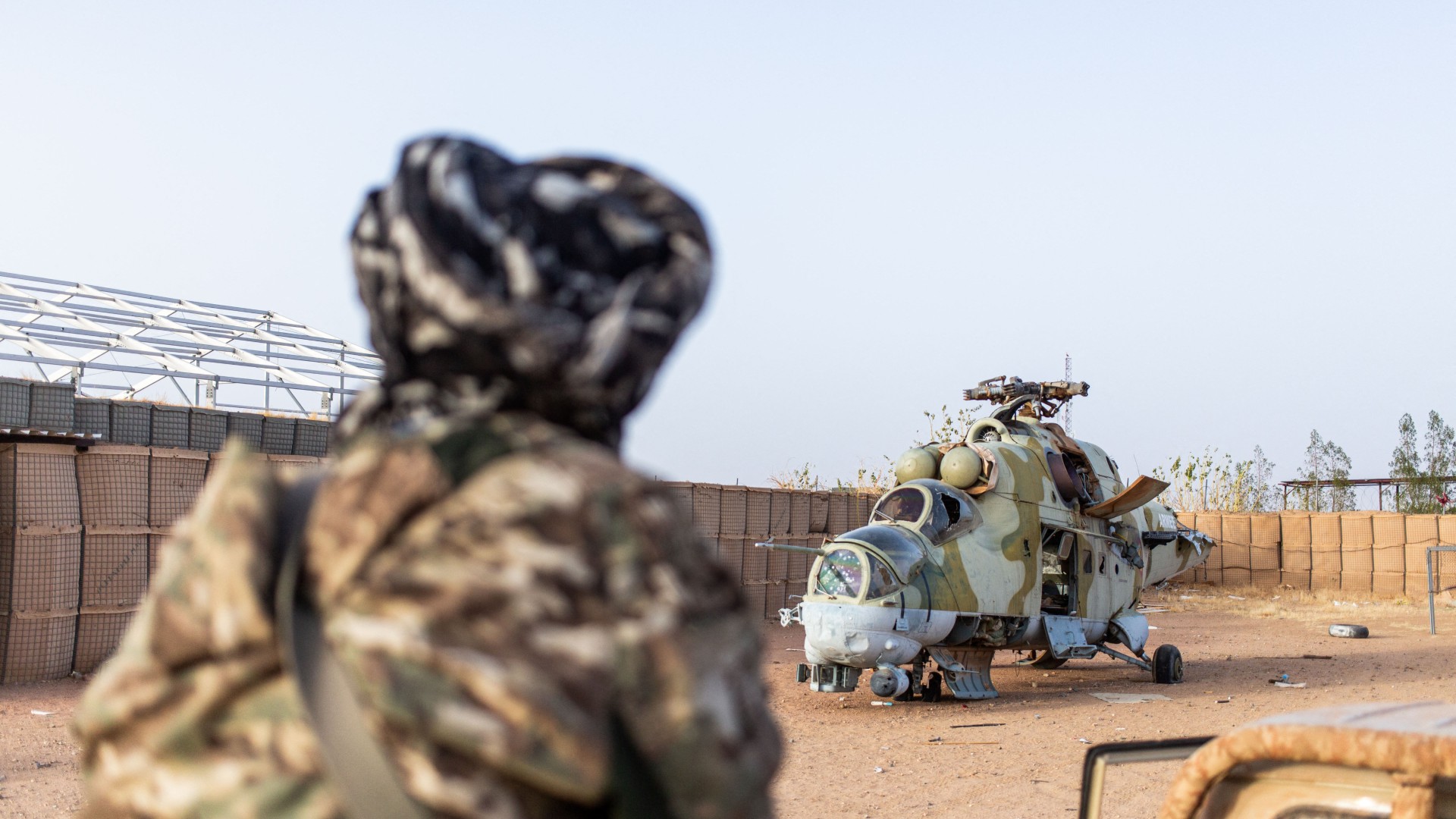
Mali’s years-long internal conflict has entered a new phase of shifting alliances and diplomatic outreach, with the Tuareg separatist Azawad Liberation Front (FLA) confirming it has held direct, tactical communications with Russia’s Africa Corps and publicly calling for open dialogue with Turkey to facilitate a negotiated political settlement to the country’s deepening crisis. The revelations came in an exclusive interview with Middle East Eye from FLA spokesperson Mohamed Elmaouloud Ramadane, who detailed the complex web of battlefield coordination and competing political goals shaping the current conflict.
Today, the FLA is fighting alongside Jama’at Nusrat al-Islam wal-Muslimin (JNIM), an al-Qaeda-aligned armed coalition, against Mali’s military-led government. The two factions have coordinated a series of successful offensives in recent months, capturing multiple urban centers and military outposts, blockading the capital Bamako, and even killing senior government military leadership including Defense Minister Sadio Camara. Despite this operational alignment, Ramadane emphasized that the two groups hold fundamentally divergent end goals: the FLA seeks to establish an autonomous independent state of Azawad in Mali’s resource-rich northeast, while JNIM’s core objective is to overthrow the Bamako government entirely.
The current military landscape in Mali is a dramatic reversal of just a decade ago, when French and Western coalition troops were deployed to prop up the Malian state against JNIM and its predecessor extremist groups. Today, the Malian junta relies on military support from Moscow, which first deployed Wagner Group mercenaries to the country in 2022. Following the short-lived Wagner mutiny against the Kremlin in 2023, the group’s Malian operations were reorganized into the official Russia Africa Corps.
A major FLA-JNIM offensive in April exposed critical weaknesses in Russia’s military deployment in northern Mali, with Africa Corps personnel withdrawing from the strategic northern city of Kidal shortly before FLA fighters seized full control of the area. By July, as fighting intensified around Anefis, a town located roughly 100 kilometers southeast of Kidal, unconfirmed reports began to circulate of informal arrangements between the FLA and Africa Corps.
Ramadane confirmed for the first time that direct contacts between the separatist group and Russia’s Africa Corps have indeed taken place, but stressed these communications are strictly tactical in nature and do not amount to formal political negotiations or a strategic shift toward rapprochement. “I can confirm that there were direct contacts in certain contexts, notably around questions related to movements, withdrawals and the situation in certain areas,” Ramadane told Middle East Eye. “In a conflict, there are sometimes channels of communication with the adversary to avoid incidents, manage certain situations or facilitate occasional arrangements. This does not mean that the political objectives of the parties have become compatible.”
The FLA spokesperson also stressed that the northeastern Azawad region must not be allowed to devolve into a proxy battleground for competing foreign powers, even as the group pursues new diplomatic overtures to Turkey. Over the past decade, Ankara has steadily expanded its diplomatic, economic, and military footprint in Mali, emerging as a key external partner for the Bamako junta. Since 2023, Turkey has supplied armed drones and other military hardware to the Malian government, and bilateral trade between the two countries has tripled since 2014. According to reporting from Le Monde, arms and ammunition made up 20 percent of all Turkish exports to Mali in 2024, making it Ankara’s top export category to the country ahead of electronics, industrial machinery, and cereals.
Ramadane acknowledged Turkey’s deepening ties to the Malian junta, noting that Turkish-supplied drones have allegedly been used in strikes that have caused civilian casualties in Azawad. “We note that Turkey has considerably developed its relations with the criminal junta in Bamako, particularly in the sale of drones,” he said. However, he argued that Ankara’s growing influence positions it uniquely to facilitate dialogue, and the FLA is not calling for Turkey to cut its ties with the Bamako government. “We do not ask Turkey to break its relations with the military junta. We ask it to look at the Malian reality in all its complexity and not to consider the question of Azawad solely through the prism of the authorities in Bamako,” Ramadane explained.
The FLA is seeking to open direct channels of dialogue with the Turkish government and President Recep Tayyip Erdoğan, rather than limiting engagement to only military channels, Ramadane added. He emphasized that the outreach is not an attempt to recruit a new foreign military patron. “We do not ask Turkey to take a military side with the FLA. We ask it first to listen and understand,” he said. “Turkey’s influence in Africa and the Muslim world, combined with its close relationship with Bamako, gave it a particular responsibility. We do not ask Turkey to choose between Mali and Azawad. We ask it to contribute to ensuring that peace is not imposed on Azawad but negotiated with it. Our essential message is this: we are not seeking foreign patrons for our cause, we are seeking partners capable of contributing to a just, lasting political solution consistent with the aspirations of the populations concerned.”
A senior Turkish official familiar with African affairs responded to the FLA’s outreach, confirming that Ankara is open to engaging with a broad range of actors in Mali. “Ankara was open to dialogue with a range of actors and that channels could be found if the FLA wanted to engage with the Turkish government,” the official told Middle East Eye. “However, it doesn’t mean that we will take their side and be part of the internal conflict of a foreign state. But we would listen to them.”
Alongside its diplomatic overtures to Russia and Turkey, the FLA once again clarified the nature of its current cooperation with JNIM, stressing that operational coordination on the battlefield does not constitute a formal political alliance. Ramadane acknowledged that the two groups have grown closer operationally out of a shared opposition to the Malian junta and Russian military presence, but their core political projects remain distinct. “It is first necessary to distinguish two things that are often deliberately confused: operational convergence on the ground and political alliance,” he said.
Following coordinated April offensives across northern and central Mali, the two groups launched a second wave of coordinated attacks in July, including heavy clashes around Anefis and targeted strikes on military positions in Gao and Aguelhok. Ramadane argued that the ad-hoc cooperation is a pragmatic response to current battlefield conditions, not a merging of political goals. Any lasting peace agreement, he emphasized, must explicitly address the longstanding political demands for Azawad’s self-determination. “The FLA remains an Azawadian political and military organisation whose project responds to the aspirations of the people of Azawad,” he said. “That being said, lasting peace in Mali and Azawad will necessarily have to take into account the realities on the ground.”
Ramadane also argued that JNIM, which now draws the vast majority of its membership from Malian citizens, cannot be sidelined in any future peace process. “It is impossible to make peace in Mali or speak of stability without including JNIM,” he said, adding that the group has increasingly begun to articulate a political platform focused on local grievances, rather than only a transnational extremist agenda.