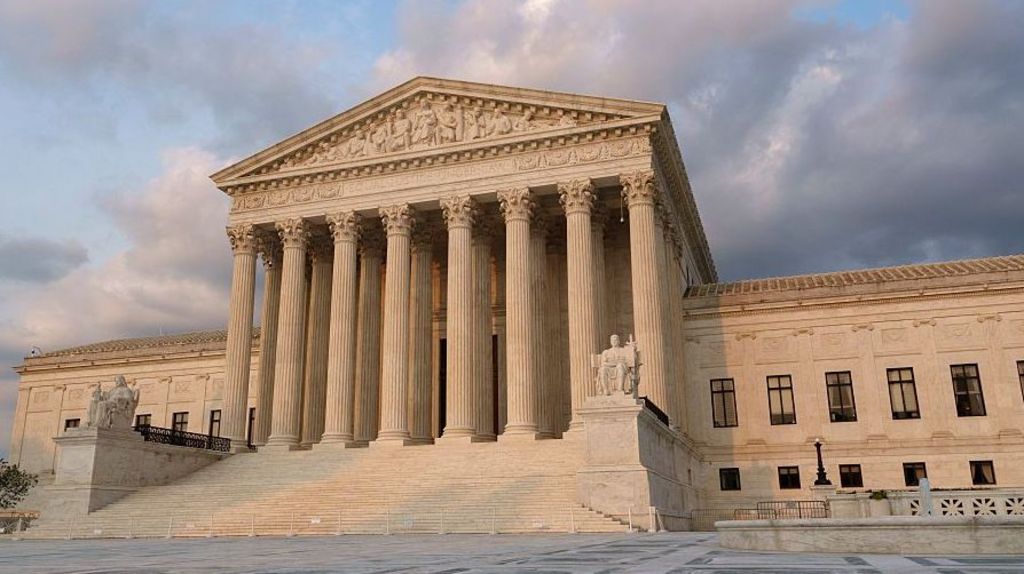
In a high-stakes legal ruling that marks a major political setback for former President Donald Trump and his administration, the U.S. Supreme Court has rejected a controversial plan to tighten restrictions on mail-in voting ahead of the 2026 November midterm elections. The nation’s highest court voted to leave in place a temporary injunction issued by a lower federal judge, which halted the U.S. Postal Service (USPS) from implementing the new rules for mail-in ballots put forward by the Trump White House. The outcome marked a surprise split among the court’s conservative wing, with Justice Brett Kavanaugh joining the court’s liberal majority to uphold the block, even as he signaled openness to ruling in the administration’s favor after the election cycle concludes.
The policy at the center of the legal battle originated from a March executive order signed by Trump, who has long claimed widespread electoral fraud plagues U.S. elections. The order directed USPS to only deliver mail-in ballots to voters who appear on official state citizen registration lists, a change that critics warned would disenfranchise thousands of eligible voters. Multiple states joined voter advocacy groups to challenge the rule in court, arguing that the Trump administration’s overreach into election administration violated states’ constitutional authority to manage their own electoral processes.
In his concurring opinion, Kavanaugh acknowledged that there was a reasonable argument that the final policy could fall within the statutory authority granted to USPS. However, he wrote that implementing the new regulation just months before a national election would qualify as arbitrary and capricious, writing that disrupting the election process so close to voting date carried unacceptable risks for voters. Only two conservative justices, Samuel Alito and Clarence Thomas, dissented from the majority ruling. In their dissent, Alito and Thomas dismissed the legal challenge to Trump’s executive order as a long-shot “Hail Mary pass” unlikely to succeed in future litigation, arguing that USPS holds broad statutory authority to regulate the delivery of mailed materials, including election ballots.
This ruling comes amid ongoing national debate over voting access and election integrity, with mail-in voting emerging as one of the most polarizing election policy issues in U.S. politics since the 2020 presidential election. This is a developing breaking news story, with additional details expected to be released in coming updates. Readers can access real-time updates via the BBC News mobile app, or by following @BBCBreaking on X for the latest alerts.