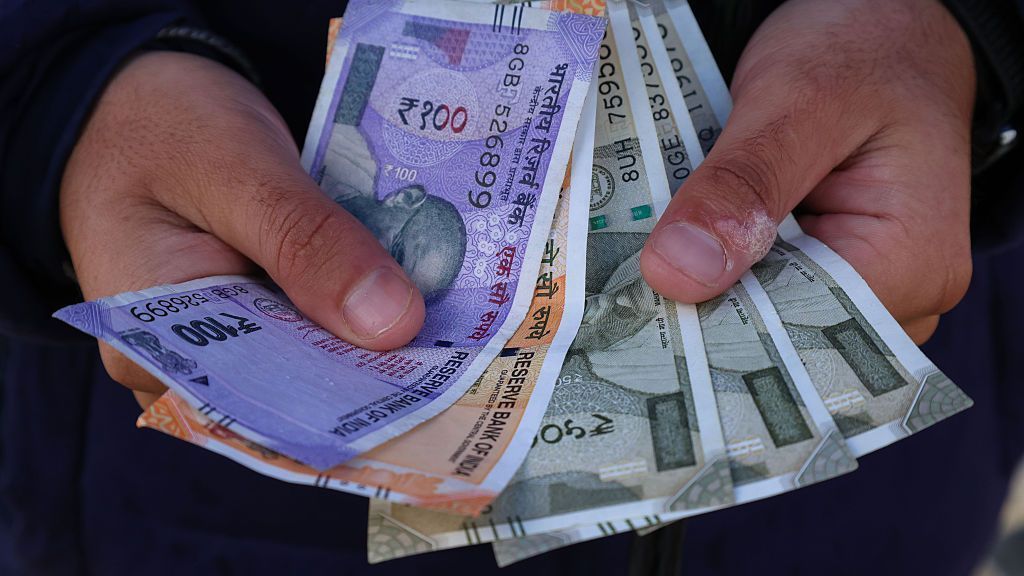
Against the backdrop of India’s unprecedented boom in digital finance, a striking and counterintuitive trend has emerged: as the country’s real-time digital transaction network Unified Payments Interface (UPI) surges toward 1 billion daily transactions, the volume of physical cash in circulation continues its steady double-digit growth. The Reserve Bank of India (RBI), the nation’s central bank, now manages a total of 176 billion circulating banknotes, printing 28 to 30 billion new notes across six denominations each year while retiring roughly 21 billion worn out bills – an enormous national logistics operation that demands constant planning and resource allocation.
This phenomenon, dubbed the “cash paradox” by RBI Deputy Governor Shirish Chandra Murmu, has presented a unique challenge to central bank planners. Speaking at a gathering of global central bankers in Jakarta last month, Murmu noted that while cash’s share of routine individual transactions has declined as digital payments gain widespread adoption, the total volume of currency in circulation continues to expand at double-digit rates. This unpredictable combination makes long-term forecasting of cash demand far more complex, complicating decisions around production capacity and distribution infrastructure.
To contextualize India’s massive cash stockpile, Murmu offered a global comparison: at the end of last year, the United States had roughly 56 billion dollar bills in circulation, while the Eurozone counted just 30 billion euro notes. One important caveat to this comparison is that India’s circulation count is inflated by a higher share of low-denomination notes, which require more individual bills to equal the same transaction value.
The puzzle of India’s growing cash supply is not that Indians still use cash – as recently as 2019, 94% of all consumer transactions were still cash-based, according to research by economists Anirudh Tagat, Mehmet Ozmen and Pushpa Trivedi. What confounds analysts is that cash volumes keep rising even as digital payments capture an ever-larger share of daily transactions. Economists point out this parallel growth of digital and physical money is not unique to India; Bank for International Settlements research shows the same pattern has played out globally since the 2007-2008 global financial crisis, and India is simply the most high-profile, large-scale case study of the trend.
Anirudh Tagat, an economist specializing in Indian payment behavior at the Mumbai-based Observer Research Foundation, explains that currency fulfills three core functions for consumers: it acts as a medium of exchange, a store of value, and a hedge against economic or systemic uncertainty. Digital payment apps have only displaced cash in the first of these roles, leaving the other two intact. That means rising digital adoption alone cannot eliminate demand for physical banknotes.
David Humphrey, a Florida State University economist who has studied cash usage across 14 global economies, notes that digital adoption is just one of many factors shaping cash holdings. For major reserve currencies, much of the growth in circulation comes from demand outside the issuing country, a trend seen clearly in the United States, where most high-denomination $50 and $100 bills are held and used overseas, rarely appearing in routine domestic transactions. Even as domestic ATM withdrawals for everyday spending – concentrated in small-denomination bills – have declined in recent years, the total value of U.S. currency in circulation continues to climb, driven by this international demand.
In India, one key structural driver of unrecorded cash growth is the large informal and underground economy. Illegal and underreported activity, from under-the-table property transactions to untaxed commerce, relies almost exclusively on untraceable cash. Even India’s 2016 demonetization policy, which overnight invalidated 86% of the country’s cash by value to crack down on “black money,” only eliminated existing illicit cash stockpiles, it did not address the underlying incentives that fuel ongoing under-the-table cash flows. Buyers and sellers in real estate still routinely underreport transaction values to avoid high stamp duties, settling the difference between the declared price and actual market value in untraced cash, leaving economists without any reliable estimate of how much unrecorded cash is held in the sector.
Psychological factors also play a role. Digital payment platforms are intentionally designed to remove the psychological “pain of paying” that comes with handing over physical cash, replacing the tangible loss of money with a simple satisfying notification. In theory, this should encourage more spending and further erode cash demand, but it has not – and analysts point to a quiet driver: fear of systemic disruption. Consumers hold cash as a buffer for when digital networks go down, power outages cut off online banking, or other crises disable digital infrastructure.
This trend mirrors what central bankers are seeing across Europe. The European Central Bank (ECB) has recorded growth in circulating euro banknotes from €1 trillion in 2016 to €1.6 trillion in 2024, even as cash’s share of point-of-sale transactions has fallen to roughly 50%. Like in India, the number of euro notes used for routine transactions is falling, but household holdings of cash as savings keep growing. ECB research has confirmed this same “banknote paradox,” driven by household hoarding and international demand for euros. Several European governments, including Germany, Austria, Finland, Sweden and the Netherlands, now formally advise citizens to keep a small stock of cash at home as a contingency for blackouts, cyberattacks, or even wartime disruption of digital systems. In short, cash is no longer primarily for everyday spending – it has been redefined as critical emergency infrastructure.
Beyond emergency preparedness, cash remains an essential tool for vulnerable populations that are often excluded from the digital finance ecosystem. University College Cork professor Olive McCarthy notes that elderly people, low-income rural communities, domestic violence victims who need to keep their finances private from abusers, and children learning about how money works all rely disproportionately on physical cash. Many consumers across income levels still simply prefer the privacy and tangibility that physical money provides.
For the RBI, this paradox creates a difficult policy and budgetary balancing act. The central bank maintains an entirely domestic, self-reliant supply chain for currency, including four paper mills, four banknote printing presses, and dedicated ink production facilities, while simultaneously championing UPI, the world’s largest and fastest-growing instant digital payment network used by more than 550 million Indians. Now, as the RBI finally begins trials of polymer 10 and 20 rupee notes – a reform first proposed a decade ago that would produce longer-lasting notes and reduce replacement costs – the central bank must decide how much capital and labor to allocate to maintaining its cash infrastructure versus expanding digital payment access.
Economists say the RBI has strong incentives to keep the cash system running even as digital payments expand. Murmu frames a reliable, widely available cash supply as a core component of India’s monetary sovereignty, and the rupee’s widespread informal use across South Asia means a stable cash supply acts as a regional economic shock absorber. If UPI follows through on reported plans to introduce transaction fees for small-value payments, analysts predict cash could even regain share in routine transactions, on top of its continuing growth as a savings and emergency asset.
The broader takeaway for policymakers globally is a humbling one: decades of rapid digital financial innovation have not rendered cash obsolete. Rather than being an outdated technology destined for replacement, cash has transformed into an insurance policy that few consumers or governments are willing to give up.