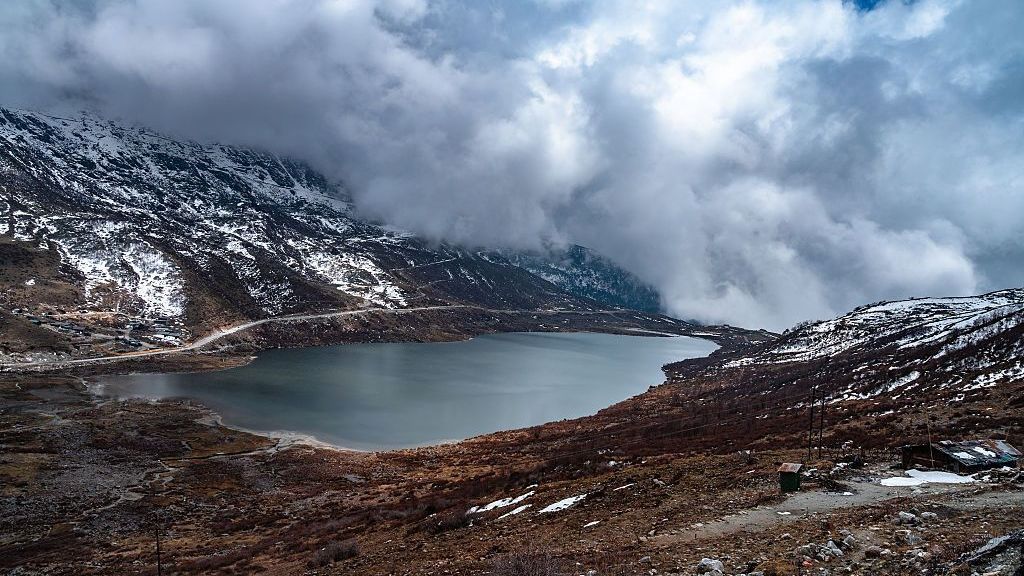
As climate change reshapes high-altitude ecosystems across the globe, the Hindu Kush Himalayan region – often called the world’s Third Pole – is edging closer to a dangerous ecological threshold, with accelerating glacial melt, growing glacial lake instability, and a critical gap in long-term monitoring creating cascading risks for hundreds of millions of people across South Asia, according to a landmark new report from global sustainability consultancy Systemiq.
The analysis, developed in partnership with the Integrated Mountain Initiative, and with technical input from the International Centre for Integrated Mountain Development (ICIMOD) and India’s GB Pant National Institute of Himalayan Environment, comes on the heels of catastrophic glacial outburst floods in Nepal and the Tibetan Plateau that claimed more than 1,300 lives and leveled communities and infrastructure – a stark reminder of the mounting threat posed by rapid environmental change in the world’s highest mountain range.
Researchers found that Himalayan glaciers are currently losing mass 65% faster than they did just a decade ago, a rate of decline far outpacing most scientific projections from the early 2010s. Despite this accelerating change, the report reveals a staggering gap in systematic observation: of the roughly 40,000 glaciers spread across the Himalaya-Karakoram region, only 21 are monitored in detail on a consistent, long-term basis.
This lack of data comes at a moment when the region’s physical landscape is shifting at an unprecedented pace. As glaciers retreat, they leave behind large, expanding glacial lakes contained by unstable natural dams made of rock and glacial debris. At the same time, rising global temperatures are thawing long-frozen permafrost and destabilizing steep high-mountain slopes, creating conditions that amplify the risk of connected, catastrophic hazards including outburst floods, landslides, and mudflows.
India, which holds a large portion of the Himalayan range within its borders, already bears direct witness to the scale of the threat. The report notes that while just 18% of India’s total land area falls within the Himalayan region, this zone accounts for 35% of the country’s total disaster events. In a July update to India’s parliament, the government confirmed that a 2025 scientific assessment of 189 high-priority glacial lakes in the Indian Himalayas has classified 56 of these water bodies as “very high risk” for catastrophic outburst. Currently, India’s Central Water Commission monitors 2,485 glacial lakes larger than 10 hectares across the country’s Himalayan river basins, a monitoring network that researchers say still falls far short of what is needed to mitigate risk.
The region has already seen deadly consequences of unmitigated glacial risk. In 2023, a glacial lake outburst flood in India’s northeastern state of Sikkim killed at least 70 people and destroyed critical infrastructure including roads, bridges, and major hydropower projects. Two years prior, a similar disaster in Uttarakhand claimed more than 200 lives when a massive flood swept through the Rishiganga and Dhauliganga river valleys, wiping out entire communities and hydropower facilities.
But the threat extends far beyond sudden, catastrophic flood events. The Himalayan region forms the headwaters for 10 major South Asian river systems that sustain more than 1.9 billion people across the subcontinent. ICIMOD projects that most river basins in the Hindu Kush Himalayan region will reach “peak water” – the point when glacial melt runoff hits its maximum, before declining steadily as glaciers shrink – by the middle of the 21st century, threatening long-term water and food security for hundreds of millions.
The new report puts an unprecedented economic value on the region’s natural water systems, estimating that Himalayan water underpins roughly 20% of India’s total gross domestic product, supporting major sectors including rice and wheat agriculture, tea production, hydropower generation, and religious pilgrimage tourism. What is more, the report finds that the Himalayan mountain states that bear the full risk of environmental change only capture around 5% of the total economic value generated by the region’s water resources, creating a misalignment of risk and reward that slows investment in resilience.
“The Himalayas are the Third Pole,” explained economist Lord Nicholas Stern, chair of the Grantham Research Institute on Climate Change and the Environment at the London School of Economics. “Unlike the Arctic or Antarctic, this pole has hundreds of millions of people living directly downstream of it, depending on its resources for their lives and livelihoods. This is national and international critical infrastructure, and the ecological system that underpins it is approaching a tipping point.”
Not all drivers of glacial melt are outside the control of regional governments, the report emphasizes. Researchers estimate that roughly one-third of total Himalayan glacial melt is driven by black carbon pollution, most of which originates from brick kilns, biomass burning, and fossil fuel combustion in the densely populated Indo-Gangetic plains. Black carbon soot deposits on glacial ice and snow absorb more solar radiation, drastically accelerating melting rates. Unlike global greenhouse gas emissions that require coordinated global action, black carbon is a local and regional pollutant that can be targeted for immediate reduction by India and its neighboring countries.
“The Himalayas are approaching a tipping point, with millions of lives and livelihoods hanging in the balance,” said Arushi Chopra, Systemiq’s senior director and lead author of the report. “Glaciers are melting faster than they were a decade ago, and our ability to track these changes and prepare for hazards has not kept pace.”
To address the growing threat, the report outlines 10 priority action areas for regional governments and international partners. These range from cutting black carbon emissions and vastly expanding the network of sustained glacial monitoring to upgrading cross-border early warning systems for glacial hazards and overhauling tourism development models in the Himalayas.
One key priority is strengthening coordinated disaster preparedness, with governments pre-agreeing on response protocols – from emergency evacuation routes to infrastructure protection measures – before hazards develop. Another core recommendation is a fundamental rethink of Himalayan tourism: the report notes that the Indian Himalayan region already attracts roughly 400 million tourist visits annually, and argues that the sector should shift its focus from maximizing visitor numbers to generating economic value that stays and is reinvested in local mountain communities, rather than being exported to outside entities.
Pema Gyamtsho, director general of ICIMOD, noted that the region’s hazard profile is growing increasingly complex as the climate warms. “Glaciers are retreating, permafrost and high-mountain slopes are becoming increasingly unstable, and communities and infrastructure downstream face growing risks from complex and cascading hazards,” he explained.
Crucially, these transboundary risks do not recognize national borders, meaning no single country in the region can address the threat alone. That makes cross-border monitoring, open shared risk data, integrated early warning systems, and joint investment in climate resilience increasingly urgent – not only to save lives during catastrophic events, but to protect the long-term livelihoods and trillions of dollars in economic activity that depend on the Himalayan region’s fragile natural ecosystems.