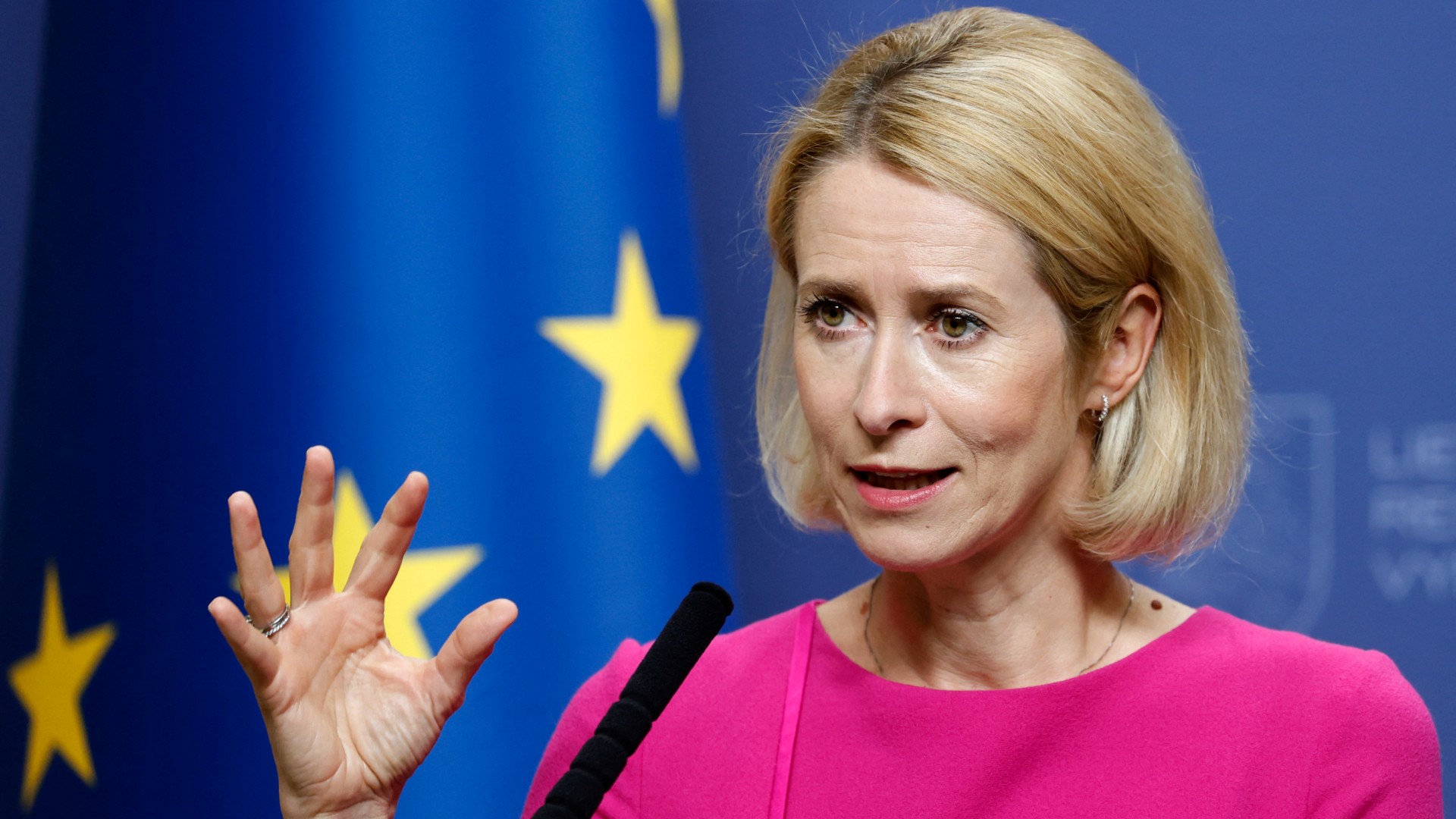
The European Union’s top foreign policy representative Kaja Kallas has ignited fresh debate over the bloc’s approach to the Israeli-Palestinian conflict by calling on EU member states to adopt the same uncompromising stance on illegal Israeli settlements in occupied Palestinian territories that the bloc took against Russia’s 2014 annexation of Ukraine’s Crimea.
In an interview with The Irish Times published Friday, Kallas argued that the EU cannot maintain its credibility as a global actor if it remains divided on how to respond to aggressive actions by the Israeli government and violent extremist Israeli settlers in the occupied West Bank. She urged member states to align behind a principle-driven policy: a bloc-wide ban on all trade with goods produced in illegal Israeli settlements, a measure that is fully consistent with existing international law, which universally recognizes settlements as a violation of the Fourth Geneva Convention.
Kallas noted that the total volume of EU trade with the settlements remains small in economic terms, but emphasized that implementing the ban would carry outsized symbolic weight, sending a clear message that the bloc does not accept illegal territorial annexation. To circumvent long-standing opposition from a handful of member states—including Germany, Hungary, the Czech Republic and Slovenia, which have blocked unanimous foreign policy sanctions against Israeli settlement activity—Kallas proposed framing the ban as a trade regulation rather than a formal sanctions measure. This procedural shift would only require a majority vote among member states to pass, rather than the unanimous consent needed for foreign policy sanctions, clearing a key path to approval.
According to Kallas, the European Commission is facing explicit pressure from a majority of national governments to formally table the trade ban proposal. She added that EU institutions have faced widespread public and political criticism for their failure to impose any punitive measures on Israel amid the ongoing military campaign in Gaza that has been widely condemned as genocidal by international human rights bodies and legal experts.
“When Russia occupied Crimea, we all agreed it was illegal, we refused to recognize the annexation, and we immediately cut off all trade with goods coming from the occupied peninsula,” Kallas said. “We need to hold the same principled line here: everyone acknowledges these settlements are illegal, so we must end all trade with products from the occupied Palestinian territories.”
Kallas’ comparison is rooted in recent EU history: within four months of Russia’s February 2014 invasion and annexation of Crimea, the bloc had implemented a full ban on Crimean-origin goods and broad economic sanctions on Moscow, eventually expanding restrictions to cover arms, energy, and technology exports to Russia.
Kallas’ call comes as Israel faces mounting diplomatic pressure from its traditional Western allies, as global public approval for Israel’s actions in Gaza and the occupied territories has dropped to historic lows. Earlier this month, on September 8, the United Kingdom became the first major Western power to implement national sanctions targeting Israeli settlement activity, and 10 other European nations plus Canada joined the UK in a joint statement affirming their plan to introduce domestic restrictions and back EU-level measures targeting illegal settlement trade.
Israeli officials have pushed back aggressively against the UK’s decision. Israeli Foreign Minister Gideon Saar announced a package of retaliatory measures, including closing the British consulate in occupied East Jerusalem and barring 11 sitting British members of parliament from entering Israeli and occupied territory. Even the United States’ ambassador to Israel, Mike Huckabee, waded into the dispute, launching a vitriolic attack on British Foreign Secretary Ed Miliband—who is Jewish—accusing him of “Jew hate” and threatening further retaliation against the UK.
The rising tensions over settlements follow an August announcement from the Israeli government that it would approve construction of the long-contested E1 settlement project, which will add 3,400 new housing units to existing settlements in the West Bank and effectively cut the occupied Palestinian territory in half, ending any possibility of a contiguous future Palestinian state. The approval drew widespread condemnation from governments and international bodies across the globe.
Kallas’ new public stance marks a notable shift, as reports have previously revealed she has privately compared Israel’s systematic treatment of Palestinians to the apartheid regime that once ruled South Africa. It also stands in sharp contrast to her earlier public position: just months ago, at a March 2025 press conference, Kallas reaffirmed the EU’s “solidarity with Israel and its people” and emphasized that the bloc views Israeli security as a core priority for Europe.