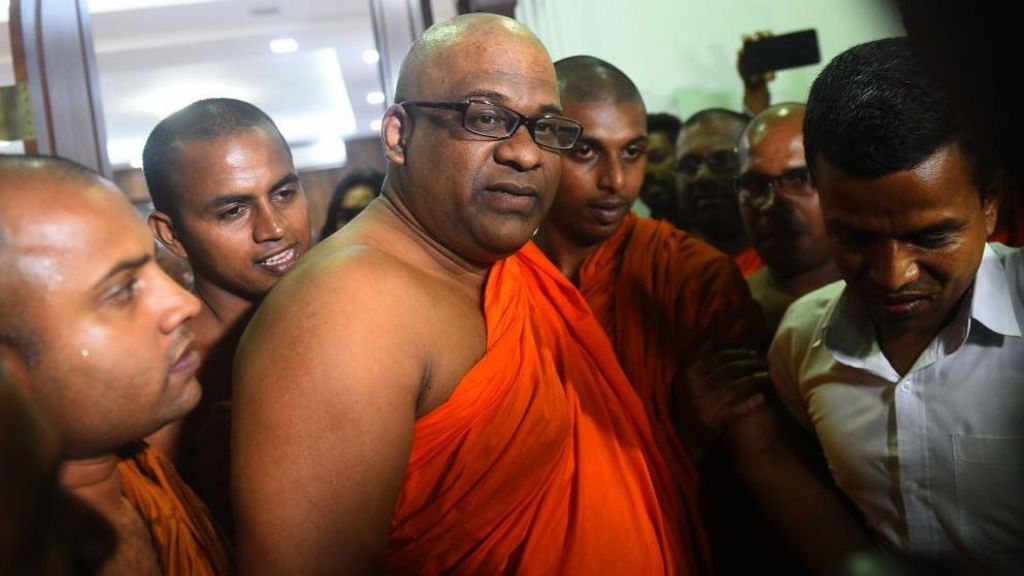
In a landmark ruling that reverberates across Sri Lanka’s political and religious landscape, the nation’s Supreme Court has invalidated a controversial presidential pardon granted to prominent hardline Buddhist monk Galagodaatte Gnanasara, mandating he serve out the remaining years of a six-year custodial sentence. The sentence was originally handed down in 2018 on charges of contempt of court and intimidation of Sanya Eknaligoda, wife of missing Sri Lankan political cartoonist Prageeth Eknaligoda.
The case traces its origins back more than 15 years, when Prageeth Eknaligoda, a cartoonist renowned for his sharp criticism of government policy and systemic inequality, vanished without a trace in 2010. His work regularly targeted nationalist former president Mahinda Rajapaksa, who led the country through the brutal final phase of the 26-year civil war that ended with the defeat of Tamil separatist rebels in 2009. In his cartoons, Eknaligoda shone a light on threats to press freedom, abuses of political power, and systemic social disadvantage, drawing the ire of the ruling establishment at the time.
To this day, Prageeth Eknaligoda has never been found. His wife Sanya has spent more than a decade leading a high-profile grassroots campaign demanding answers about his disappearance, repeatedly accusing successive Sri Lankan governments of failing to conduct a thorough, transparent investigation into the case. It was during a court hearing centered on allegations that military intelligence officials abducted the cartoonist that Gnanasara interrupted proceedings to publicly defend the accused officials, triggering the 2018 contempt and intimidation conviction.
Gnanasara never completed his six-year term. Just months into his sentence, then-president Maithripala Sirisena granted him a full presidential pardon, allowing him to walk free after serving less than 12 months behind bars. The hardline monk has long been a polarizing figure in Sri Lankan politics: he leads the Bodu Bala Sena (BBS), also known as the “Buddhist Power Force,” a radical nationalist organization that has drawn international condemnation for its anti-minority rhetoric. He has maintained close political ties to the Rajapaksa political dynasty, serving as a trusted ally to Mahinda Rajapaksa and his brother Gotabaya Rajapaksa, who went on to hold the presidency from 2019 to 2022.
This is not Gnanasara’s only recent legal trouble. In 2025, he was convicted on separate charges of insulting Islam and inciting interreligious hatred, receiving an additional nine-month prison sentence. The latest Supreme Court ruling marks a rare milestone in Sri Lankan jurisprudence: convictions of Buddhist monks are extremely uncommon in the country, and custodial sentences for members of the clergy are almost unheard of.
The Supreme Court’s decision to overturn the pardon and send Gnanasara back to prison is being closely watched by civil society groups, who say it signals a potential shift in accountability for high-profile figures linked to religious extremism and political interference in human rights cases. For Sanya Eknaligoda and other activists demanding answers about enforced disappearances in Sri Lanka’s post-civil war era, the ruling is being viewed as a rare step toward judicial accountability after years of perceived government inaction.