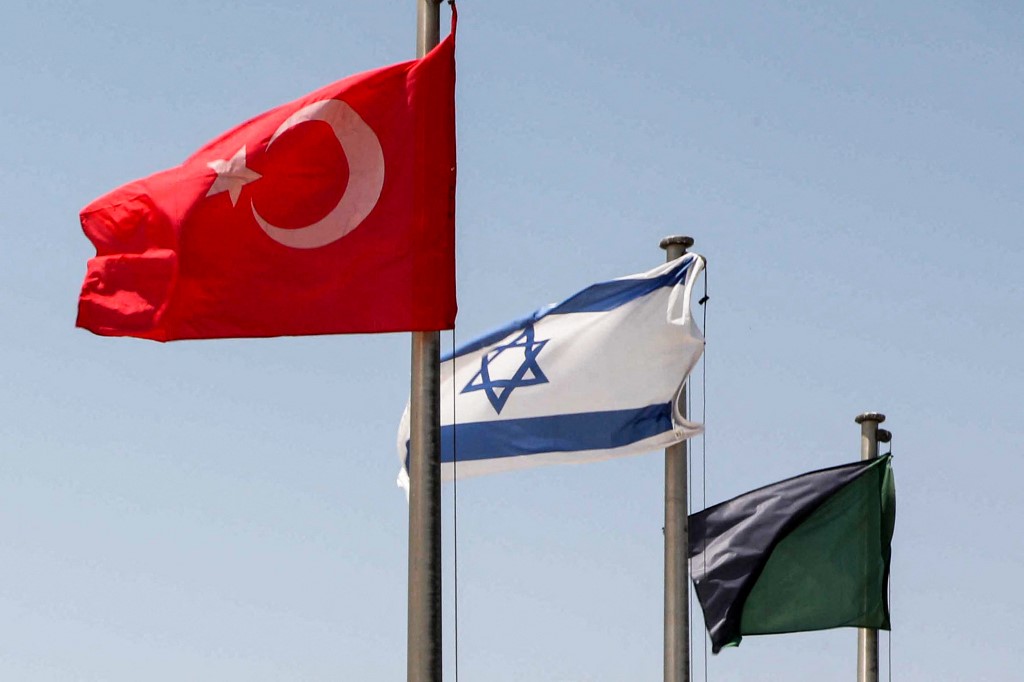
In a small but notable step that signals continued tentative engagement between two longtime regional rivals, Israel has named a new senior diplomatic representative to Turkey this week, even as the country’s main embassy compound in Ankara remains shuttered to most diplomatic activity over persistent security threats, a senior Israeli official confirmed to Middle East Eye in an exclusive briefing Wednesday.
Veteran Israeli diplomat Joel Lion has been selected by the Israeli Foreign Ministry to fill the post of charge d’affaires in Turkey, taking over the role that has sat vacant since the retirement of former ambassador Irit Lillian earlier this year. Lion brings a wealth of regional and European diplomatic experience to the role: he most recently served as Israel’s first resident ambassador to Moldova, a post he held until April 2025, and also held concurrent accreditation as non-resident ambassador to Armenia through August 2026.
On the very day the appointment was confirmed, Lion was already on the ground in Ankara to formally present his credentials to Turkey’s Ministry of Foreign Affairs, marking the first visit by a senior Israeli diplomatic official to the country since Israel withdrew all of its expat diplomatic staff from Ankara and Istanbul in late 2023 amid escalating security risks.
The Israeli official who spoke to MEE emphasized that the ongoing closure of the embassy is exclusively a matter of security assessment, not a reflection of a diplomatic rupture between the two states. Contrary to public speculation that the shuttering constitutes a formal downgrade of relations, the official clarified that the mission has never been officially closed: local Turkish diplomatic staff continue to carry out limited core operations from the compound even as all senior Israeli personnel remain stationed outside the country. “Both sides agree that the embassy should stay closed over the security issues,” the official told MEE, confirming a shared consensus on the current status of the facility.
The appointment comes at a moment of deep, persistent friction between Ankara and Jerusalem that shows little sign of near-term easing. After a brief period of warming bilateral ties between 2022 and 2023, relations deteriorated sharply following the October 7, 2023 Hamas-led attack on southern Israel. Turkey was one of the earliest and most vocal critics of Israel’s subsequent military campaign in Gaza, ultimately upgrading its condemnation to labeling the war a genocide and imposing formal trade restrictions on Israeli goods in 2024.
Tensions spilled beyond verbal confrontation earlier this year in neighboring Syria, where both countries maintain competing military and strategic presences. Just last month, Israeli warplanes carried out airstrikes on the Abu al-Duhur military air base in northern Syria, located just 70 kilometers from the Turkish border. Israel justified the strike by claiming Turkey was preparing to deploy advanced air defense systems to the base, a move that would have limited the Israeli military’s unrestricted freedom of operation in Syrian airspace, where it regularly carries out strikes against Iranian-backed militant groups.
Ankara has pinned its hopes for a reset in relations on the upcoming Israeli general election scheduled for October, with Turkish officials widely expecting that a defeat for Israeli Prime Minister Benjamin Netanyahu would open the door to renewed high-level dialogue. The Israeli official pushed back on that expectation Wednesday, noting that even if Netanyahu’s current bloc fails to secure a majority, his Likud party could still form a viable governing coalition by aligning with other centrist or moderate opposition parties. Such a shift in coalition makeup, the official added, could actually bring broader, more substantive changes to Israel’s overall regional policy framework. The official also identified one key persistent irritant in bilateral ties: widespread what the official called “incitement against Israel” in Turkish state and private media outlets, which the official described as the single biggest stumbling block to improved relations right now.