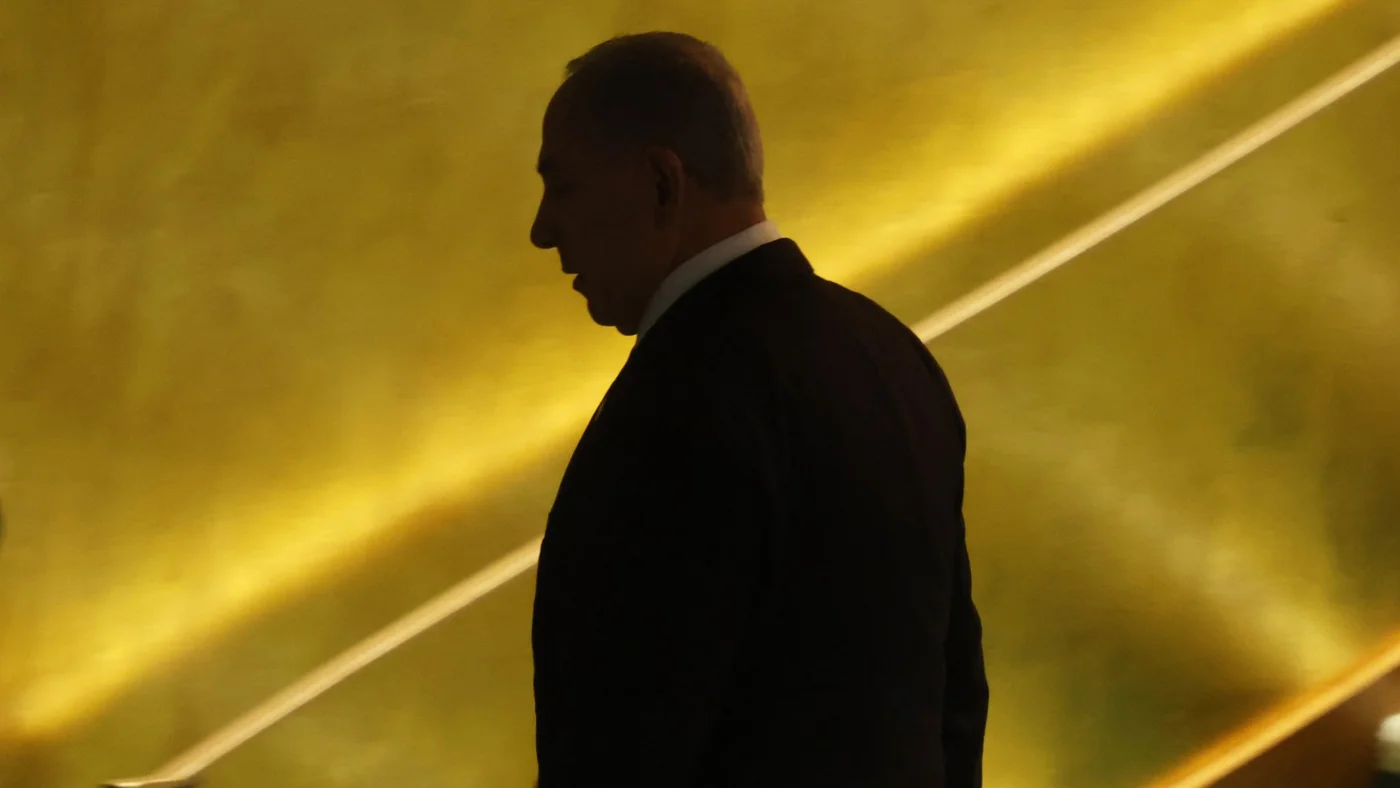
A major diplomatic rift has erupted between the United Kingdom and Israel after London imposed sweeping new sanctions on illegal Israeli settlement activity in the occupied West Bank, triggering immediate retaliation from Benjamin Netanyahu’s right-wing government and deepening accusations from Israeli opposition that the current administration has pushed the country into historic global isolation.
Announced by UK Foreign Secretary Ed Miliband, the new measures mark a significant escalation of international pressure on Israel over its decades-long occupation of the West Bank. Miliband confirmed that the UK will officially designate Israel’s entire occupation of the West Bank as unlawful, and will implement a full ban on imports of goods produced in Israeli settlements. Additional sanctions include asset freezes and travel restrictions targeting individuals and companies involved in settlement construction, infrastructure development, financing, and real estate projects tied to expanding settlements. The UK will also bar advertising of settlement-based properties within its borders, sanction extremist settlers linked to violence against Palestinian communities, and suspend new weapons export licenses that could materially support the occupation, maintaining over 30 existing arms suspensions already in place.
Miliband emphasized that the sanctions target only illegal settlement activity, not the state of Israel itself, noting that the UK will continue normal trade with Israel within its pre-1967 internationally recognized borders. “Today we refuse to be bystanders to further suffering and to the destruction of the two-state solution,” he said, adding that the UK could no longer merely condemn injustice without taking concrete action. Miliband also accused Israeli settler groups of carrying out ethnic cleansing against Palestinian communities, saying Netanyahu’s government has deliberately turned a blind eye to this violence.
The UK announcement was backed by a joint statement from 12 European and North American nations including France, Canada, Spain, Denmark, Ireland, Finland, Iceland, Norway, Poland, Portugal and Sweden. The coalition called on Israel to immediately halt settlement expansion, hold perpetrators of settler violence accountable, and launch investigations into alleged abuses by Israeli forces, warning that ongoing Israeli actions in the West Bank have eliminated any viable path to a two-state solution that would deliver permanent peace for both Israelis and Palestinians.
Netanyahu’s government responded with swift and sweeping retaliatory measures. Israeli Foreign Minister Gideon Saar announced the closure of the British consulate in Jerusalem, the expulsion of British representatives from the US-led International Gaza Support Centre (tasked with monitoring the Gaza ceasefire), and the termination of UK-led training programs for Palestinian Authority security forces. Israel also issued entry bans targeting 11 British parliamentarians known for their criticism of Israeli policy, including former Labour leader Jeremy Corbyn, and one British human rights lawyer.
Saar denounced the UK sanctions as “morally distorted” and “a blatant interference in the affairs of a sovereign state”, arguing that the measures were an inappropriate attempt to sway Israel’s upcoming October national elections. Claiming that the Israeli public overwhelmingly rejects the establishment of an independent Palestinian state, Saar warned that Israel would retaliate against any other country that follows the UK’s lead. “The message to every government that harms us: whoever acts against Israel – Israel will harm them, and they will lose their influence and relevance,” he said.
Israeli President Isaac Herzog also condemned the sanctions, calling them “a gross interference in the democratic elections of a sovereign nation, and a decision that will fall on the wrong side of history.” In a post on X, Herzog called on foreign governments to halt punitive measures, urging instead “constructive dialogue and cooperation.” Far-right National Security Minister Itamar Ben Gvir went further, urging Netanyahu to immediately close the British consulate in East Jerusalem, claiming the facility operates on behalf of the Palestinian Authority, and arguing that a hardline response is needed to push back against British “audacity”, reminding London that the British Mandate for Palestine ended decades ago and Israel is now a fully sovereign state.
Inside Israel, opposition politicians have pinned the blame for the diplomatic fallout squarely on Netanyahu’s far-right coalition, saying the government’s unapologetic expansion of settlements has left the country more isolated globally than ever before. Former Israeli Prime Minister Yair Lapid, who leads the main opposition bloc, called the British decision wrong but directed his criticism at the current administration. “[The government] is leading Israel into unprecedented diplomatic isolation, and doing nothing but issuing rebukes and threats that no one takes seriously,” Lapid said.
Knesset member Gilad Kariv of the left-wing Democrats party echoed that assessment, saying Netanyahu’s government is directly responsible for the sanctions due to its ongoing seizure of Palestinian land in the West Bank. Kariv added that Netanyahu has become politically “leprous” on the global stage, and argued that ordinary Israeli citizens should not be forced to pay the price for the prime minister’s “corrupt alliance with nationalist fanatics” in his far-right coalition.
Even some former senior Israeli officials have broken with the government to back the UK measures. Michael Ben-Yair, a former Israeli attorney-general, wrote in the Financial Times that while he does not support punitive action by a close Israeli ally, the sanctions are necessary to preserve the possibility of a two-state political solution that could deliver lasting peace and security for the seven million Jews and seven million Palestinians living between the Mediterranean Sea and the Jordan River. Ben-Yair argued that the measures correctly distinguish between the legitimacy of Israel as a sovereign state and its ongoing occupation of Palestinian territory, which he described as “morally, politically and legally unacceptable.”
Netanyahu’s government has faced growing international condemnation this year for accelerating settlement construction across the occupied West Bank. Earlier this year, the government opened tenders for more than 1,200 new settlement homes in the strategically sensitive E1 corridor, a plan that would connect Jerusalem to the large Ma’ale Adumim settlement and cut off the territorial contiguity of any future Palestinian state, a move widely seen as a fatal blow to the two-state framework.