The annual race for the prestigious Ballon d’Or is officially underway, with France Football magazine revealing the full shortlists of 30 men’s and 30 women’s candidates this Tuesday. This year’s iteration carries extra significance: to celebrate the 70th anniversary of the first award, won by England’s legendary Stanley Matthews in 1956, the October 26 winner announcement ceremony is shifting from its long-time Paris home to London. The voting period for 2026 covers all performances between August 3, 2025 and July 19, the date of this year’s FIFA Women’s and Men’s World Cup final.
On the men’s side, the list of top contenders reads like a who’s who of global soccer, headlined by last year’s defending champion Ousmane Dembélé, Bayern Munich’s Harry Kane, and France superstar Kylian Mbappé. Also among the nominees is 2024 winner Rodri, the linchpin of Spain’s second World Cup title run, and eight-time recipient Lionel Messi, who earned his spot after leading Argentina to a World Cup runner-up finish and claiming the Major League Soccer trophy with Inter Miami. In a notable shakeup, three other active former Ballon d’Or winners—Cristiano Ronaldo, Karim Benzema, and Luka Modric—did not earn a spot on the 2026 shortlist. For another year, no goalkeeper was nominated, leaving Soviet legend Lev Yashin as the only keeper to ever claim the honor, a record he has held since 1963. Geographically, the nominee list carries some surprises: Italy, the Netherlands, and Germany failed to place any representatives after Italy missed World Cup qualification, and only one Serie A player—Inter Milan’s Lautaro Martínez—earned a spot.
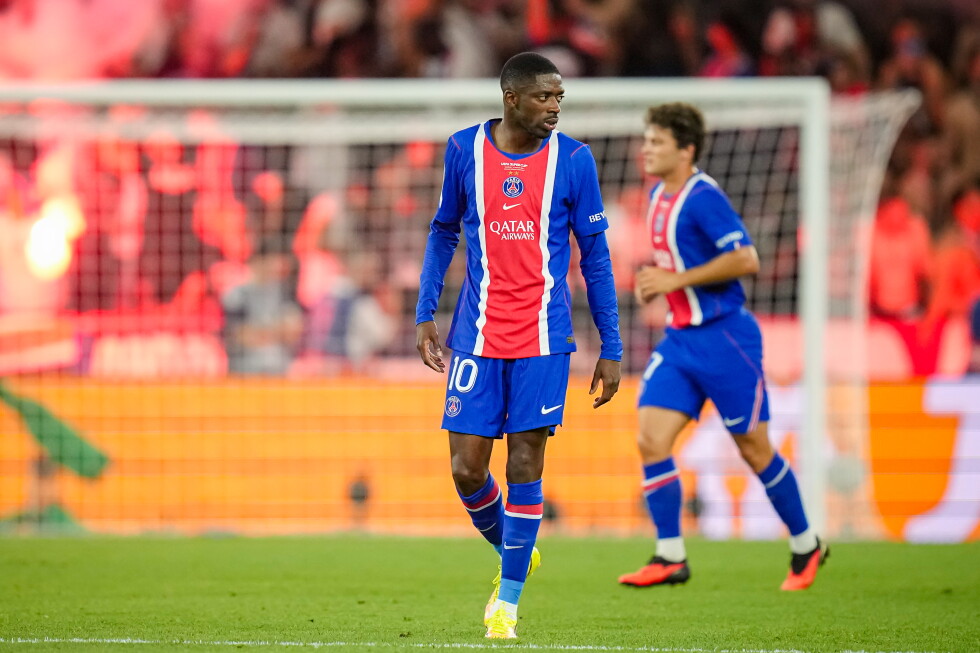
Dembélé, who secured a second consecutive Champions League title with Paris Saint-Germain this season, enters the race with a strong chance to become a rare back-to-back winner. PSG’s dominance in this year’s race is unmatched: Dembélé is one of nine current PSG players nominated, with 10 total when including recent signing Ferran Torres, who scored Spain’s game-winning goal in the World Cup final. In a candid interview with France Football, Dembélé expressed confidence that the trophy would stay in PSG’s hands, even declining to name himself among his personal top contenders, highlighting teammates Khvicha Kvaratskhelia, Joao Neves, Fabian Ruiz and Willian Pacho alongside Kane and Mbappé instead.
For Mbappé, who joined Dembélé on France’s World Cup squad that exited in the semifinals against eventual champion Spain, his candidacy is driven by historic individual achievement. Despite France falling short of a title, Mbappé broke a longstanding record to become the all-time leading goalscorer in men’s World Cup history, notching his 22nd goal in fewer appearances than the previous record holder Lionel Messi. While the Ballon d’Or often favors players with major team silverware, Mbappé’s milestone has made him a formidable contender. Kane, meanwhile, turned in one of the best seasons of his decorated career, notching 73 combined goals for club and country, winning his first Bundesliga title with Bayern Munich, and leading England to a third-place finish at the World Cup, cementing his status as a top candidate.
In the women’s race, two-time winner Alexia Putellas, Ewa Pajor, and Melchie Dumornay enter as the pre-list favorites. The biggest omission from the women’s shortlist is three-time defending champion Aitana Bonmatí, who missed the vast majority of the season with a long-term injury. Bonmatí did make a late return to help Barcelona secure a quadruple, including another UEFA Women’s Champions League title, but the extended absence kept her out of the running this cycle.
First introduced for men in 1956 and expanded to include a women’s award in 2018, the Ballon d’Or is decided by a panel of international journalists. For the men’s award, one journalist from each of the top 100 FIFA-ranked countries casts a ranked vote, while the women’s award draws votes from one journalist per top 50 FIFA-ranked nation. Points are allocated based on ranking, and the player with the highest cumulative total wins. Organizers evaluate candidates based on three weighted criteria: first, individual performance and decisive, impactful play; second, collective team success and major titles; and third, sportsmanship and overall class of play.