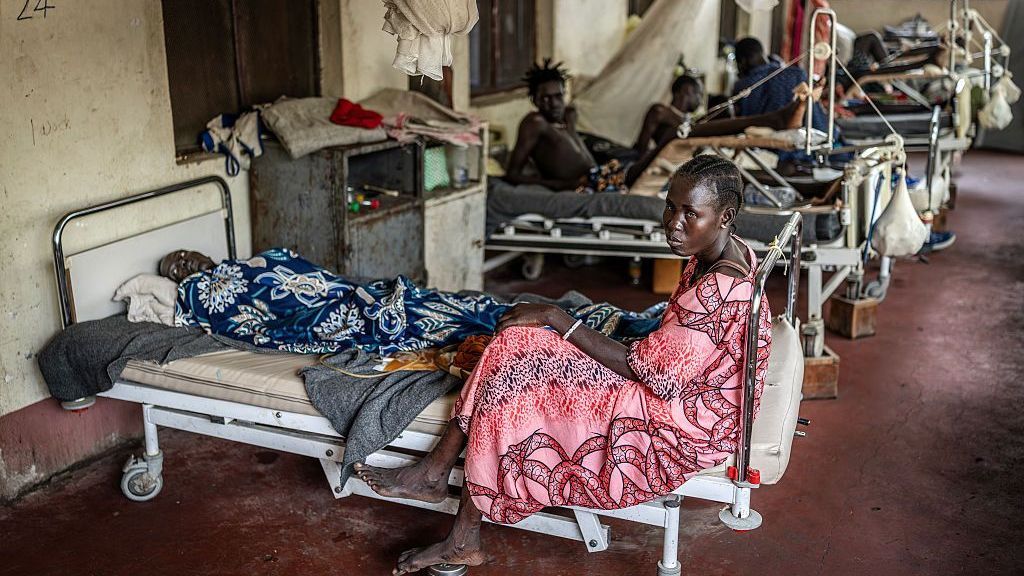
Three years into a devastating civil war that has split Sudan along military lines, the East African nation’s already tattered public health infrastructure is barreling toward total collapse, international medical humanitarian organization Médecins Sans Frontières (MSF) has declared. The catastrophic shift has been triggered by sweeping cuts to international aid, a crisis that has shuttered dozens of healthcare facilities across the country and left millions of vulnerable Sudanese without access to even basic life-saving care.
The root of the funding collapse traces back to last year, when the United States — long Sudan’s single largest international aid donor — dissolved the United States Agency for International Development (USAID), its primary foreign assistance delivery body. Dozens of local and international aid groups that relied on USAID grants were left with no time to secure alternative funding streams, MSF explained. Existing USAID-funded grants for Sudan operations officially expired in June 2026, compounding a broader global trend of declining aid: the Paris-based Organisation for Economic Co-operation and Development (OECD) confirms that total international development aid dropped by 21.3% globally in 2025 compared to 2024, with European governments also slashing their assistance budgets for conflict zones like Sudan.
Since civil war erupted in April 2023 between Sudan’s national army and the paramilitary Rapid Support Forces (RSF), the country has faced what the United Nations calls one of the worst humanitarian catastrophes on the planet. More than 33 million Sudanes — two-thirds of the country’s total population — now require urgent medical assistance, while over 19.5 million face crisis-level food insecurity and 5 million are pushed into emergency-level hunger, UN data shows.
MSF, which funds its own Sudan operations through private donations, says the withdrawal of other aid providers has created a cascading crisis that is overwhelming the few remaining functional health facilities. “War is driving Sudan’s needs; funding cuts are shrinking the response,” said Muhammad Ibrahim, MSF’s country director for Sudan. “When funding disappears from other health services, clinics close, patients have fewer places to go, and pressure shifts to the facilities that remain, including ours.”
In Darfur, the western Sudanese region that has borne the brunt of the most intense fighting over the past three years, patients are already facing deadly consequences. Sebastián Traficante, MSF’s emergency coordinator for Darfur, explained that surviving clinics and hospitals are forced to turn patients away after days-long, dangerous journeys across active conflict zones. “After a longer and more expensive journey, patients often arrive in a much more serious condition, and the hospital may already be full,” Traficante said.
MSF data underscores the severity of the strain: between January and April 2026, admissions at MSF-supported facilities in central Darfur jumped 22.5% compared to the same period in 2025, just after 45 local healthcare centres in the region lost all funding and closed their doors in May alone. The collapse of frontline care has also drained remaining facilities of critical supplies, with running low on essential medicines and losing operational capacity to treat incoming patients.
Gedaref state, which hosts tens of thousands of internally displaced persons (IDPs) who have fled fighting across the country, offers a stark example of the crisis. At Tanedba camp, home to 18,400 displaced people, the only maternity and surgical wards closed permanently when the managing aid organization pulled out in June. MSF has stepped in to run a basic emergency room, but pregnant people requiring obstetric surgery now face a three-hour trip to the nearest functional hospital in a major city. In nearby Um Rakuba camp, which hosts 17,000 displaced people — most of them women and children — the number of active aid agencies has plummeted from 35 in 2021 to fewer than 10 today.
The funding crisis is compounded by an ongoing epidemic of violence targeting healthcare workers and infrastructure, MSF added. In 2025 alone, 1,620 people were killed in attacks on medical facilities across Sudan — accounting for 82% of all global deaths from attacks on healthcare last year, the organization reports.
As world leaders prepare to gather for the annual UN General Assembly in New York, MSF is calling on global powers to reverse aid cuts and take urgent action to prevent total health system collapse in Sudan. “If support does not increase, more patients will face longer journeys, fewer treatment options and greater risk of arriving too late for care,” warned Liz Harding, MSF’s UK humanitarian representative.
Despite ongoing diplomatic efforts to broker a ceasefire, the civil war shows no sign of abating. Most recently, a drone attack on the army-controlled town of Umm Ruwaba in North Kordofan state killed at least 11 people on Tuesday, with a projectile striking a crowded courtyard inside a local court complex, according to local medical sources.