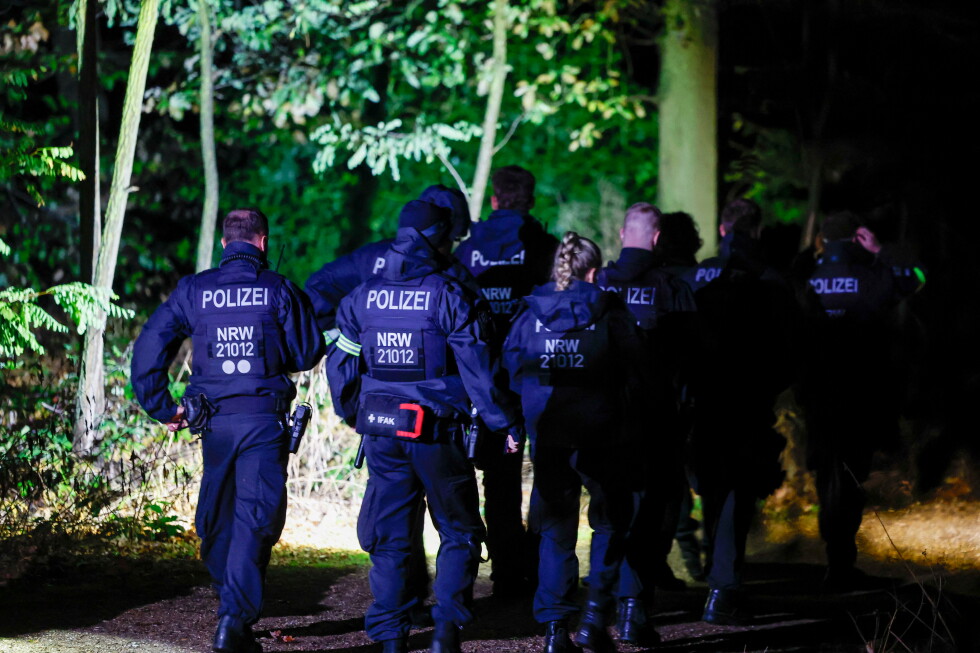
BERLIN — A multi-day, nationwide manhunt launched after a string of coordinated sabotage attacks on German power distribution infrastructure concluded Tuesday with law enforcement taking a suspect into custody, German federal and state police confirmed. The 48-year-old man was apprehended close to a power facility in Weisweiler, a town located in the western German state of North Rhine-Westphalia.
In accordance with Germany’s strict national privacy regulations, officials have not released the suspect’s full name or nationality, though regional media outlets have publicly identified the man as Daniel V. Cologne police’s official statement notes that the suspect was carrying explosive materials at the time of arrest and did not resist when taken into custody.
The wave of attacks began early last month, when the first act of sabotage was detected at an electrical substation near the Jänschwalde coal-fired power plant in Brandenburg, a northeastern German state. Just hours after that incident, a second deliberate short-circuit took down key power lines at the Bergheim substation near Cologne, in western Germany. In the immediate aftermath of the back-to-back attacks, senior security leaders in both affected states raised significant alarm, noting that foreign state-sponsored sabotage could not be ruled out as a potential motive.
This heightened concern came as Germany was already operating at an elevated security alert level: just weeks prior, the German government formally accused Russian actors of plotting an explosive drone attack on Leipzig/Halle Airport. However, that narrative shifted just days later, when German Interior Minister Alexander Dobrindt announced that investigators had converged on a new theory: the attacks were the work of a lone individual linked to violent climate extremism.
Investigators have since linked the suspect to more than just the two initial confirmed attacks in Brandenburg and North Rhine-Westphalia. He is also accused of carrying out multiple unsuccessful sabotage attempts across three German states: North Rhine-Westphalia, Brandenburg, and Saxony. According to official allegations, the suspect used homemade rocket launchers to attempt to fire thin conductive wires across high-voltage power lines, a method designed to trigger intentional short circuits and disable grid infrastructure.
On Monday, just one day before the arrest, law enforcement discovered several unused launch devices positioned along a high-voltage line near the Weisweiler power plant — mere meters from the location where the suspect would be taken into custody. German national news agency dpa reported that investigators also found a claim of responsibility letter at that site, adding to a series of identical letters recovered from other attack locations across the three states.
In the documents, the suspect explicitly framed the power grid attacks as a direct action campaign against the use of fossil fuels for energy production. All three states where attacks or attempted attacks occurred currently have active lignite (brown coal) mining operations and coal-fired power generation, a major flashpoint for climate activists in Germany.
Following the arrest, police confirmed that search teams located a hidden tent set up in underbrush near the arrest site, which held additional unassembled explosive charges. The seized explosive materials are currently undergoing forensic analysis by bomb disposal specialists from the North Rhine-Westphalia State Criminal Police Office. An arrest warrant for the suspect had already been issued by the Cottbus Public Prosecutor’s Office in Brandenburg ahead of the apprehension. As of Tuesday, investigative teams remained on site in Weisweiler, securing forensic evidence and sweeping the surrounding area for any additional undetonated explosive devices that may have been left by the suspect.