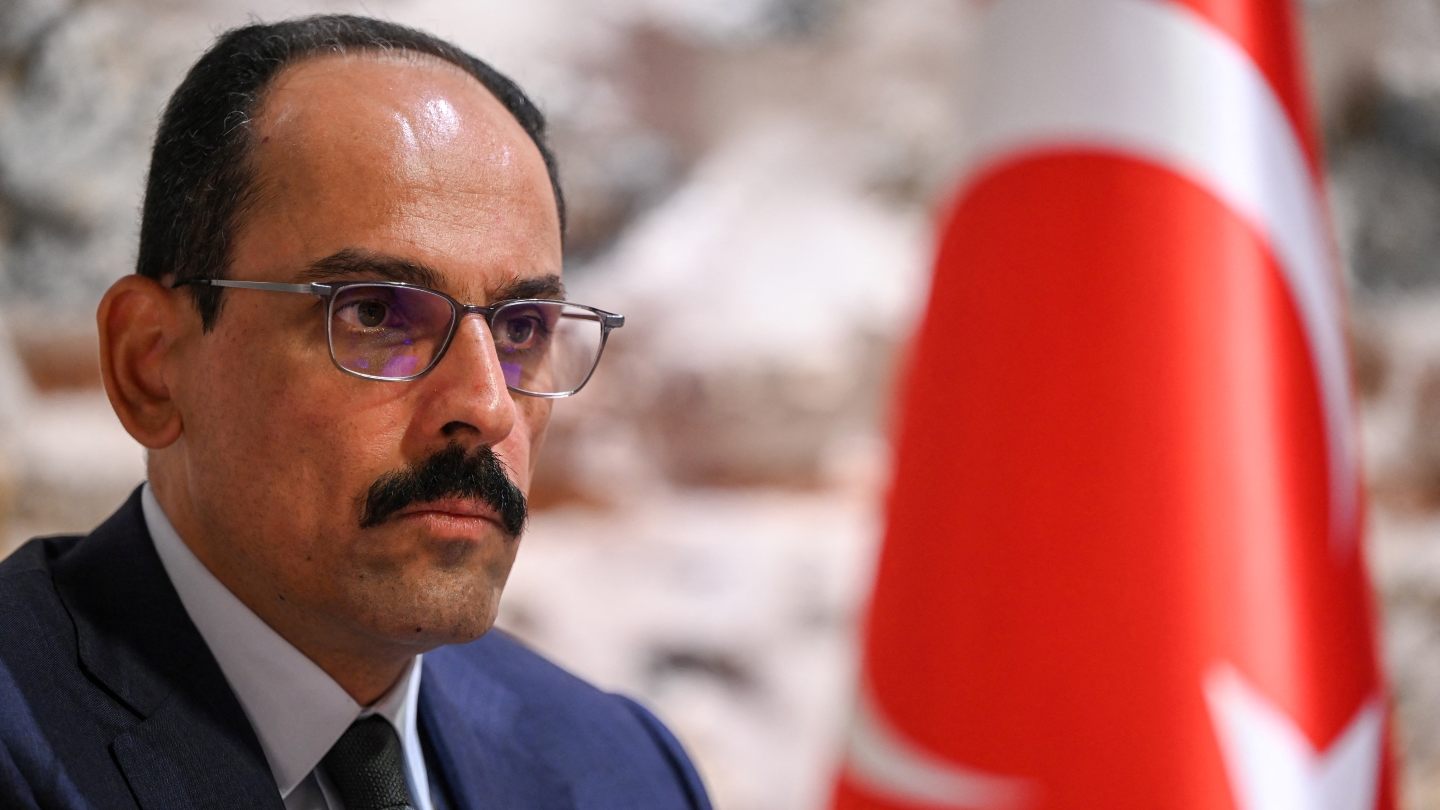
A previously unannounced meeting between the top intelligence leaders of Turkey and Greece has emerged, shedding new light on the under-the-scenes diplomatic and security dynamics playing out across the volatile Eastern Mediterranean. Both Greek and Turkish media outlets have confirmed that Ibrahim Kalin, the head of Turkey’s National Intelligence Organisation (MIT), traveled secretly to Athens last week to hold talks with his Greek counterpart, Themistoklis Demiris, director of Greece’s National Intelligence Service (EYP). The closed-door gathering comes at a moment of rising friction between the two neighboring NATO allies, with disagreements flaring over Aegean Sea territorial claims, deepening defense cooperation between Greece and Israel, and growing broader security uncertainty across the Eastern Mediterranean.
For decades, Greece and Turkey have been locked in long-running disputes that touch on multiple core strategic issues: competing claims over maritime borders in the Aegean, the status and ongoing militarization of disputed Aegean islands, and the long-running conflict over Cyprus. This latest high-level intelligence contact comes just days after Greece sealed a landmark $3.5 billion defense deal with Israel, under which Israeli defense firms will support Athens in building a sophisticated multi-layered air defense network dubbed the Achilles Shield. The agreement includes the procurement of Israel’s cutting-edge David’s Sling and SPYDER air defense systems, the Barak MX interceptor system, and advanced MMR multi-mission radars. As part of Greece’s broader $28 billion national air defense modernization program, the full upgrade is scheduled for completion by 2036. For Ankara, the rapidly expanding defense partnership between Athens and Tel Aviv has become a major point of concern, as Turkey’s own relations with Israel have deteriorated sharply over recent regional developments.
Details of the previously undisclosed visit were first brought to public attention by Turkish news outlet Yeni Şafak. In his analysis published in the outlet Saturday, columnist Yahya Bostan outlined the Turkish position conveyed by Kalin during the talks: Ankara maintains that it seeks a constructive working relationship with Greece, but will not back down from defending its established national rights and interests. According to Bostan, Kalin made clear that Turkey will not accept any unilateral Greek moves that create a fait accompli in the Aegean, or alter what Ankara views as the existing status quo through the militarization of disputed islands. The Turkish side also framed Greece’s effort to build a new regional security architecture through its partnership with Israel as a misstep, stressing that Turkey poses no threat to Greece but will not tolerate any actions that undermine its sovereign rights and interests.
Greek accounts of the meeting offer a different framing, focusing heavily on the potential for expanded bilateral security and intelligence cooperation. Greek City Times reported that the talks centered on cross-border security threats including organized crime, migrant smuggling networks, international terrorism, and espionage. Greek sources specifically noted that discussions covered the presence of roughly 300 Turkish individuals linked to 15 separate organized criminal groups operating in Greece, as well as Turkish nationals accused of coordinating migrant smuggling operations departing from the Turkish coast toward the European Union. Both sides confirmed that the meeting was arranged through the long-standing regular security communication channel that has remained open between Athens and Ankara, even amid broader political disputes.
This latest exchange is far from the only point of friction between the two nations in recent months. Ankara has also pushed back against Greek policy initiatives in the Aegean, including Athens’ Special Spatial Framework for Tourism. Back in August, Turkey’s foreign ministry publicly stated that the Greek framework held no legal weight for Turkey, and called on Athens to abandon all unilateral actions in the Aegean and wider Mediterranean. “We once again emphasise that attempts to instrumentalise universal values such as environmental protection for political purposes are futile and will in no way affect our country’s established legal position,” foreign ministry spokesperson Oncu Keceli told state-run Anadolu Agency at the time. Keceli added that international maritime law explicitly encourages cooperation between coastal states in enclosed and semi-enclosed seas, including on issues related to environmental protection, rather than unilateral action.
Kalin, a long-time close confidant of Turkish President Recep Tayyip Erdogan, took over leadership of MIT in June 2023, following the appointment of his predecessor Hakan Fidan as Turkey’s foreign minister. Prior to leading the intelligence agency, Kalin spent years serving as a senior foreign policy advisor to Erdogan, making him one of the most influential figures shaping Turkey’s current strategic posture. Notably, despite decades of deep political and strategic disagreements between Athens and Ankara, the two countries have consistently maintained open lines of communication between their intelligence and law enforcement agencies, creating a quiet channel for dialogue even when formal diplomatic relations have been strained.