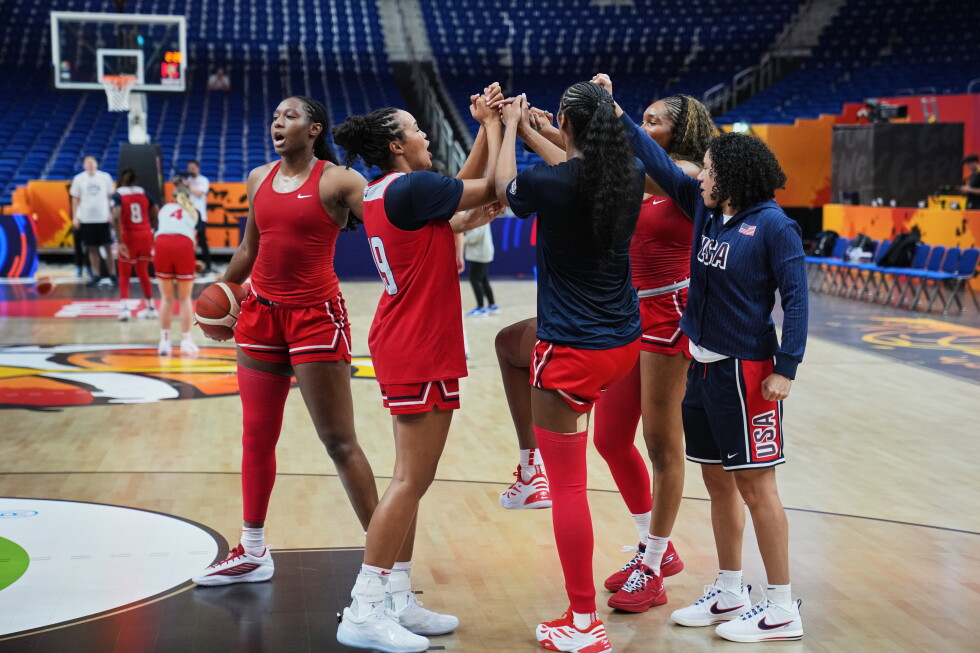
The 2026 FIBA Women’s World Cup is set to tip off this Friday in Berlin, bringing together 16 of the world’s top national women’s basketball teams for 10 days of elite competition that runs through September 13. Entering the tournament as the undisputed dynasty, the United States women’s national team is gunning for an unprecedented fifth consecutive World Cup championship, a feat that would further cement their status as the dominant force in international women’s basketball.
The U.S. enters the tournament riding a 30-game winning streak in FIBA World Cup play, a run that stretches all the way back to a 2006 semifinal loss to Russia. This year’s squad blends exciting young rookie talent and veteran championship experience in a unique mix that has basketball fans across the globe eager to see how the team performs. Making their senior World Cup debuts are NCAA standouts turned WNBA stars Caitlin Clark, Angel Reese, and Paige Bueckers, three of the most high-profile players in the women’s game today. Leading the team alongside the young core is veteran forward Breanna Stewart, one of the most decorated players in international basketball history, who already boasts three Olympic gold medals and three FIBA World Cup titles to her name.
While the U.S. remains the clear favorite to claim gold, multiple top-ranked nations are poised to challenge the American dynasty and end their decades-long winning streak. France, which narrowly lost to the U.S. by just a single point in the 2024 Paris Olympic gold medal game, enters the tournament hungry to avenge that near-miss and claim the first major global title in program history. Other legitimate contenders include Spain, Belgium, and China, the latter of which faced the U.S. in the 2022 World Cup final and pushed the Americans to a tight contest before falling.
This year’s tournament introduces an expanded format compared to the 2022 edition, which featured only 12 teams split across two groups. For 2026, 16 teams have been divided into four groups of four, with each group playing a full round-robin preliminary stage. Group winners earn an automatic bye to the quarterfinals, while the second and third-place finishers from each pool advance to a knockout qualification round, with the four winners of those matches filling out the quarterfinal bracket. All 36 tournament games will be hosted across two dedicated venues in Berlin, giving fans across Germany and the world a front-row seat to the action.
For viewers in the United States, every game of the tournament will be broadcast across TNT, truTV, and HBO Max, as part of the network’s multi-year media rights agreement with FIBA. To bolster studio coverage, TNT has brought on two former U.S. national team standouts, Tina Charles and Renee Montgomery, as game analysts. Charles, who helped Team USA claim three consecutive World Cup titles between 2010 and 2018, highlighted the unique pressure the American squad faces entering every major tournament.
“There’s definitely going to be challenges. You know, gold is earned. It’s not assumed,” Charles told the Associated Press in a pre-tournament interview. “When you put USA across your chest, there’s an expectation that you’re supposed to win, regardless of what your experience has been internationally. But I think people just don’t really understand how difficult that is. You’re playing the best players from around the world. You’re adjusting to different styles, you’re adjusting to the physicality of the game and how the referees will call these games, and everybody wants to be the team that beats you. You have that bullseye on your back.”
This year’s World Cup also marks a major step forward for FIBA’s investment in women’s international basketball, with the organization committing expanded resources to improve the player experience to match the standards of the men’s World Cup. For the first time in tournament history, every player from every participating team will be provided with a private hotel room, a change from past tournaments where players often shared accommodations. Additional upgrades include a dedicated on-site weightlifting facility and a private relaxation lounge for all teams. FIBA has also introduced a new financial assistance program to help member national federations prepare their squads for the tournament, a first for the women’s competition.
“We’re providing the same conditions as in the men’s World Cup,” FIBA Secretary General Andreas Zagklis told the Associated Press. “We are providing also for the first time financial assistance to our members to prepare their teams.”
With more than 50 current WNBA players competing in the tournament across all participating nations, the WNBA has paused its 2026 regular season from August 31 through September 16 to accommodate the event. This is the first time the FIBA Women’s World Cup has been scheduled during the WNBA regular season; past iterations were held after the conclusion of the WNBA Finals. The tournament will shift to a new late-November time slot when Japan hosts the 2030 edition of the event.