A coalition of 56 civil rights and advocacy organizations has launched a formal push to persuade congressional leaders to remove a contested policy provision from the upcoming 2027 National Defense Authorization Act (NDAA) that would deepen institutional military technology cooperation between the United States and Israel. The demand was delivered in a public letter addressed to the top leaders of both the House and Senate Armed Services Committees, a copy of which was reviewed by Reuters.
The provision, numbered Section 219 in the House-passed version of the annual defense policy bill and re-designated Section 1217 in the separate Senate version, would formalize a new permanent framework called the United States–Israel Defense Technology Cooperation Initiative. This framework would create formal structures for joint development ventures, technology licensing agreements, and co-production partnerships based on U.S. soil. The House version of the full NDAA advanced out of the lower chamber in July, and the legislation now awaits a full vote and reconciliation in the Senate.
Signatories to the critical letter include prominent global and domestic groups such as Amnesty International, the National Lawyers Guild, and a coalition of both Arab-American and Jewish-American advocacy organizations. In the text of the letter, the groups argue that expanding Israeli influence within the U.S. defense technology ecosystem carries severe risks, at a moment when U.S. strategic interests increasingly diverge from Israeli policy and public opinion across the U.S. has shifted sharply against unconditional military support for the Israeli government.
The letter explicitly condemns Israeli actions in the Gaza Strip and ongoing settler violence in the occupied West Bank, accusing Israel of widespread violations of international humanitarian law. The groups argue these documented violations should rule out any expansion of formal military cooperation between the two nations. The push to remove the provision comes as the existing 10-year memorandum of understanding granting Israel $3.8 billion in annual U.S. military aid is set to expire in 2028, opening up broader debates about the future shape of U.S. security assistance to Israel.
The push to strike the provision is not limited to advocacy groups: a bipartisan group of House lawmakers already attempted to remove the text via amendment earlier this year. The amendment, introduced by Republican Representative Thomas Massie of Kentucky and Democratic Representative Ro Khanna of California, failed to advance to a floor vote before the House passed its version of the NDAA.
The legislative process for the annual NDAA, which must pass to fund all Pentagon operations for the coming fiscal year, requires both chambers to reconcile their differing versions into a single compromise text before it can be sent to the president for signature or veto. The Senate version of the provision, introduced by Democratic Senator Kirsten Gillibrand of New York and Republican Senator Ted Budd of North Carolina in a bipartisan push, goes further than the House text: while the House version only requires the U.S. Secretary of Defense to appoint an executive agent to coordinate bilateral efforts, the Senate version mandates ongoing formal consultation with the Israeli Minister of Defense on cooperation efforts.
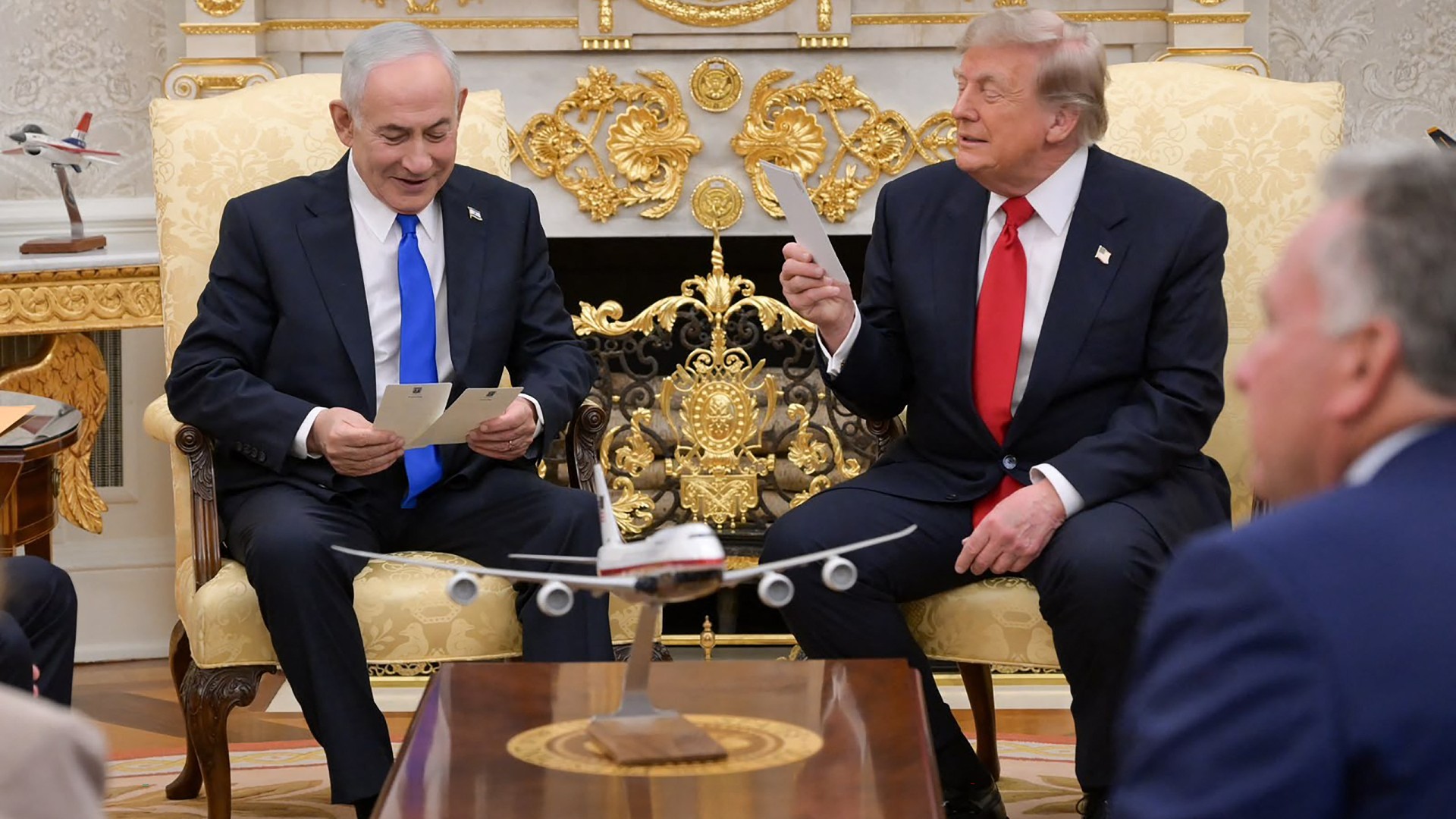
Israeli Prime Minister Benjamin Netanyahu has framed the initiative as a transformative shift that would move Israel beyond its status as a recipient of U.S. foreign aid to a full, equal strategic partner. Crucially, once codified, the permanent cooperation framework could not be unilaterally withdrawn by future U.S. presidents, locking in the bilateral integration for decades. While many elements of the close defense cooperation outlined in the provision already exist in practice through long-standing Pentagon agreements with Israel, the text would codify this collaboration into law and grant Israel formal input into U.S. defense and national security decision-making processes.
The provision was first introduced in the House by Texas Republican Representative Ronny Jackson, who served as former President Donald Trump’s White House physician during Trump’s first term. Jackson, who retained his senior Navy rank during the Biden administration after it was briefly lowered following allegations of inappropriate sexual comments and alcohol-related misconduct, saw the language adopted into the final House bill.
Under the terms of the proposed initiative, the U.S. Secretary of Defense would be required to formalize joint cooperation across a range of high-priority technology areas: counter-drone systems, missile and air defense, quantum computing, artificial intelligence, and cyber and electronic warfare. The explicit policy goal of the provision is to reduce Israel’s long-term dependence on direct U.S. foreign military aid. Within one year of the provision entering into force, the Secretary of Defense would be required to submit a public report to Congress detailing all activities carried out under the initiative and their ongoing assessment.
Beyond the 56 groups signing the Thursday letter, another Washington-based policy advocacy group, A New Policy — co-founded by former State Department whistleblower Josh Paul — has already publicly called for lawmakers to vote down the initiative, warning it poses direct risks to U.S. national security. In a detailed policy brief, the group argued the framework exposes sensitive U.S. military capabilities to heightened counterintelligence risks, normalizes the use of technologies developed in the context of occupation and civilian harm, puts U.S. defense companies at a competitive disadvantage relative to Israeli firms, and deepens U.S. legal and reputational exposure without any clear strategic justification, while also reducing transparency around ongoing U.S. military support for Israel.
Israel currently remains the largest single recipient of U.S. foreign military assistance, receiving billions of dollars annually in commitments that were first negotiated during the Obama and Biden administrations.