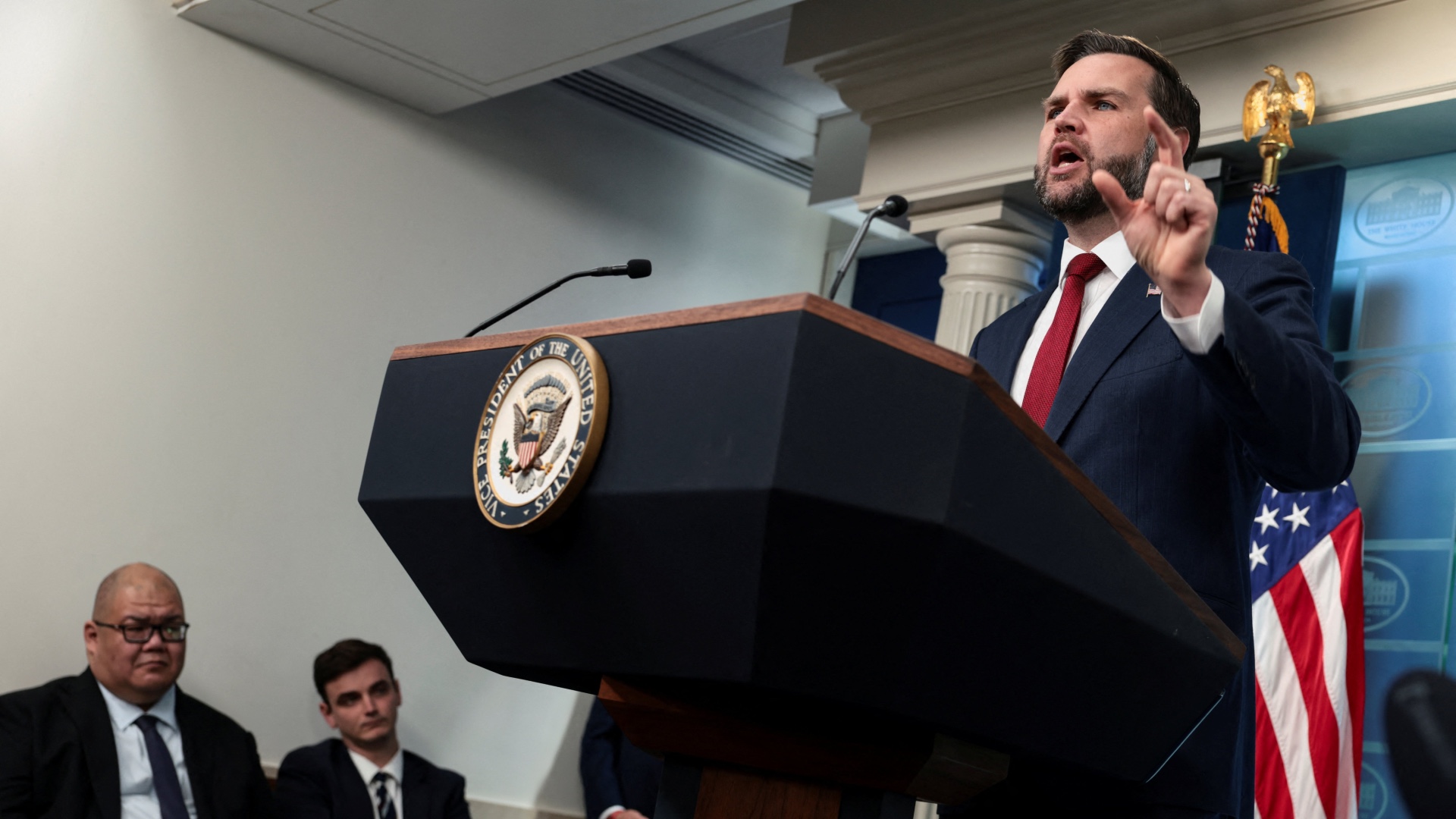
In a White House press briefing Thursday, U.S. Vice President JD Vance confirmed that American authorities are conducting a full investigation into reports that a U.S. military strike hit a wedding gathering on Iran’s southern coast earlier this week, killing at least four civilians and wounding more than a dozen others. The incident marks one of the most severe escalations in tensions between Washington and Tehran since the two sides signed a memorandum of understanding in Islamabad just over two months ago.
Vance, who previously led U.S. negotiation teams with Iran in both Islamabad and Lucerne, told reporters he had received regular updates on the ongoing investigation, while casting doubt on initial reporting from Iranian state media. “Iranian state media has not been a reliable source of information about what has unfolded in this conflict to date, so I am extremely skeptical of their claims,” he said. The vice president emphasized that the U.S. military has a long-standing policy of avoiding civilian targets in combat operations. “We never have targeted civilians, and we never will. Unfortunately, accidents do happen in conflict. When our military makes an error, we conduct full reviews to improve our procedures going forward, which is why this investigation is proceeding thoroughly,” he added.
During the briefing, Vance implicitly confirmed that no active diplomatic channels currently exist between Washington and Tehran, when he did not push back against reporters’ framing of the issue as occurring amid a total diplomatic breakdown. He did, however, push back on characterizations of the current situation as an open war. “Major combat operations are not ongoing right now, and they have not been for quite some time,” he said. “I would not call this a war. There is no active, widespread shooting at this moment.”
Despite this framing, Vance spent much of the nearly hour-long briefing justifying the continued deployment of U.S. military power in the Strait of Hormuz, a critical global energy chokepoint where tensions have spiked sharply since late February. Since U.S. and Israeli operations against Iran began on February 28, Iran has implemented a blockade of vessels linked to the U.S. and Israel in the waterway, its most potent leverage in the current standoff. In response, the U.S. Navy imposed a counter-blockade in April.
“Just yesterday, we moved 15 million barrels of oil through the Strait of Hormuz, even as Iran continues to fire on commercial shipping,” Vance noted, questioning the global community’s lack of action. “What has any other country done to address this? Why is the United States the only nation willing and able to guarantee that global energy markets remain supplied?” Minutes later, he offered a blunt answer to his own question: “We are the only country in the world that can maintain control over this critical waterway. If we do not step up, no one else will.”
Vance offered a blunt message to Tehran: “Stop acting like crazy people.” His remarks came hours after Iranian First Vice President Mohammad Reza Aref warned that the alleged strike has forced Tehran to rewrite its security and defense calculations, and that Iran will launch an “asymmetrical, multi-layered” response to the attack. Iran has a history of targeting U.S. regional assets across the Gulf, including in Kuwait, the UAE, Bahrain, and Jordan. In a post on X Thursday, Aref issued a stark warning to the U.S. economy: “Americans should begin stockpiling gasoline and fuel. Dark months await the American economy.”
Outlining U.S. strategy moving forward, Vance said Washington faced two clear choices. “We could withdraw entirely from the region, which would leave the entire world far worse off, with no guaranteed access to global oil and gas supplies. Or we can accept that Iran will continue attacking shipping, and take whatever steps are necessary to prevent their actions from triggering a global energy crisis,” he said. Vance added that Gulf nations have explicitly told Washington that a full permanent withdrawal from U.S. military bases in the region – which have expanded dramatically since the 1991 Gulf War – would be a catastrophic outcome for regional security. Even so, the future of forces evacuated from these bases earlier this year remains unclear; 18 U.S. military personnel have been killed in operations since the current conflict began.
Speaking at a separate panel hosted by Democracy in the Arab World Now (Dawn) Thursday, former U.S. Defense Intelligence Agency officer Harrison Mann said he does not expect U.S. forces to ever return to the Gulf bases they vacated earlier this year, including installations in Bahrain, Qatar, Kuwait, and eastern Saudi Arabia. “This conflict has turned those bases into an even greater political liability for the ruling monarchies of the region,” Mann explained. He added that the U.S. could eventually consolidate its regional military posture in Israel – a shift that would bring its own risks, as Iran-aligned groups like Lebanon’s Hezbollah maintain rocket capabilities that can reach all of Israel.
Vance confirmed Thursday that the White House has no set timeline for de-escalation, a notable shift from earlier administration pledges that gasoline prices would drop significantly by the first week of September. That promise has yet to materialize. He added that the U.S. is not planning its strategy around an expectation that Iran will act responsibly or negotiate in good faith. “Our approach is to use all tools at our disposal to meet two core goals: first, eliminate the threat of an Iranian nuclear program, and second, guarantee that global energy markets remain adequately supplied,” he said.
At the Dawn panel, Center for International Policy senior non-resident fellow Negar Mortazavi explained that Iran has shifted its strategy after what it views as a misstep from an earlier ceasefire. In June 2025, after Israel launched an attack on Iran, Tehran agreed to a ceasefire within 12 days, a move Mortazavi said Iran now sees as overly hasty. “They accepted the ceasefire too quickly, which is why the conflict reignited for a third time this past February,” she said. “Now, their doctrine has shifted: they have adopted a far more offensive, aggressive posture.”
Mortazavi added that Iran has also drawn lessons from its past dealings with President Donald Trump. “Publicly and privately, Iranian officials say that when they back down to Trump, he only escalates further. But when they stand their ground and escalate in response, he backs off – and they have multiple examples of this dynamic,” she said.
One of the core tools the U.S. is deploying against Iran is an expanded package of sanctions, unveiled last week by Treasury Secretary Scott Bessent. Dubbed “Operation Economic Outcast,” the new sanctions regime aims to cut off all of Iran’s economic enablers and asphyxiate the Iranian economy, according to Bessent, who added that Trump has been holding conversations with global allies to secure their participation in the effort. The administration has not yet named which countries have agreed to join, nor released a timeline for full implementation.
When asked Thursday which countries have stepped up to support the sanctions beyond the UAE, Vance said a broad coalition has formed, even if many participants prefer to keep their involvement private. “Turkey, Azerbaijan, Saudi Arabia, Qatar, much of the Gulf Arab coalition – we have support from countries all across the world. Many just aren’t willing to say so publicly,” he said. On the question of China, Iran’s closest global ally that has long helped Tehran evade U.S.-led financial restrictions, Vance struck a far more conciliatory tone. “We have held a number of conversations with the Chinese, and frankly, they have been responsive to several of our requests,” he said. “Say what you will about China, but they do not shoot at commercial shipping to advance their interests in international disputes. In that regard, they have proven far more responsible.”
Vance’s remarks come ahead of a planned state visit to the U.S. by Chinese President Xi Jinping, scheduled for later this month.