Party conference season stands as one of the most defining annual traditions in British political culture. Each year, major parties gather their grassroots activists, refine their policy platforms and public visions, and work hard to project an image of energy, unity and forward momentum to the voting public they hope to govern after the next election.
This core goal of projecting democratic openness is exactly why the long-standing convention of granting press access to party conferences emerged. By tradition, any national political party grants entry to accredited working journalists, even those that have previously published critical or unfavorable coverage of the party’s actions, policies or leadership. This open access is widely understood as a tangible demonstration of a party’s commitment to free speech, open debate and public scrutiny – the foundational pillars of a functioning democratic system.
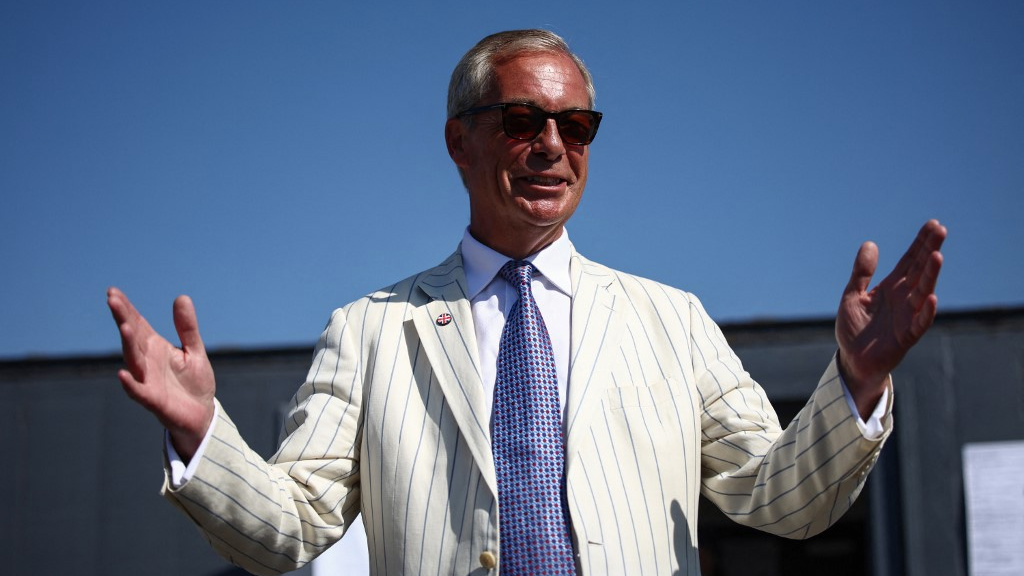
But this year, one leading British party is breaking sharply from that convention: Reform UK, the right-wing populist party led by Nigel Farage. Currently sitting second in national opinion polls, and widely viewed as a credible contender to enter government after the next general election, Reform UK is set to hold its 2026 national conference in Birmingham from Thursday to Saturday this week. What was supposed to be a routine event, however, has been overshadowed by a chaotic and controversial back-and-forth over press accreditation that has left multiple senior journalists locked out – and sparked fierce criticism of the party’s commitment to democratic openness.
The bizarre experience of Middle East Eye’s UK Political Correspondent lays bare the chaos unfolding around Reform UK’s press policies. The correspondent, who has covered the party’s 2025 conference alongside events for Labour, the Liberal Democrats and the Greens without issue, first applied for accreditation for the 2026 conference all the way back in July. On Tuesday evening, days before the conference was set to kick off, the reporter received a formal rejection: “Unfortunately, on this occasion, your application has been unsuccessful.” Accepting the outcome, the correspondent canceled pre-booked hotel accommodations and train travel to Birmingham.
Less than 24 hours later, a completely unexpected second email arrived from Reform UK’s press team. This message confirmed the reporter’s media pass, extended a welcome to the conference, and included a full schedule of events. Left uncertain whether the first rejection was a mistake or the party had reversed course, the correspondent described the situation as being a “Schrodinger’s Reporter” – simultaneously accepted and rejected. Cautiously optimistic, the reporter rebooked the hotel and train tickets, choosing refundable options to hedge against further changes.
Just two hours after that second confirmation, a third email landed in the inbox. This message carried a far firmer tone, stating simply: “Unfortunately, you do not meet the criteria and your application has been rejected.” When the correspondent reached out to Reform UK to ask what specific criteria had not been met, the party sent a polite reply that did not answer the question – instead blaming the second confirmation on a technical error.
This confusing, whiplash-inducing experience was not unique to the Middle East Eye correspondent. Prominent political broadcaster and journalist Michael Crick also revealed on social media platform X that he had received identical conflicting accreditation emails, quipping: “Clearly Reform are in brilliant shape to run the country. Maybe they’re worried I might talk to party members.” Further reporting confirmed that Guardian City editor Anna Isaac and investigative journalist Peter Geoghegan have also been blocked from accessing the event, and multiple outlets report that many more accredited journalists have been similarly rejected without clear explanation.
While Reform UK has not publicly stated a reason for the correspondent’s rejection, it is notable that the reporter has previously published reporting linking Reform UK to close political and financial ties with the United Arab Emirates. Critics of the party have already seized on the accreditation chaos to condemn Reform UK for showing a fundamental disregard for long-standing British democratic norms, arguing that the party’s behavior is particularly alarming given its current standing in national polls. As things stand, with the conference set to begin in just days, the locked-out journalists are still waiting for any clear explanation from Reform UK for their exclusion. For his part, the Middle East Eye correspondent ends on a note of dry humor: there is always a chance a fourth email could arrive tomorrow, reversing the rejection once again.