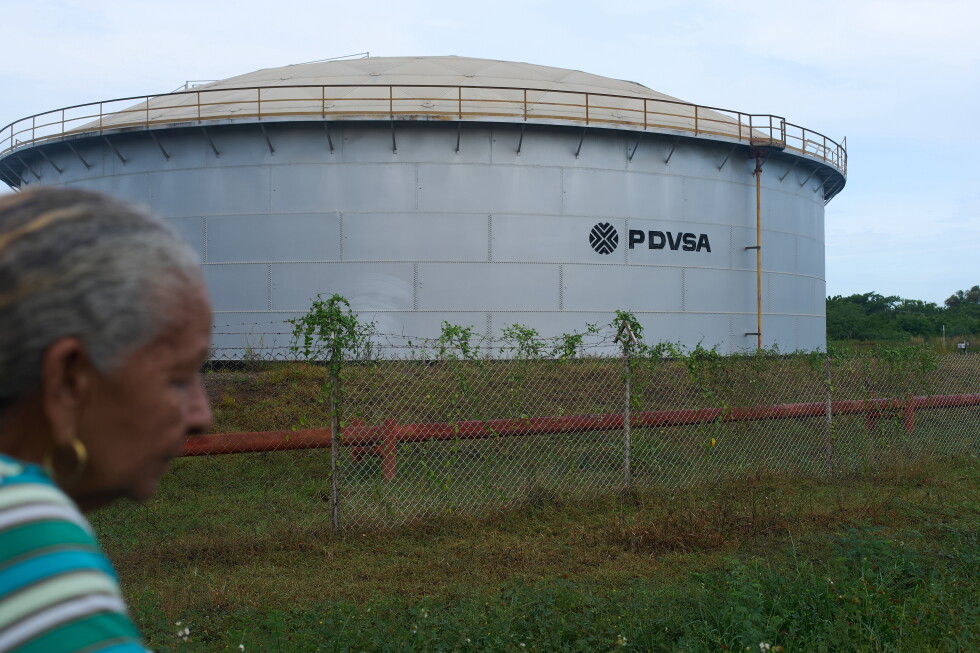
NEW YORK — U.S. energy giant Chevron has officially announced a major expansion of its operations in Venezuela, moving forward just days after former U.S. President Donald Trump unveiled a high-stakes framework agreement to develop the Latin American nation’s massive untapped oil reserves that grants the U.S. Pentagon a share of project profits.
In a public statement released Wednesday, Chevron confirmed it has been allocated additional exploration and production acreage in the Orinoco Belt, a heavy crude-rich region where the company has maintained active operations for decades. Under the new joint venture agreement with Venezuelan partners, the firm plans to inject more than $7 billion in capital investment over the next five years. Once the expansion is fully completed by 2026, the company’s daily production in the country will more than double, reaching approximately 600,000 barrels of crude per day.
“Chevron’s footprint in Venezuela stretches back more than a century, and our expanded commitment here underscores our confidence in the country’s extraordinary resource potential and its ability to compete for long-term capital in our global portfolio,” said Chevron CEO Mike Wirth in the prepared remarks. “With revised commercial terms and access to new acreage, we are building out a position that will deliver attractive low-cost oil growth, bolster global energy security, and generate unique long-term shareholder value.”
Per the 2025 Annual Statistical Bulletin from the Organization of the Petroleum Exporting Countries (OPEC), Venezuela holds the world’s largest volume of proven crude oil reserves, totaling more than 303 billion barrels. Saudi Arabia, the global crude export leader, ranks a distant second with 267 billion barrels of proven reserves.
The official confirmation came one day after an unnamed U.S. official, speaking on background under White House ground rules for a press briefing, previewed the announcement and disclosed that Chevron executives and U.S. Energy Secretary Chris Wright planned to travel to Caracas on Wednesday to formally unveil the new investment package. As the second-largest oil company in the United States, Chevron is the only major U.S. energy firm that maintains a large-scale operational presence in Venezuela, with a history stretching back to 1923. The company currently operates three joint ventures in the country: Petroindependencia and Petropiar, which run extra-heavy crude projects in the Orinoco Oil Belt, and Petroboscan, based in Venezuela’s western Zulia State.
The expansion move aligns with the Trump administration’s broader energy strategy, which the White House formalized on Monday when it announced a partnership with North American Blue Energy Partners as part of the push to unlock Venezuela’s oil potential. Trump has prioritized reestablishing deep U.S. commercial ties to Venezuela’s oil sector since the capture of former Venezuelan President Nicolás Maduro, with his framing the move as a path to reduce U.S. reliance on crude imports from the Middle East. He has actively courted other major U.S. oil firms to enter the market, claiming Monday that “We have Exxon going in, we have Chevron going in. We have our big oil companies going in.”
The remark came despite Trump’s own comment in January that he was inclined to block ExxonMobil from entering Venezuela, after Exxon CEO Darren Woods publicly labeled the country “uninvestable.” A spokesperson for ExxonMobil clarified Tuesday that the company’s position on Venezuela has not changed, contradicting Trump’s claim that the firm was preparing to enter the market.
The sweeping new U.S.-Venezuela energy agreement has faced significant skepticism from industry analysts and legal experts. Many analysts note that Venezuela’s oil production infrastructure has fallen into severe disrepair after decades of underinvestment and mismanagement, and it will take many years to restore output to meaningful levels. Legal experts have also raised questions about whether acting Venezuelan President Delcy Rodríguez holds the legal authority to grant 100-year exploitation rights for 17 oil fields holding 65 billion barrels of reserves, and whether future administrations in either Caracas or Washington could move to overturn the agreement entirely.