As India grapples with soaring summer power demand driven by record-breaking heat, a striking contradiction has emerged at the heart of its clean energy transition: the world’s fastest-growing solar market is regularly forced to shut down working renewable capacity even when the nation desperately needs more electricity.
When temperatures peaked across the South Asian giant this year, extended air conditioner use through hotter nights pushed evening power grids to their limits. Yet behind the strain, data shows renewable energy providers were ordered to throttle output, as existing transmission networks lacked the capacity to safely absorb the excess clean electricity being generated. Over the last 15 months alone, India has curtailed nearly 11 terawatt-hours of solar generation, according to analysis from global energy think tank Ember and official government data. To put that volume in perspective, that wasted clean power is enough to supply roughly 10 million average households with electricity for a full year. The waste comes at a time when extreme heat and below-average monsoon rains have driven up demand nationwide, for both home cooling and agricultural groundwater pumping.
As the planet’s most populous country and one of the top global emitters of greenhouse gases, India has made rapid progress expanding renewable energy, particularly utility-scale solar, to decarbonize its power sector. It now boasts more than 300 gigawatts of installed clean energy capacity, accounting for over half of the nation’s total installed electricity capacity. Despite that milestone, coal still generates the majority of India’s electricity, and systemic bottlenecks prevent the country from utilizing all the clean power it can produce. Energy analysts say these bottlenecks represent the next major barrier to India’s goal of becoming a global leader in low-carbon energy growth.
The core barriers fall into three interconnected categories: insufficient long-distance transmission infrastructure, inadequate grid-scale energy storage, and the inflexibility of existing coal-fired power plants that dominate baseload supply. When solar generation peaks in bright midday afternoons, coal units cannot quickly ramp down output to make room for the excess clean power. Unlike natural gas or hydro facilities that can adjust output rapidly, coal plants are engineered for steady operation; ramping them down too quickly compromises operational efficiency, raises costs, and even raises risks of mechanical failure. Vinay Pabba, CEO of Hyderabad-based renewable energy developer Vibrant Energy, describes the challenge of adapting rigid coal infrastructure to variable renewable supply as “like asking an elephant to dance.”
Curtailment does more than waste carbon-free power: it creates direct financial losses for renewable energy developers, who only earn revenue for the electricity they actually deliver to the grid. Geographic concentration has worsened the problem too: nearly half of India’s total solar capacity is located in the western states of Gujarat and Rajasthan, leading to rapid transmission congestion when solar output hits its daily peak. “When solar peaks, usually in the afternoon, there is a limited pipe to evacuate it,” Pabba explained.
Without adequate storage to hold excess solar generation for peak evening demand, India also risks locking in continued reliance on fossil fuels even when cheap clean power is available. “Without enough storage, India risks keeping coal plants running even when cheap renewable power is available,” noted Vibhuti Garg, South Asia director for the Institute for Energy Economics and Financial Analysis.
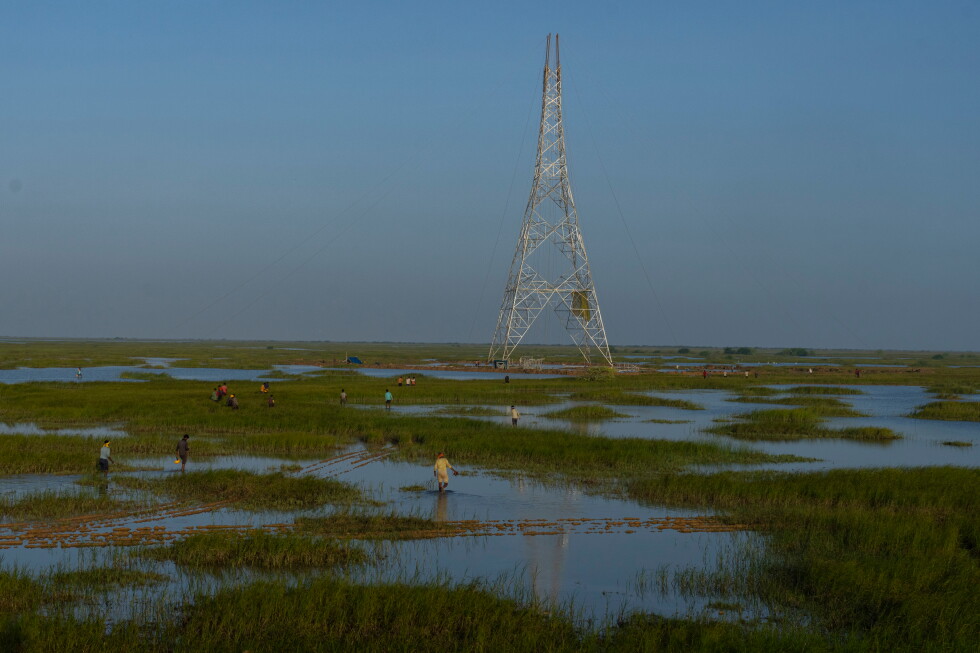
Infrastructure timelines have compounded the gap: utility-scale solar and wind farms can often be completed in as little as two years, but new long-distance transmission lines require a minimum of three years of planning, permitting and construction. Ember research finds that India has only hit roughly 80% of its annual transmission construction targets over the past five years, leaving a growing backlog of grid expansion that cannot keep pace with new renewable capacity.
Policy experts have proposed near-term fixes to ease the strain, including spreading new renewable development more evenly across different regions of India, and increasing investment in smaller distributed solar projects and onshore wind to balance output across the day. Even with these adjustments, analysts warn the challenge will grow more acute as India continues its rapid buildout of clean capacity.
India has set ambitious decarbonization targets: the country aims to reach 500 gigawatts of total clean energy capacity by 2030, and policymakers project that non-fossil fuels will account for nearly 70% of total installed power capacity by 2036. To meet these goals without continued waste and grid instability, energy leaders say expanded grid-scale energy storage will be a critical piece of the puzzle.
Batteries allow grid operators to store surplus solar electricity generated during sunny afternoon hours, then discharge that power after sunset when demand remains high but solar output drops to zero. A recent study from the University of California, Berkeley’s India Energy and Climate Center found that renewable power paired with battery storage can match the reliability of conventional coal-fired power, at a lower cost than building new coal plants. Despite that cost advantage, India’s current storage sector remains a fraction of the size needed to meet 2030 targets. As of July this year, India had only 3 gigawatts of operational battery storage and 7.4 gigawatts of pumped hydro storage, with national projected storage demand expected to hit 74 gigawatts by 2032.
“If we try to increase the solar installations without solving for energy storage, it is only going to lead to curtailment,” said Ankit Mittal, CEO of Indian battery storage firm Ingro Energy. Mittal noted that India is navigating an unprecedented, compressed energy transition, with decades-worth of transformation compressed into just a few years as power demand surges from growing electrification of transportation, industry and data centers.
Avinash Rao, CEO of leading Indian renewable developer Mahindra Susten, warned that delayed investment in high-capacity energy storage creates dual risks: it adds operational instability to the national grid and slows progress toward India’s national climate and energy transition targets. Ember analyst Neshwin Rodrigues noted that batteries have a key advantage over large transmission projects: they can be built far faster, making them one of the quickest solutions to ease immediate curtailment pressures.
Across the industry, stakeholders agree that the current crunch was largely unforeseen. Few expected the explosive growth in power demand that has come alongside rapid electrification of new sectors across India. “None of us saw it coming. If we had seen it coming, we would have probably planned our way around it,” Pabba said.