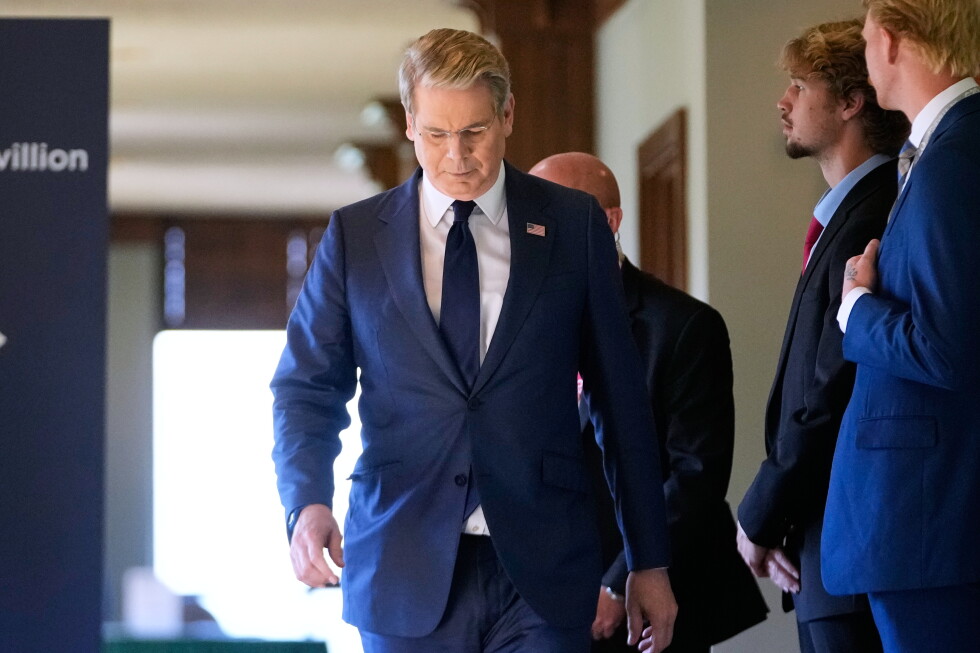
ASHEVILLE, North Carolina — Against a backdrop of simmering trade frictions and geopolitical division, U.S. Treasury Secretary Scott Bessent has launched a push to convince fellow G20 finance ministers to mirror the Trump administration’s aggressive approach to trade imbalance enforcement, centered on broad tariffs and targeted trade restrictions. Speaking on the sidelines of the three-day G20 finance minister summit, Bessent confirmed his early warning — issued at the start of Donald Trump’s second presidential term — that Washington’s new multi-layered “tariff wall” targeting Chinese goods would redirect massive volumes of Chinese exports to third-party markets across the globe has already come to pass.
“And unfortunately, I was right,” Bessent told assembled reporters. “The rest of the world probably needs to take a hard look at what they should be doing to protect their citizens’ jobs, their manufacturing base, so that everything they do doesn’t get offshored.”
The Trump administration’s unilateral tariff strategy has drawn widespread criticism from economists and cross-party political leaders alike, who argue the measures have driven up living costs for ordinary American consumers and disproportionately hurt U.S. trade allies rather than targeted economic competitors. Independent economic think tank the Tax Foundation has quantified this impact, finding that new tariffs rolled out by the administration across 2025 lifted the overall retail price of imported consumer goods by roughly 7 percent compared to pre-tariff price trends. Compounding this political and economic pushback, the U.S. Supreme Court ruled in February that the sweeping global tariffs Trump imposed using emergency presidential powers during his second term were unconstitutional, forcing the White House to overhaul its trade playbook.
Despite the court ruling, the administration is moving forward with new trade restrictions: it is currently weighing an additional 7.5 percent tariff on all Chinese imports, following a probe into alleged excess Chinese industrial capacity and what Washington calls problematic forced-labor regulations. Bessent confirmed he held one-on-one talks with his Chinese counterpart during the Asheville summit, though he declined to share any substantive details about the content or outcome of those discussions.
Speaking in a Tuesday interview with Fox Business commentator Larry Kudlow, who served as Trump’s top economic advisor during his first term, Bessent outlined the administration’s current posture toward Beijing: “I often say in our trade discussions with China that we do not want to pull apart from them, but we have to de-risk.” He also noted unexpected common ground between Washington and Beijing on a key Middle East security issue: “We have more in common with the Chinese on Iran than we disagree on. The Chinese agree Iran cannot have a nuclear weapon. The Chinese agree that there should be freedom of navigation in the Strait of Hormuz.”
Beyond trade tensions with China, Bessent addressed growing market jitters over soaring global debt levels. Global gross debt has surged to a historic $353 trillion, with U.S. national debt hitting a record $40 trillion as of August. Fears of a sustained sell-off in U.S. government bonds have rippled through global markets in recent weeks, but Bessent sought to downplay those concerns, telling reporters “I don’t think we’re in any kind of dire situation” when it comes to bond market stability. Bessent also identified China’s 2025 record trade surplus of $1.2 trillion, as well as what he frames as excessive Chinese economic regulation, as major headwinds to balanced global economic growth.
The summit has also been marked by geopolitical discord over Russia’s participation, as the attendance of Russian Finance Minister Anton Siluanov sparked widespread discomfort among Western delegations. Though Siluanov held a brief sideline meeting with Bessent on Monday, he was excluded from the G20 finance ministers’ traditional opening “family photo,” a visible snub reflecting ongoing international tensions over Russia’s full-scale invasion of Ukraine. Canadian Finance Minister François-Philippe Champagne told reporters the Russian minister’s presence “created a lot of discomfort around the table, not only from Canada, but from colleagues around the table. We have made sure our discomfort is being heard by colleagues with respect to who is in attendance at the meeting.”
Valdis Dombrovskis, European Commission’s economy commissioner, echoed that sentiment during a Tuesday press briefing, saying the international community should not move to normalize economic and diplomatic relations with Moscow at this time. Associated Press reporter Rob Gillies contributed reporting from Toronto.