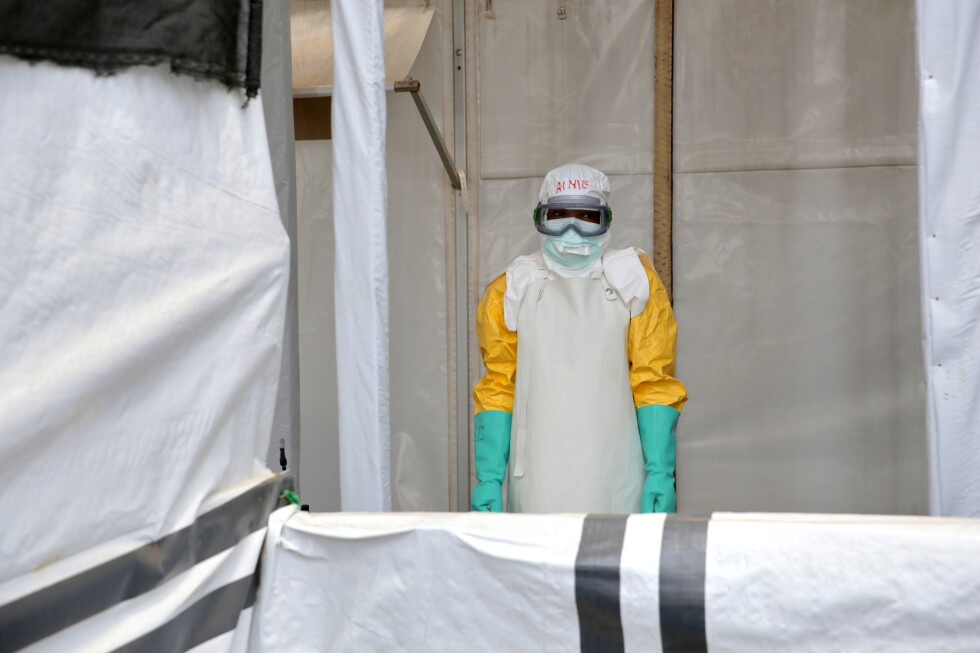
The Democratic Republic of Congo kicked off its new academic year nationwide this Tuesday, drawing widespread concern from parents and educators over ongoing Ebola transmission risks in the outbreak’s eastern epicenter. The decision to resume in-person classes comes as the country grapples with one of the most devastating Ebola outbreaks in recorded history, which has spread at an unprecedented pace across affected regions.
Latest official data released by the Congolese government confirms that as of Tuesday, the virus has infected more than 6,100 people and claimed 2,950 lives since the first detected cases emerged last May. Health researchers trace the current outbreak to the rare Bundibugyo Ebola strain, which experts confirm has spread faster than any previous outbreak on record. The virus has already reached more than 60 distinct health zones, and public health investigators believe it circulated undetected in local communities as early as February of this year. The World Health Organization has warned that current trends put the outbreak on pace to surpass the 2014–2016 West African Ebola epidemic, the deadliest occurrence of the disease to date.
Ituri province, located in eastern Congo, sits at the center of the outbreak. The provincial teachers’ union formally requested a delay to the start of the academic year to implement adequate safety measures, but the national government moved forward with the original schedule. Early reports show notably low student attendance at public schools across the province, and Ituri regional authorities have not responded to requests for details on planned classroom safety protocols.
Aimerance Vahweka, a parent based in Bunia, Ituri’s provincial capital, says the early resumption of classes caught her and many other local families off guard. She has chosen to keep her own child home for the time being, citing a visible lack of enhanced Ebola prevention measures in local schools. “I do not really see an increase in prevention measures,” Vahweka noted in an interview.
Some local education representatives, however, say that preparations are underway to protect students and staff. Private schools in Bunia have begun rolling out basic safety infrastructure, including non-contact infrared thermometers, alcohol-based hand sanitizer, and dedicated hand-washing stations. “We also raise student awareness about adhering to hygiene protocols, particularly regular handwashing and the use of hand sanitizer,” explained Etienne Ndjabu, a teacher at a Bunia private school.
Despite these small-scale efforts, international aid organizations warn that major systemic gaps remain. Many schools across affected regions lack consistent access to clean running water, a critical requirement for regular hand hygiene, and public funding for outbreak safety measures has fallen far short of needed targets. Greg Ramm, country director for Save the Children in Congo, noted that logistical barriers compound these issues, particularly in hard-to-reach rural areas. “There are also significant logistical challenges, particularly in remote areas, where the delivery of equipment and learning materials may be delayed,” Ramm explained.
Health data from the outbreak underscores the severity of the risk to young children. Available statistics show that children under the age of four face the highest case fatality rate of any age group, with roughly 60% of confirmed cases in this demographic resulting in death.
Ebola response efforts across eastern Congo have faced a cascade of additional barriers that have fueled the outbreak’s spread. Ongoing armed conflict between government forces and rebel groups in the region, repeated targeted attacks on frontline health workers, and large-scale population displacement have all made containment efforts far more difficult. In recent months, health workers in affected provinces have held multiple strikes over delayed hazard pay, which has further disrupted outbreak response operations.
While there is no universally approved, fully licensed treatment or vaccine for the current strain of the virus, Congolese health authorities have begun rolling out thousands of doses of the experimental Ervebo vaccine, which the WHO has confirmed may offer partial protection against infection for at-risk groups.