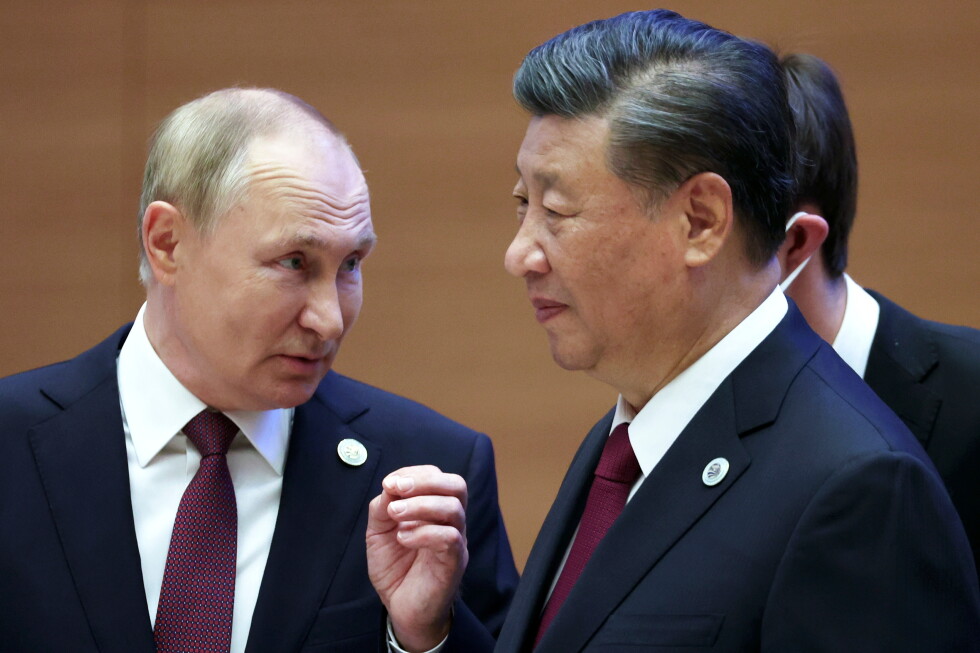
The capital of Kyrgyzstan, Bishkek, is this week hosting the high-profile Shanghai Cooperation Organization (SCO) summit, which has drawn heads of state from major global powers including China, Russia, and India, as observers frame the bloc as a growing counterweight to long-standing Western-dominated global governance structures.
The summit’s agenda includes formal plenary sessions and a packed slate of bilateral meetings on its sidelines. Among the most anticipated talks are a Monday meeting between Chinese President Xi Jinping and Russian President Vladimir Putin, followed by discussions between Putin and Iranian President Masoud Pezeshkian scheduled for Tuesday, the date of the bloc’s official main summit sessions.
For two key member states facing intense geopolitical friction with the West, the gathering offers a critical opportunity to deepen ties with other non-Western nations. Russia is now four and a half years into its full-scale invasion of Ukraine, while Iran has been engaged in open conflict with the U.S. and Israel for six months; both view the SCO platform as a space to strengthen economic and political alignment with partners across the Global East and Global South.
Founded in 2001 by China, Russia and four Central Asian republics as a regional security dialogue forum, the SCO has expanded dramatically in size and geopolitical clout over the past 24 years, even as its core institutional mandates and public profile remain relatively underdefined outside member states. Today, the bloc counts 10 full member states: China, Russia, India, Iran, Pakistan, Belarus, Kazakhstan, Kyrgyzstan, Tajikistan, and Uzbekistan, with dozens more countries holding formal dialogue partner status.
Alongside Russia, China has positioned the SCO as a viable alternative to Western-led multilateral blocs such as the G7, making active pushes over the past decade to expand the organization’s geographic reach and policy scope, while pledging billions in development and financial assistance to member and partner states. Last week, China’s Ministry of Foreign Affairs stated that the bloc has successfully “explored a new path for regional cooperation,” with Beijing consistently advancing a vision for a multipolar alternative global order with Moscow’s backing.
Despite the framing of the SCO as a unified counterweight to Western influence, analysts emphasize that the bloc remains far from a cohesive political or military alliance, with deep-seated divergent interests and long-running disagreements between many of its core members.
For India, which shares tense border relations with China and has a long-standing territorial and geopolitical rivalry with fellow member Pakistan, experts frame the summit as more an exercise in strategic signaling than a venue for groundbreaking substantive outcomes.
Dinakar Peri, a security studies fellow at Carnegie India, explained that the SCO’s real value for New Delhi lies in giving India a seat at the table in a region increasingly defined by great power competition. “While it may not entirely shape the agenda, it gives New Delhi a first-hand view of the region and allows it to hedge its position with others,” Peri noted, adding that membership lets India protect its core interests, track shifting geopolitical trends, and project itself as a reliable regional stakeholder.
Turkey, which has held SCO dialogue partner status since 2012, is also using the summit to advance its long-held goal of full membership. For Ankara, SCO membership fits into a long-running strategy of balanced foreign policy: it maintains long-standing institutional ties to the West as a NATO member, while seeking to expand its political and economic influence across Eurasia. President Recep Tayyip Erdogan has repeatedly reiterated his push for full permanent membership, a move that comes as Turkey’s decades-long bid to join the European Union remains effectively stalled, even as the country retains a close 1995 trade deal with the bloc. The meeting’s reporting was supported by contributions from correspondents Andrew Wilks in Istanbul, Huizhong Wu in Bangkok, and Aijaz Hussain in New Delhi.