A growing wave of initial public offerings (IPOs) is surging through China’s major financial hubs of Shanghai and Hong Kong, fueled by ravenous investor demand for artificial intelligence and advanced technology stocks, alongside a shifting preference for domestic listings over overseas exchanges. The trend is reshaping global capital markets, positioning China’s two leading exchanges as major global players in new share issuance this year.
The latest high-profile offering to hit the market is fast fashion and e-commerce giant Shein, a China-founded brand that is set to make its trading debut Tuesday on the Hong Kong Stock Exchange. The blockbuster IPO is projected to raise $1.7 billion, ranking among the city’s largest new share sales of 2026. Shein’s decision to list in Hong Kong came after it weighed options in New York and London, reflecting a broader industry shift toward domestic venues for Chinese firms.
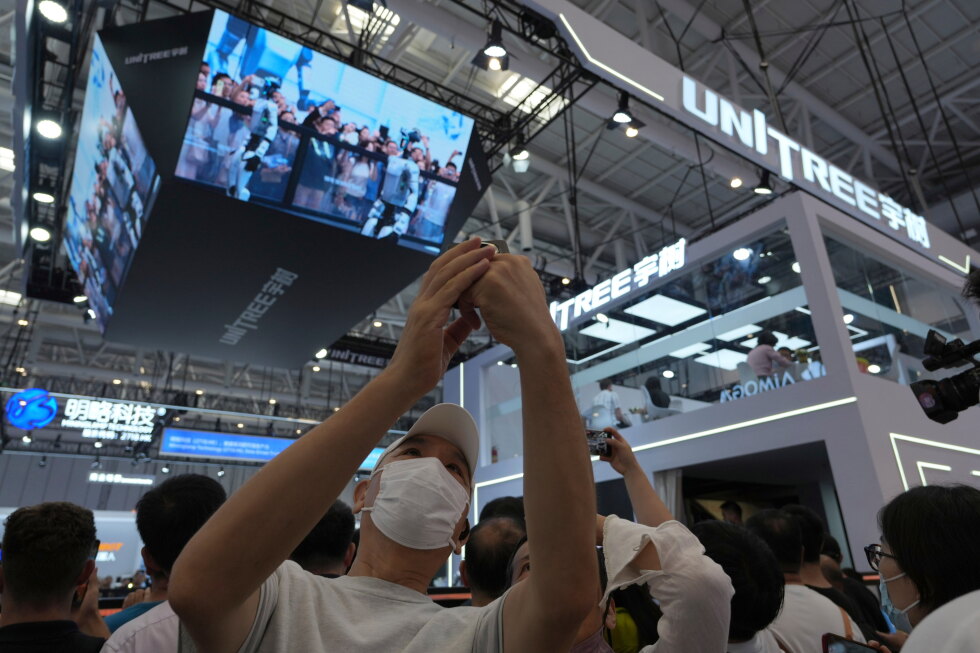
This year’s IPO boom has already been marked by a string of massive technology offerings. In July, CXMT, China’s top domestic memory chip manufacturer, secured more than $8.6 billion through an IPO on Shanghai’s Nasdaq-style STAR Market, marking the second-largest offering in the bourse’s history and the second-biggest IPO on mainland China this year. CXMT’s shares exploded 466% higher on their first day of trading, riding a wave of demand for AI-capable semiconductor manufacturing. Just one month later, leading Chinese humanoid robot developer Unitree followed suit with its own Shanghai debut, where shares soared 460% on opening day.
Industry analysts note that investor enthusiasm for AI and next-generation technology is the core engine driving the current market momentum. “The current IPO boom is powered by investor appetite for AI and robotics,” explained Ruiying Zhao, senior research analyst at S&P Global Market Intelligence, adding that retail investor activity makes up a large portion of trading volume on Shanghai’s exchange.
Perris Lee, head of APAC equity capital markets for ION Analytics, noted that CXMT’s landmark offering carries broader strategic implications for China’s technology ecosystem. CXMT, founded in 2016, saw revenue surge more than 700% year-over-year to 50.8 billion yuan (approximately $7.5 billion) in the first quarter of 2026, driven by skyrocketing demand for AI-grade memory chips. Lee said the successful IPO “placed China in a strategically significant position in tech manufacturing related to AI” and serves as clear evidence of the country’s progress toward its goal of technological self-sufficiency.
Data from financial data platform LSEG confirms the scale of this year’s IPO boom. Total proceeds from IPOs and secondary listings on the Shanghai and Hong Kong exchanges have already surpassed $54 billion so far in 2026, outstripping 2025’s full-year total of more than $46 billion. Combined, the two Chinese exchanges account for roughly 21% of global IPO proceeds this year, ranking second globally only behind the U.S.-based Nasdaq, which holds a 55% global share. Nasdaq’s leading position was boosted by SpaceX’s $75 billion mega-IPO in June, which cemented the U.S. exchange as the world’s largest IPO market for 2026. To access international capital while adhering to China’s restrictions on foreign investment in mainland exchanges, many Chinese firms pursue parallel listings in Hong Kong that are open to global investors.
A key factor driving the shift toward domestic listings is tightening regulatory scrutiny on both sides of the U.S.-China relationship in recent years. Chinese firms operating in strategically critical sectors such as advanced technology now face far higher barriers to listing on U.S. exchanges, pushing many to pursue offerings closer to home. Beyond regulatory hurdles, domestic IPOs also offer a faster path to going public, noted Howie Farn, capital markets partner at international law firm Freshfields.
Beyond semiconductors and robotics, other high-tech Chinese firms have also seen strong investor demand for their Hong Kong IPOs this year, including Apple supplier Luxshare Precision Industry and Zhongji Innolight, a leading manufacturer of optical transceivers for AI data centers. The pipeline of future offerings remains robust, with two more major Chinese robotics firms, AGIBOT and Deep Robotics, already planning IPOs in Shanghai or Hong Kong in the coming months.
Despite the widespread market enthusiasm, some industry observers warn of growing risks, including the potential for an AI investment bubble that has already shown early signs of correction. After record oversubscriptions and massive first-day gains, a number of newly listed tech firms have seen their share prices retreat sharply from debut-day peaks. As of last Friday, Unitree’s share price had dropped more than 40% from its all-time high set on opening day.
Zhao from S&P Global notes that the same valuation questions worrying U.S. AI investors are now taking hold in China. “The critical question remains: is the AI sentiment enough?” she said. “For a durable market cycle, investors will demand sustainable revenue, visible profit margins, and realistic valuations.”
The global AI investment frenzy has also diverted risk appetite away from non-tech IPOs like Shein. Jacob Cooke, CEO of WPIC Marketing + Technologies, explained that “the AI investment cycle is absorbing much of the risk appetite that would have otherwise flowed to a company like Shein.” Shein’s IPO values the company at roughly $27 billion, only a fraction of its peak valuation several years ago. That drop in valuation also partially stems from new trade restrictions imposed by the U.S. and EU that eliminate de minimis tax exemptions for small imported packages, cutting into Shein’s core cross-border business model.