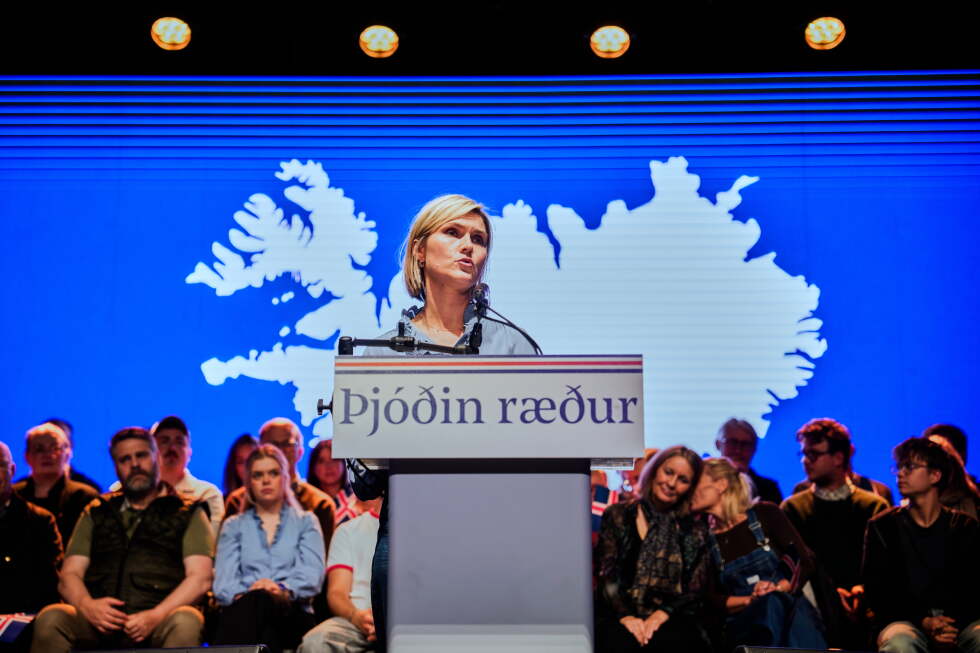
On Saturday, roughly 265,000 eligible Icelandic voters will cast their ballots in a historic non-binding referendum that could reshape the nation’s future relationship with the European Union, a debate long stalled and now reignited by shifting geopolitical currents in the North Atlantic. The question put to voters is straightforward: should Iceland restart accession negotiations with the EU that have been dormant for nearly a decade? A “no” vote would effectively take EU membership off the national agenda for at least a generation, while a “yes” result would open the door to formal talks with the European Commission covering 35 policy domains, from economic regulation to human rights protections.
What has turned this long-simmering domestic debate into an urgent geopolitical conversation is the lingering shadow of U.S. President Donald Trump’s repeated public interest in securing U.S. control over Greenland, the self-governing Danish territory located just 180 miles off Iceland’s coast. Though Trump has ruled out military force to take control of the island, his unwavering interest has sparked deep unease across Iceland: many voters now openly wonder if Iceland could be the next target of American expansion in the region, and whether full EU membership would act as a geopolitical bulwark against any future American ambition in the North Atlantic.
This shift in public mood prompted Iceland’s left-leaning coalition government, elected in 2024, to move the referendum up from its originally scheduled 2025 date. “We can’t really trust the U.S. anymore,” explained Hildur Knútsdóttir, an Icelandic horror fiction writer and vocal supporter of the “yes” campaign, echoing a common sentiment among pro-membership voters.
EU membership is not a new debate for Iceland. The country formally abandoned its last accession process in 2015, with opposition driven almost entirely by concerns over what EU rules would mean for Iceland’s most critical national industry: fishing. For centuries, the descendants of the Viking settlers who first populated the island have relied on the rich North Atlantic and Arctic waters surrounding Iceland, where massive catches of cod and haddock form not just the backbone of the national economy, but a core pillar of Icelandic national identity. Having won the 20th-century “Cod Wars” against the United Kingdom to defend its exclusive fishing rights, many Icelanders remain deeply protective of their sovereign control over these resources.
Under the EU’s Common Fisheries Policy, full membership would require opening Iceland’s territorial waters to fishing vessels from other EU member states, including Spain and the Netherlands, a prospect that has galvanized opposition across the political spectrum. The current government has pledged to negotiate a special exemption, potentially a full opt-out from the policy, if voters approve restarting talks.
Leading up to the vote, Icelandic Prime Minister Kristrún Frostadóttir has sought to reassure undecided voters that Saturday’s referendum is not a final decision on membership. If voters approve opening negotiations, any final accession agreement would be put to a second public referendum before Iceland formally joins the bloc, she clarified at a recent campaign rally. “This is not an election about membership and not about adaptation, as there will be another referendum on an accession agreement if the result is yes,” Frostadóttir said.
Proponents of membership argue that beyond geopolitical security, closer integration with the EU would help Iceland tackle cross-border challenges such as climate change, which poses an outsized threat to the island’s fragile arctic ecosystem. They note that Iceland already participates in the EU’s single market and the Schengen Area free-travel zone, so full membership would simply formalize existing ties while giving Iceland a voting seat at the table to shape EU policies that already impact the country.
Opponents counter that Iceland’s current arrangement is already optimal, granting the country all the economic benefits of European integration without forcing compromises to national sovereignty that come with full membership. “I think Iceland is better off outside of the EU, within the close collaboration with the EU,” former prime minister Katrín Jakobsdóttir told the Associated Press, capturing the core of the “no” campaign’s argument that the status quo strikes the perfect balance for the small Nordic nation.