As the United States prepares to complete its full troop withdrawal from Iraq by the end of September, a bombshell development has emerged: the Trump administration is poised to halt longstanding security assistance to Iraq’s Peshmerga, the Kurdish security force that stood as a core U.S. partner in defeating the Islamic State (IS) militant group. Four independent sources with direct knowledge of closed-door discussions have confirmed the plan, which has sparked widespread alarm among regional leaders and policy analysts.
In recent high-level meetings with leaders of Iraq’s semi-autonomous Kurdistan Regional Government (KRG), Department of Defense officials explicitly stated that the administration does not intend to renew the existing memorandum of understanding (MoU) that underpins U.S. security support for the 180,000-strong Peshmerga. The agreement is scheduled to expire on September 30 – the exact same date that the U.S. and its coalition partners will withdraw their final remaining troops from Iraq, formally closing the books on the decades-long international counter-IS campaign. The last active U.S. military base in Iraq, located in the Kurdistan regional capital Irbil, will also shutter next month following the troop pullout.
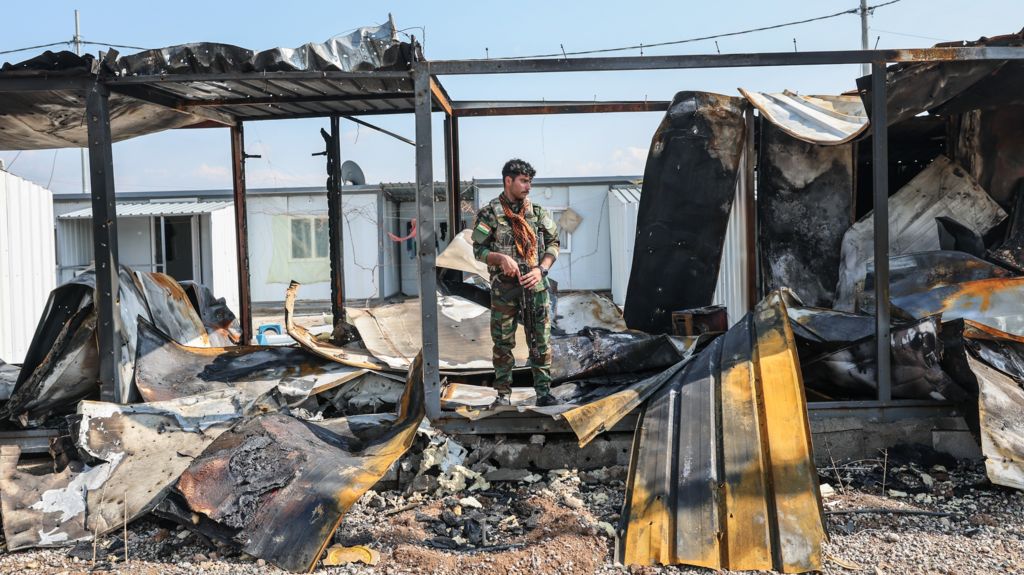
This planned aid cutoff comes at a moment of escalating aggression from Iran against the KRG. By late May of 2026, Iran and Iranian-aligned militias had already carried out 158 separate drone and missile strikes across Iraqi Kurdistan, according to the latest data compiled by the Washington-based Foundation for Defense of Democracies. Just days ago, an Iranian drone attack targeted Irbil itself, amplifying already urgent fears among Kurdish officials about the coming security gap.
For fiscal year 2026, the Peshmerga received $61 million through the Pentagon’s counter-IS program, funding that covered weapons procurement, military training, and troop stipends. In the administration’s 2027 budget request, the Pentagon proposed eliminating all of this security assistance, arguing that with the declared defeat of IS, the funds can be redirected to other priorities. That budget proposal remains stalled amid a broader partisan budget battle in Congress, but even so, Kurdish officials who held out hope for a short-term extension of the existing aid agreement have now been told no extension is planned. Multiple sources note that a final formal decision is still under review, and administration officials are reportedly exploring limited alternative forms of security support after the troop withdrawal, but no concrete plan for continued full funding has emerged.
The timing of this move aligns with President Trump’s long-stated second-term goal of reducing U.S. military entanglements across the Middle East. It also comes six months into the ongoing open conflict between the U.S. and Iran, a confrontation that shows no sign of de-escalation. What makes the development particularly striking is that it comes less than a year after the U.S. opened its largest diplomatic consulate in the world in Irbil, an $800 million facility that senior State Department officials hailed just last December as a lasting symbol of the close strategic partnership between Washington and the KRG.
Both the KRG and the U.S. State Department have declined to publicly comment on the confidential talks. A Pentagon spokesperson directed inquiries to a July statement from Defense Secretary Pete Hegseth following his meeting with newly elected Iraqi Prime Minister Ali al-Zaidi, which noted that “the United States, Iraq, and Coalition partners have achieved tremendous success in defeating ISIS and now the Iraqi Security Forces, including the Peshmerga and other Iraqi Kurdistan Region security forces, will lead the fight against terrorists in Iraq.”
Regional policy experts and former U.S. officials have widely condemned the planned aid cutoff, warning it carries severe strategic consequences for U.S. credibility in the Middle East. Analysts argue that ending support for the Peshmerga will not only create a dangerous power vacuum in northern Iraq but also send a clear message that the U.S. cannot be counted on to stand by its long-term regional allies.
Yerevan Saeed, director of the Global Kurdish Initiative for Peace at American University, emphasized the deep cost of abandoning a partner that sacrificed heavily for U.S. goals in the region. “The US would be cutting off the Kurds, who shed so much blood to help the Americans achieve their goals in Iraq and the wider Middle East,” Saeed said. “This is going to be a big win for Iran, China, and Russia if the Kurds are left so exposed.”
James Jeffrey, who led the global counter-IS coalition during Trump’s first term and served as a U.S. ambassador to Iraq and Turkey under the Obama administration, warned that cutting aid would repeat a catastrophic mistake of the past. “It’s money well spent, as we found out when the Islamic State rolled into northern Iraq,” Jeffrey said, referring to the 2011 U.S. full troop withdrawal that left a power vacuum and allowed IS to seize large swathes of northern Iraq.
Jason Campbell, a former U.S. defense official and Middle East expert at the Middle East Institute, noted that the withdrawal of U.S. troops will already reduce Iran’s ability to target American personnel in the region – but it will leave the Peshmerga far more exposed to Iranian aggression. “The Peshmerga have been the frontline in the US and international war with ISIS,” Campbell said. “If the US moves forward with this, it’ll make the Kurds perhaps the most vulnerable potential targets of Iran.”
The discussions on Peshmerga aid are part of broader negotiations between Washington, Baghdad, and the KRG tied to the upcoming troop withdrawal, which was agreed to in a 2024 bilateral security deal between the U.S. and Iraq. American combat troops initially withdrew from Iraq in 2011, but returned in 2014 after the vacuum created by the first withdrawal allowed IS to rise to power and seize large portions of northern Iraq and Syria. Today, experts estimate fewer than 1,000 U.S. troops remain in Iraq, down from a peak of 170,000 during the height of the Iraq War.
Leading the U.S. side in the recent security talks is Tom Barrack, a close Trump ally who serves as U.S. ambassador to Turkey and special envoy to Iraq and Syria. The administration has publicly stated it is open to a new bilateral security agreement with Baghdad, and the topic was discussed during al-Zaidi’s July visit to Washington, where the Iraqi prime minister met with President Trump, Defense Secretary Hegseth, and congressional leaders. During his visit, al-Zaidi framed the upcoming withdrawal as a historic milestone for Iraqi sovereignty: “October 1 will mark a new day in the trajectory of the Iraqi state, as Iraq will be free of any foreign military presence,” his office said in a statement.