On a quiet, charming small square in Brussels’ St Gilles district, just steps from the busy international Midi train station that welcomes daily passengers from London and Paris, what should be a bustling community gathering spot has been transformed into a frontline of escalating drug-related violence. Last Monday night, that transformation became impossible to ignore when drug gang gunshots ripped through Salvatore’s local pizzeria, turning a popular evening dining spot into a chilling crime scene.
Looking over the pockmarked walls still dotted with bullet holes days after the attack, Salvatore, the restaurant’s owner, recounted the terror of the incident: “We dropped to the floor. I had clients eating on the terrace with children. Look, we can see the bullet impacts everywhere.” Shocked by the audacity of the attack, the small business owner voiced the growing anger and fear spreading across the community: “Are we in an American gangster movie? This needs to stop.”
This shooting was not an isolated incident. It marked the third violent attack in this single neighborhood over just three days. The day before the pizzeria attack, a suspected drug dealer was shot in the leg just across the street from the restaurant. Even a week later, 70-year-old long-time resident Murielle still points out the faint dark stain of a bloodstain on the pavement where the shooting took place.
Murielle, who now sits daily with her dog Chéva near the site of the attack, says the neighborhood she has loved for years – a close-knit community she describes as “a little village inside the city” – has changed dramatically for the worse. She recalls that even when low-level drug dealing was common years ago, dealers treated local residents with respect: “Even the drug dealers used to be polite and decent. I would just tell them to go further away and they’d say, ‘Yes, ok mama!’ But that’s all changed now.”
Six months ago, the open-air drug trade in St Gilles intensified dramatically, according to residents. Just five minutes after arriving in the neighborhood, an on-scene reporter witnessed an open drug transaction: a buyer approached a waiting seller, exchanged a handshake, and walked away with contraband in hand. Crack cocaine use has skyrocketed among the most vulnerable, low-income residents of the area, and rival criminal gangs now fight deadly turf wars to control the most profitable dealing spots. Murielle says the trade has become so brazen that customers can regularly be seen lining up to purchase drugs.
The draw of enormous profits drives this escalating violence. According to Jurgen de Landsheer, chief of Brussels South Police, a prime drug dealing location in the city can net criminal gangs up to €50,000 (approximately $58,000) or more in a single day. Currently, police estimate there are more than 200 active open-air drug dealing points operating across Brussels.
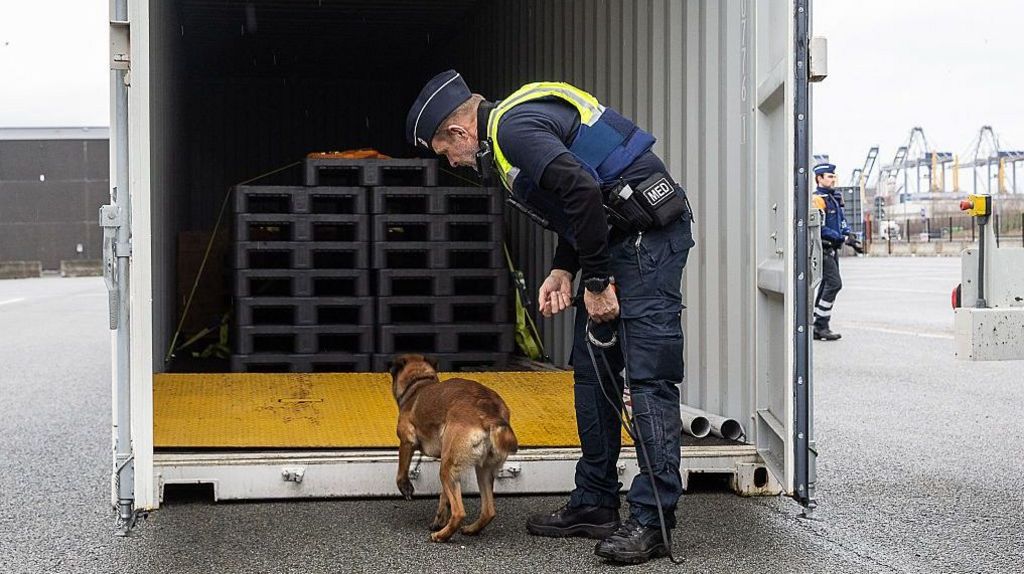
The surge in drug-related violence in Brussels mirrors a growing crisis across multiple major European cities, most notably the French port city of Marseille. The root of the crisis lies in the massive inflow of cocaine into Europe, with major continental ports acting as the primary entry points for drug cartels. Just 40 kilometers north of Brussels, the Belgian port of Antwerp has reported record-breaking cocaine seizures year after year in recent years, as smuggling groups flood the European market with the drug.
De Landsheer notes that Brussels gangs have increasingly adopted the brutal violent tactics used by criminal groups in Marseille, though he stresses Brussels has not yet reached the same extreme level of instability. “We don’t have no-go zones here in Brussels,” he says. “It’s not easy to go in some neighbourhoods, but we go everywhere. We don’t want to become like some neighbourhoods in Marseille, so we’ll do everything to stop it.”
Still, recent violence has reached a new, alarming milestone. Just last weekend, a local Brussels police station became a direct target for criminal gangs – the first time such an attack has occurred in the city. Surveillance footage captured two attackers riding a scooter, pulling up outside the station, and firing multiple rounds at the building’s entrance with a weapon matching the description of an AK-47 assault rifle before fleeing the scene.
The proliferation of cheap, easy access to heavy weaponry and the recruitment of young, disenfranchised people to carry out attacks has further amplified the danger. De Landsheer explains that criminal gangs pay inexperienced young people just a few hundred euros to carry out contracted attacks: “They get a weapon, AK-47 or other heavy weapon, and then they get a mission. To shoot a person in the leg, for example, or to try to kill somebody. And they get very little money for this.” Many of the young people arrested for these attacks are as young as 12 years old, according to the police chief, creating an extremely high risk for the broader community. “The biggest danger is a stray bullet,” he says, that can hit innocent bystanders regardless of their connection to the drug trade.
In response to the dramatic spike in shootings, Belgian federal authorities have announced urgent intervention. On Thursday, Belgium’s interior minister confirmed that an additional 40 uniformed police officers would be deployed to the high-risk St Gilles area to crack down on open drug dealing and gang violence.
Despite the increased police presence, de Landsheer acknowledges that increased law enforcement alone cannot solve the deep-rooted crisis. “There is no magic solution. We need prevention over repression,” he says. “We can do our part and be present in the street, but our society also needs to give a future to the young people, do something with them. That’s the social part.”
Back in the St Gilles neighborhood, the daily fear has already upended community life. “Nobody sleeps here at the moment,” Salvatore says. “People talk about moving out, houses are losing value.” Even amid the uncertainty, long-time resident Murielle says local residents refuse to be driven out by gang intimidation. “We will not be intimidated,” she says. “We’ll carry on living and we’ll keep on protecting our lovely neighbourhood.”