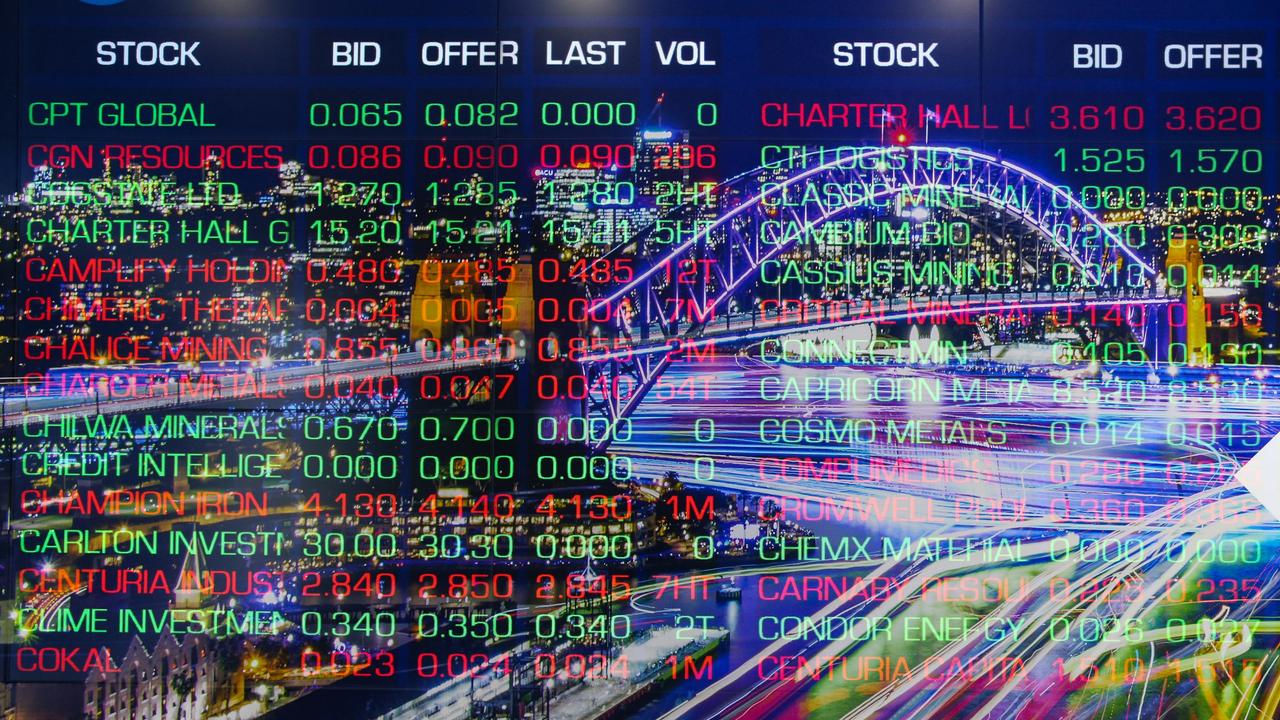
Australia’s benchmark share market faced steep downward pressure on Thursday, dragged lower by a combination of stickier-than-expected inflation, stronger-than-forecast household spending, and a wave of underwhelming corporate earnings results that have flipped market expectations for future interest rate moves. The benchmark S&P/ASX 200 closed the trading session down 89.60 points, a 0.98% drop that brought the index to 9038.20, while the broader All Ordinaries index fell 95.60 points, or 1.02%, to settle at 9243.20. Against this volatile backdrop, the Australian dollar strengthened against the U.S. dollar, hitting 71.83 US cents at market close. Just two of the ASX’s 11 industry sectors managed to finish the day in positive territory, with nine ending the session in negative territory.
The sell-off was led by the consumer discretionary, technology, and large mining sectors, with top retailers leading the declines after releasing weak full-year results. Retail conglomerate Wesfarmers, one of the biggest listed companies on the exchange, saw its share price slump 4.58% to $79.46 after reporting a 1.8% annual drop in net profit to $2.87 billion, where strong performance from its Bunnings and Kmart divisions was offset by lackluster earnings from Officeworks. Rival electronics retailer JB Hi-Fi fell 4.48% to $66.02, and furniture retailer Harvey Norman dropped 2.17% to $4.50.
In the technology sector, major listed software firms also posted broad losses. Accounting software leader Xero fell 2.60% to $81.73, logistics tech firm WiseTech Global dropped 3.28% to $39.55, and enterprise software provider Technology One fell 2.74% to $31.64. For large iron ore producers, results were mixed: BHP fell 1.48% to $66.40 and Rio Tinto slipped 0.52% to $178.70, while Fortescue Metals bucked the downtrend to gain 0.85% to $17.70. A small number of stocks outperformed, most notably airline giant Qantas, which saw its share price jump 4.77% to $9.66 despite reporting a 13.1% annual drop in net profit to $2.06 billion, a $330 million decline driven largely by a $420 million hit from surging jet fuel costs. Corporate Travel Management, meanwhile, announced it would refund $191 million to customers and set aside an additional $55 million for remediation for three major clients, as the firm narrowly avoided being delisted by posting a full-year net loss of $346.7 million, dragged down by goodwill impairments.
The market downturn was triggered largely by fresh economic data released earlier this week that has reinforced expectations that the Reserve Bank of Australia (RBA) may need to implement one more interest rate hike to bring persistent inflation under control. Data from the Australian Bureau of Statistics (ABS) released Wednesday showed that headline annual inflation fell to 3.5% in July, down from 3.8% in June, but the figure still came in hotter than economists had forecast. The RBA’s preferred trimmed mean inflation measure, which strips out volatile price movements to track underlying inflation, held steady at 3.6% – matching the previous month’s reading and defying expectations for a small decline.
Compounding the inflationary pressure, ABS data released Thursday showed household spending rose a stronger-than-expected 1.1% in July, signaling that consumer demand remains resilient enough to keep upward pressure on prices. As a result of the new data, money markets are now pricing a 50% chance that the RBA will raise its official cash rate by 25 basis points to 4.6% when its Monetary Policy Board meets on September 29. Three of Australia’s four major banks have now updated their forecasts to predict a rate hike before the end of 2024, with NAB chief economist Sally Auld reversing her earlier call for rates to hold steady to predict a September hike.
“July CPI data showed inflation running hotter than the RBA expected in early August, and the RBA has repeatedly signalled in recent weeks that the Monetary Policy Board would act if upside risks to inflation were realised,” Auld noted, adding that “the risk is biased towards an additional hike in November, especially if activity data shows resilience in coming months.” Westpac remains the only major bank that has not updated its rate forecast to reflect the new inflation and spending data.