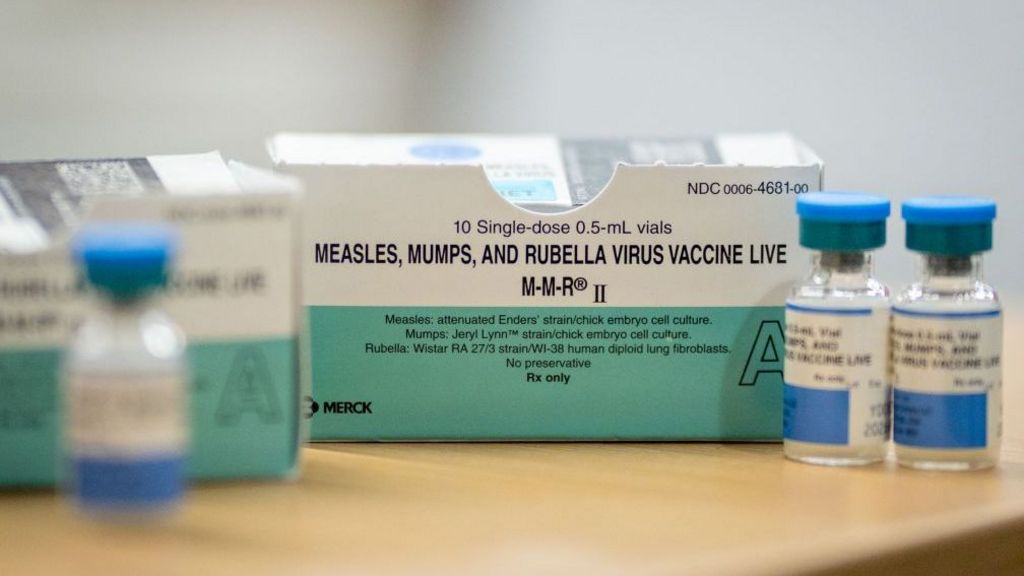
The United States is facing its most severe measles outbreak in three and a half decades, with two unvaccinated individuals in Pennsylvania becoming the latest fatalities of the highly contagious viral disease, state health officials have confirmed.
As of the eighth month of 2026, the Centers for Disease Control and Prevention has recorded 2,777 confirmed measles cases across the country, a figure that already surpasses 2025’s total of 2,289 cases — the previous high for decades. This growing public health crisis is rooted in years of rising vaccine hesitancy that has pushed childhood immunization rates below the threshold needed for effective herd protection.
In Lancaster County, the location of the two recent deaths, just 85% of kindergarten-age children have received the measles, mumps, and rubella (MMR) vaccine. That rate falls far short of the 95% herd immunity benchmark required to slow transmission and shield immunocompromised community members who cannot receive the vaccine themselves. This is not the first deadly measles incident in recent years: in 2025, two unvaccinated children in Texas died during an outbreak that infected more than 1,000 people, most of them under 18. So far in 2026, Pennsylvania alone has logged 393 confirmed cases.
Pennsylvania Secretary of Health Debra Bogen extended condolences to the families of the deceased in an official statement, noting that decades of near-elimination have left many Americans unaware of how dangerous the virus can be. “Because measles was largely eliminated in the Commonwealth for more than three decades, people are not familiar with this disease and don’t fully understand the potential severity of the illness,” Bogen said. She reaffirmed that the standard two-dose MMR vaccine regimen, recommended for all children between 1 and 6 years old, remains the most effective defense against measles, with clinical data showing it is 97% effective at preventing infection. State health officials have not released any additional details about the identities of the two people who died to protect family privacy.
The accelerating outbreak has unfolded alongside controversial shifts in federal vaccine policy led by the Trump administration. Earlier this month, former President Donald Trump signed an executive order calling for reduced childhood vaccination volumes and splitting the combined MMR vaccine into three separate individual doses. Public health experts across the country have warned that the order will spread unnecessary confusion about a vaccine that has been proven safe and effective for more than half a century, and will create additional costs for healthcare providers and families.
The order is the latest policy change from Health Secretary Robert F. Kennedy Jr., a prominent vaccine skeptic who has led a widespread overhaul of national vaccine policies and childhood immunization schedules over the past year. Most of Kennedy’s proposed changes were already blocked by a federal judge earlier in 2026. Kennedy has sent inconsistent public messages about the MMR vaccine: he has occasionally issued weak endorsements of the shot while repeatedly sharing unsubstantiated, debunked claims about its safety.
By the end of 2026, an international public health panel will review whether the United States will lose its measles elimination status, a designation it has held for nearly two decades. Canada lost this status in 2025 amid its own rising outbreak driven by low vaccination rates, and current trends put the United States on track to follow suit.