In a sharp escalation of cross-Pacific tensions ahead of a high-stakes bilateral leadership meeting, China issued a formal warning Tuesday that it will respond with reciprocal measures if the United States extends its Iran-focused sanctions campaign to target Chinese enterprises. The diplomatic alert comes one day after U.S. Treasury Secretary Scott Bessent unveiled a new round of penalties designed to further isolate Iran, threatening any nations maintaining trade ties with Tehran with expulsion from the U.S. dollar-centered global financial system.
According to reporting from the Financial Times, Chinese officials have explicitly cautioned against sweeping expansions of secondary sanctions to Chinese businesses, with a foreign ministry spokesperson confirming that China will enact “all necessary measures” to safeguard its national and commercial interests. The spokesperson reaffirmed China’s longstanding stance opposing unilateral sanctions implemented without formal authorization from the United Nations Security Council, and urged all parties to de-escalate tensions and restart diplomatic negotiations to resolve the ongoing U.S.-Iran conflict.
The latest U.S. sanctions package targets 60 individuals, corporate entities and vessels, including a small number of entities based in mainland China and Hong Kong. Notably, the measures stopped short of penalizing major Chinese banks that have long been suspected of facilitating trade in Iranian crude oil. When pressed for details on potential future sanctions against large Chinese financial institutions Monday, Bessent stated that no entity is immune from U.S. penalties, though he declined to name specific countries, institutions, or a timeline for potential additional action.
The prospect of broad sanctions on major Chinese companies represents an especially sensitive flashpoint for bilateral relations. For years, China has been the world’s largest purchaser of Iranian crude oil, purchasing approximately 90 percent of Iran’s total oil exports. Most of these purchases flow through smaller independent Chinese refiners widely known as “teapots,” while large state-owned Chinese refiners have largely avoided trading in sanctioned Iranian crude. Even so, Iranian oil shipments to China have dropped dramatically since the U.S. reimposed its naval blockade of Iranian ports in mid-July.
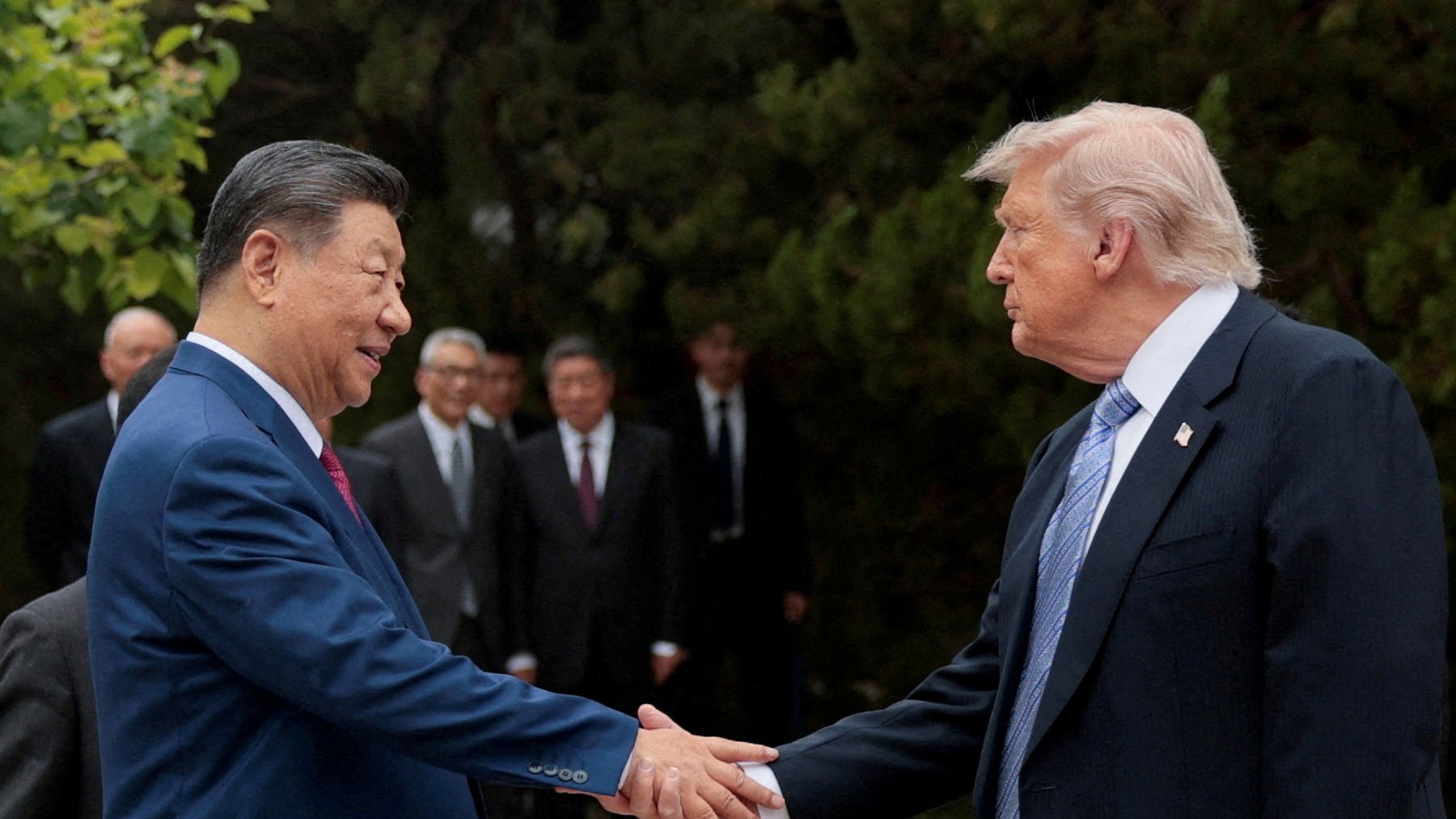
A full-scale expansion of sanctions against Chinese entities comes at a particularly precarious moment for U.S.-China relations, with just weeks remaining until the expected meeting between U.S. President Donald Trump and Chinese President Xi Jinping in Washington. The two leaders are scheduled to discuss the fragile long-term trade truce the two sides reached last year. To prepare for potential escalations, Beijing has already built out an extensive legal framework that enables it to retaliate against foreign sanctions that harm Chinese companies.
For the U.S., the risks of escalating this dispute are substantial. China holds a dominant market share in the global supply of multiple critical minerals that are core inputs for U.S. manufacturing and high-tech industries. Past Chinese export restrictions have already demonstrated Beijing’s willingness to leverage its control over these critical supply chains as leverage during trade disputes.
Peking University international relations scholar Wang Dong told the Financial Times that it remains unclear whether Washington’s threat of expanded secondary sanctions is primarily a negotiating tactic to pressure Iran, or if it will eventually lead to broad penalties targeting Chinese entities. Even so, Wang confirmed that Beijing is prepared to defend its core economic interests if Chinese entities are targeted.
Beyond its direct trade ties with Iran, China is also working to prevent the wider U.S.-Iran conflict from disrupting global energy supplies across the Middle East. While Iranian crude remains important to China’s energy mix, Beijing also relies heavily on Saudi Arabia and Iraq for oil imports, meaning sustained disruption to shipping through the Strait of Hormuz poses broad economic risks for China. Provisional data from analytics firm Vortexa, cited by Reuters, shows that daily shipping traffic through the strait fell to around five million barrels on Monday, down from more than 20 million barrels before the latest escalation of the Iran conflict.
In recent diplomatic outreach, President Xi Jinping has held meetings with Jordan’s King Abdullah II, while Chinese Foreign Minister Wang Yi has held talks with his Kuwaiti counterpart, with regional conflicts topping the agenda for both discussions. Nanjing University international relations expert Zhu Feng told the FT that Beijing has no intention of being drawn directly into the U.S.-Iran conflict, but is growing increasingly concerned about the economic fallout from sustained disruption to shipping and trade in the Persian Gulf. Zhu added that Beijing has consistently encouraged Tehran to engage in ongoing diplomatic negotiations to resolve the standoff.