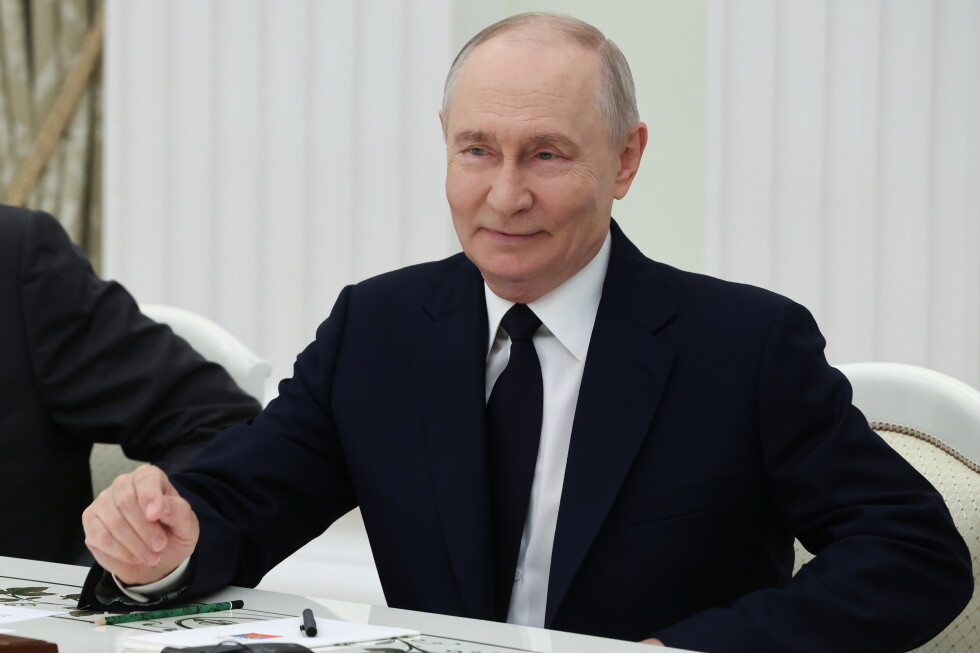
As the Russia-Ukraine war extends into its third year, a series of increasingly accurate deep strikes by Ukrainian long-range drones have forced Moscow to adopt extraordinary emergency measures. On Monday evening, Russian President Vladimir Putin signed a new decree granting the federal government temporary authority to take over management of critical infrastructure assets if private owners fail to meet two core requirements: implementing sufficient defensive measures against Ukrainian drone attacks and completing reconstruction work following strikes. The new order applies to key sectors across the Russian economy, including energy and fuel facilities, industrial hubs, communications networks, and transport and logistics sites. A wide range of commercial and energy assets have become prime targets for Ukrainian attacks in recent months, with strikes triggering widespread fuel shortages and disrupting core economic activity that has damaged the credibility of Russia’s ruling establishment amid mounting wartime pressure.
Contrary to early speculation about mass nationalization, Deputy Prime Minister Denis Manturov emphasized in an official statement that the new policy does not alter private ownership rights of affected enterprises. Instead, he framed it as a targeted intervention to resolve urgent national security challenges, noting that “this mechanism doesn’t imply widespread use — targeted, carefully considered decisions will be made at the highest level.”
Former Putin speechwriter and independent Russian political analyst Abbas Gallyamov offered a pragmatic interpretation of the decree’s core purpose, arguing it is a tactical ultimatum to push reluctant private infrastructure owners to invest in repairs and defense that they would otherwise avoid. Gallyamov noted on his Telegram channel that many key energy facilities, particularly oil refineries, have been struck three to five times by Ukrainian drones, leaving owners unwilling to sink billions of rubles into rebuilding infrastructure that could be destroyed again in short order. “If you don’t finance the restoration of the refineries, we’ll take them away from you,” Gallyamov summarized, framing the order as a pressure tactic rather than a broad seizure of private assets.
The announcement of the decree came just one day before Ukraine’s General Staff confirmed another successful strike on a key Russian energy asset: the Afipsky oil refinery in Russia’s southern Krasnodar region. Regional governor Veniamin Kondratyev confirmed a large fire broke out at the facility following the overnight attack, marking the latest in a string of high-profile strikes on Russian energy infrastructure that have exacerbated existing economic strains.
After more than two years of full-scale invasion, Russia faces growing budget pressures from the enormous cost of its war effort, forcing the Kremlin to raise taxes and expand domestic borrowing to keep its widening budget deficit under control. Some analysts note that seizure of damaged private assets could generate short-term windfall revenue for the state, though it would also impose new long-term financial burdens on federal authorities. A more immediate driver for the policy is the Kremlin’s need to share the growing cost of air defense across the private sector: Russia’s vast territory makes comprehensive defense of all critical infrastructure logistically impossible, so the state is pushing private owners to take responsibility for protecting their own assets.
The new decree is not an isolated policy, but part of a growing suite of emergency measures Moscow has rolled out to counter escalating deep strikes by Ukraine. Back in May, Russian lawmakers passed legislation requiring state financial institutions including the Central Bank and state-owned Sberbank to install air defense systems at their premises to fend off drone attacks. Russian business outlet RBC also reported that month that the government had established a formal mechanism allowing private companies to procure military-grade weapons and defensive equipment to protect their own facilities, a policy that top Russian officials have repeatedly urged businesses to adopt.
In additional moves to support businesses affected by recent strikes, the Russian Finance Ministry proposed new relief measures Monday for Wildberries, Russia’s largest e-commerce retailer, and thousands of independent sellers that operate through its platform. The company suffered massive losses after a Ukrainian drone strike hit one of its major warehouses, prompting the government to offer extended deadlines for tax and insurance payments to give the struggling firm and its sellers much-needed financial breathing room.
Speaking to Russian state television over the weekend, Putin acknowledged the growing threat of Ukrainian deep strikes and pledged that Moscow would strengthen and expand its national air defense capabilities. “We must and will improve the air defense system and enhance its capabilities,” Putin said, adding that improving interagency coordination between defense, law enforcement, and civilian authorities at all levels, and leveraging the resources of both state-run and private enterprises, would be critical to countering the drone threat. As strikes continue to disrupt economic activity across Russia, the new decree marks the Kremlin’s latest effort to enforce greater private sector accountability for wartime security amid escalating pressure on its home front.