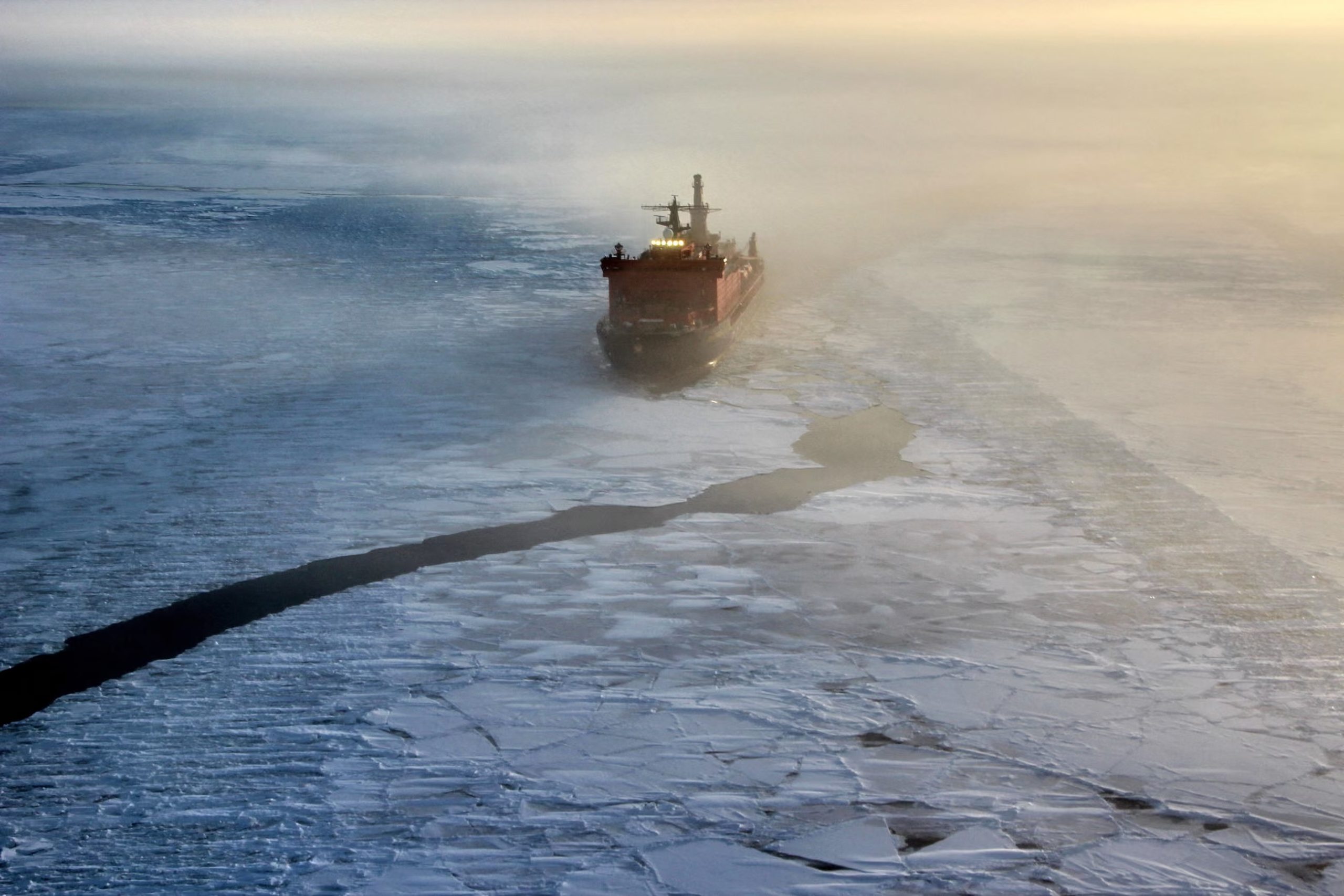
Against a backdrop of heightened shipping insecurity through the Red Sea and decades-old geopolitical and climate shifts, Chinese shipping company Sea Legend has made a landmark announcement: the launch of the first regular container shipping service connecting China and Europe via the Arctic Northern Sea Route. This move follows a successful 2025 trial voyage, where a container vessel completed the journey from China’s Ningbo-Zhoushan Port to the United Kingdom’s Felixstowe in just 20 days, a milestone that has drawn sharp attention from shipping and policy circles across the Western world.
Today’s growing interest in the Arctic route is directly tied to ongoing geopolitical instability in the Middle East. While ongoing tensions around Iran have not fully blocked traffic through the Suez Canal, they have drastically increased risk for commercial vessels transiting the Red Sea, disrupting the core trade artery connecting Europe and Asia. For carriers struggling with rising costs and uncertain delivery timelines, the Arctic route offers a compelling potential solution: it cuts total travel distance between the two continents by up to 40 percent, translating to lower fuel costs and faster delivery times. Yet major obstacles, both physical and geopolitical, continue to limit the route’s widespread adoption.
The dream of a navigable Northern Sea Route has captured the attention of global policymakers for more than a century. The first major test of its strategic value came during the 1904–1905 Russo-Japanese War, when Russia’s Baltic Fleet was forced to abandon plans to surprise Japanese forces via the icy Siberian Arctic waters. Instead, the fleet sailed thousands of miles around the Cape of Good Hope, across the Indian Ocean to East Asia, where it was ultimately destroyed by the Japanese Navy at the Battle of Tsushima Strait.
After the 1917 Russian Revolution, Soviet planners prioritized systematic surveys of Russia’s northern Arctic coast. Soviet leaders framed the route as critical to expanding industrial development across Russia’s far northern regions, and as Cold War tensions escalated after 1945, it became a key strategic asset for building out northern military infrastructure. It was not until 1987, as Cold War tensions began to ease, that Soviet leader Mikhail Gorbachev first proposed opening the passage to commercial traffic from foreign nations.
Shortly after Gorbachev’s announcement, the International Northern Sea Route Program—a collaborative research effort between Japanese, Norwegian, and Russian institutions—was launched to build the scientific and technical foundation for commercial shipping in the region. The program’s findings confirmed the route’s potential but also outlined severe physical and technical limitations: shallow waters in eastern sections of the route and persistent year-round ice imposed strict size limits on passing vessels. At the time, researchers calculated the maximum safe deadweight tonnage for vessels using the route was between 20,000 and 50,000 tons, far smaller than the 70,000 to 80,000-ton container ships that were being rolled out on major global trade routes by the late 1990s.
Over the past three decades, rapid climate change has dramatically altered the Arctic’s landscape. The region is warming at almost three times the global average rate, leading scientists to project that the Arctic Ocean could see its first completely ice-free summer as early as 2030. While this warming has triggered catastrophic harm for Arctic wildlife, coastal infrastructure, global climate systems, rising sea levels, and the traditional way of life for the 400,000 to 500,000 Indigenous people who call the region home, it has also drawn growing global interest to the newly accessible Northern Sea Route.
Several major East Asian economic powers have already integrated development of the route into their official Arctic policy frameworks, and all three—China, Japan, and South Korea—possess the domestic shipbuilding capacity to construct the heavy icebreakers that remain essential for Arctic navigation, a capability the United States has struggled to maintain in recent years following decades of declining domestic shipbuilding output. Earlier in 2026, South Korea passed sweeping legislation to redevelop its southern port of Busan as a major hub for Arctic shipping, and in mid-August announced plans to launch its own trial container transit of the route this September. The planned trial has sparked quiet concern among European diplomats, as it requires close coordination with Russian authorities to complete.
Of all non-Arctic nations, China has emerged as the most proactive in advancing development of the Northern Sea Route. For Beijing, the route offers a critical alternative to the congested, strategically vulnerable Malacca Strait, which currently handles roughly 80 percent of China’s imported oil and the vast majority of its overall trade volume. In 2018, China launched the Polar Silk Road initiative as part of its broader Belt and Road global infrastructure project. After decades of scattered trial transits by Chinese vessels, primarily between China and Russia, Sea Legend’s new regular service to Europe marks a key turning point from experimental voyages to established commercial operations.
Japan also views the Arctic route as a strategically important energy shortcut, with deep-water ports on Hokkaido and Honshu ideally positioned to serve as import hubs for Arctic liquefied natural gas. Still, Japan has adopted a far more cautious approach than its neighbors, shaped by its longstanding tense diplomatic relations with Russia.
Despite growing interest and climate-driven changes to the Arctic, multiple operational, economic, and geopolitical barriers still prevent the Northern Sea Route from becoming a mainstream alternative to conventional trade routes. Currently, the route remains only navigable during a narrow window in late summer, with ice conditions and weather varying dramatically from year to year. Vessels require reinforced hulls, specially trained crews, and official permits to transit, and Russian law mandates that all commercial vessels be escorted by Russian icebreakers through sections of the route.
Additionally, shipping insurers charge steep premium rates for voyages along the route, in large part because the region lacks sufficient emergency response infrastructure to address accidents or mechanical failures. While further Arctic warming may ease some operational constraints over time, it will not eliminate the region’s inherent natural hazards.
Geopolitics adds an additional layer of friction. Widespread Western sanctions and diplomatic tension with Russia have discouraged European shipping firms from engaging with Northern Sea Route development, leaving East Asian nations to lead the push for commercialization. For the foreseeable future, the Northern Sea Route remains far less a full replacement for the Suez Canal and far more a seasonal, high-stakes alternative—blocked as much by geopolitical divides as it once was by physical sea ice.