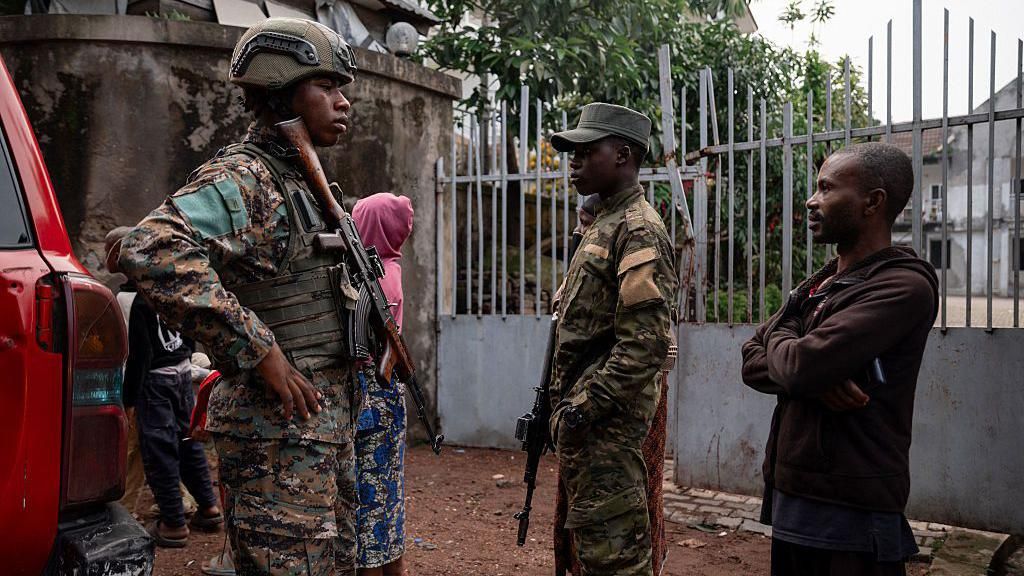
After five days of intensive closed-door negotiations in Switzerland, the government of the Democratic Republic of Congo (DRC) and the Rwanda-backed M23 rebel movement have reached a historic breakthrough: a formal roadmap to guide future peace negotiations aimed at ending decades of brutal conflict in eastern DRC. The joint agreement, announced publicly following the talks, commits both sides to pursue good-faith negotiations toward a lasting, comprehensive peace and durable conflict resolution, while establishing two new oversight bodies to monitor compliance with existing ceasefire terms.
The negotiated timeline builds on the U.S.-brokered Doha Framework Agreement signed by both parties in 2025, a deal that failed to stop escalating violence just months after it was finalized. Despite the optimistic step forward, core disagreements continue to divide the two sides: thorny issues including international sanctions on M23 leadership, the release of civilian and combatant detainees, and the scheduling of long-promised political reforms remain unresolved, casting a shadow over the implementation process.
The latest round of talks brought together a broad coalition of international and regional mediators, including representatives from Qatar, the United States, Togo, the African Union Commission, and host nation Switzerland. Per the joint statement released at the conclusion of negotiations, the new progress-review mechanism will be tasked with tracking compliance with all obligations outlined in the 2025 Doha framework, and addressing emerging implementation challenges as they arise.
Mediators and negotiating parties have agreed to a set of sequenced, time-bound steps for upcoming negotiations, with both sides committing to approach remaining disputes with flexibility and creative problem-solving to avoid a return to open conflict. A dedicated ceasefire monitoring mechanism has also been formalized, with its administrative secretariat already fully operational. The mechanism’s first on-the-ground verification mission is scheduled to launch this coming Monday in Minembwe, a conflict-battered region of South Kivu that has seen repeated outbreaks of fighting in recent months.
Even with repeated public commitments to a ceasefire over the past years, heavy fighting has persisted across both North and South Kivu provinces, with Kinshasa and M23 regularly trading accusations of ceasefire violations. The decades-long conflict in eastern DRC is deeply intertwined with long-running geopolitical tensions between DRC and its eastern neighbor Rwanda. Rwanda has repeatedly justified its involvement in the region by arguing that DRC has failed to disarm the Democratic Forces for the Liberation of Rwanda (FDLR), an armed opposition group that Kigali views as a direct threat to Rwandan national security.
In contrast, the DRC government denies providing any support to the FDLR, and has long presented concrete evidence that Rwanda provides direct military backing to M23, including supplying frontline troops and advanced weaponry to the rebel group. The conflict escalated dramatically in January 2025, when M23 forces launched a major offensive that seized control of large swathes of eastern DRC, including the major regional hub of Goma and two key civilian and military airports. Over the 30 years of sustained conflict in the region, an estimated tens of thousands of people have been killed, and more than hundreds of thousands of civilian residents have been forced to flee their homes, seeking safety in overcrowded displacement camps or neighboring countries.
Eastern DRC holds vast reserves of coltan and other critical minerals that are essential inputs for the global electronics and clean energy industries, making the stability of the region strategically important for global supply chains. Rwanda has repeatedly and publicly denied claims of backing M23, despite widespread documentary and on-the-ground evidence of its military involvement, and has consistently framed any cross-border military presence as a defensive measure to counter threats from anti-Rwandan armed groups operating from DRC territory.