With less than 48 hours remaining until a self-imposed deadline set by the United States, ongoing Canada-US trade negotiations are facing growing internal friction in Canada, as a high-profile provincial premier has publicly rejected proposed concessions and launched a scathing personal attack on US President Donald Trump.
Negotiating teams from both nations face a Friday night deadline to finalize a new preliminary trade agreement, or Washington will move forward with a new round of sweeping punitive tariffs on hundreds of billions of dollars worth of Canadian exports, ranging from industrial metals to finished consumer goods. Canadian Trade Minister Dominic LeBlanc emerged from a more than three-hour closed-door negotiating session with US Trade Representative Jamieson Greer on Thursday to tell reporters the two sides are now “very close” to reaching a tentative agreement, with a follow-up meeting scheduled for Friday morning.
Leaked details of the draft framework published by multiple Canadian and US outlets show the proposed compromise would cut existing US tariffs on Canadian steel and aluminum from 50% to 25%, and reduce tariffs on imported Canadian automobiles from 25% to 15% — a partial rollback rather than a full elimination of the levies imposed by the Trump administration. In exchange, Canada would be required to make two key concessions: reopening provincial liquor store shelves to US-made alcohol, and granting expanded market access to American dairy producers.
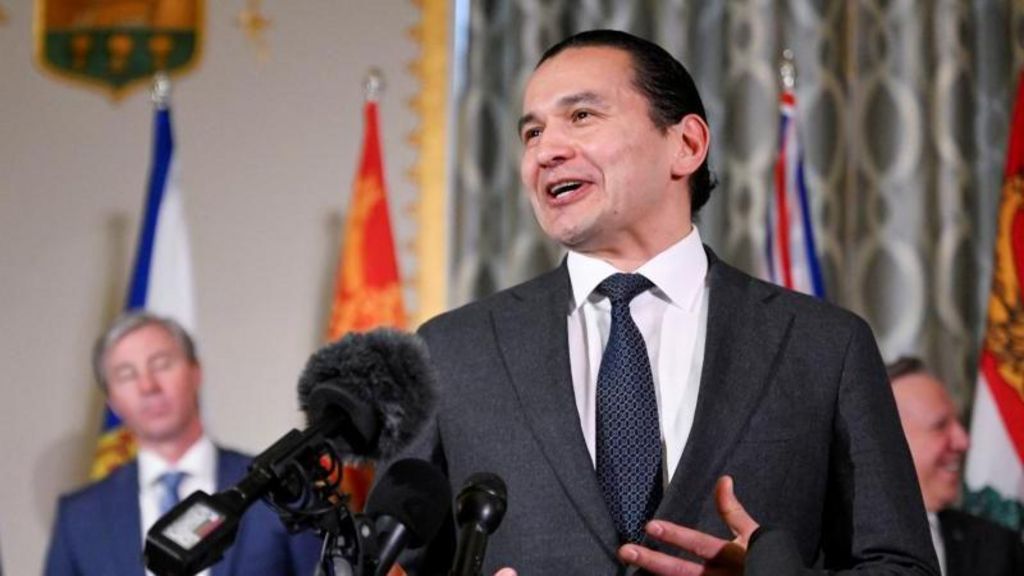
The agreement requires buy-in from Canada’s provincial premiers, who control alcohol retail sales regulations across most of the country, putting Prime Minister Mark Carney in a precarious position as he works to secure provincial support ahead of the deadline. Manitoba Premier Wab Kinew, the first provincial leader to break ranks publicly, has emerged as the most vocal opponent of the proposed compromise, calling on Ottawa to hold out for better terms rather than rushing to accept unfavorable terms.
Kinew did not limit his criticism to the trade deal itself, launching a personal attack on Trump, labeling the US president a “bad person” who is “erratic, irresponsible, and not to be trusted.” He questioned why Canada would surrender its key negotiating leverage by lifting restrictions on US alcohol sales to secure a partial tariff cut, arguing the country should fight for a better deal rather than make concessions to an untrustworthy counterpart. While Kinew said he would reluctantly comply with a national agreement for the broader good of Canada, he urged Canadian consumers to boycott any US alcohol that enters his province’s stores, saying “Let it sit on the shelf.”
Other provincial leaders have echoed Kinew’s caution, even as some have signaled they are willing to comply. Quebec Premier Christine Fréchette, whose province hosts Canada’s largest and most politically powerful dairy industry, said she is still reviewing the draft agreement’s potential impact on Quebec dairy farmers before committing to lift alcohol sales restrictions. Doug Ford, Premier of Canada’s most populous province Ontario, has so far declined to comment publicly on the draft deal. By contrast, premiers from Nova Scotia and Yukon have already said they are prepared to restore US alcohol sales to meet the deal’s terms.
Concerns over the proposed terms are not limited to provincial political leaders. Matthew Shoemaker, mayor of Sault Ste. Marie — the Ontario city home to Canada’s second-largest steel producer — told public broadcaster CBC that a deal locking in 25% tariffs on Canadian steel is “wouldn’t be something to celebrate.” He added, “I am worried with the news that’s coming out that we are not seeing a deal that will benefit our community at the very least.”
The fractured provincial response lays bare the political challenge facing Carney, who campaigned for prime minister on a promise to take a tough, “elbows-up” negotiating stance with Trump. Public opinion polling supports the hardline approach: a recent survey by Canadian polling firm Leger found that 56% of respondents want Canadian negotiators to reject major concessions and take a hard line in talks with Washington.
The political friction was amplified this week after a leaked audio recording of a closed private fundraiser, first reported by Canadian media, captured US Vice President JD Vance mocking Carney’s negotiating posture. Vance claimed that Carney has tried to “out-tough Donald Trump” in talks, but added that “It’s hilarious because Carney presents this as some victory for Canada when fundamentally, like, they climb down on a lot of issues.”
While Trump has praised the draft deal as a major win for American farmers and manufacturing firms, Carney has defended the ongoing negotiations, saying the emerging agreement addresses Canada’s “most important strategic sectors” and that both sides are close to a breakthrough. With the clock ticking down to Friday’s deadline, all eyes remain on Ottawa as negotiators work to finalize terms and Carney works to rally enough provincial support to avoid triggering a new round of US tariffs.