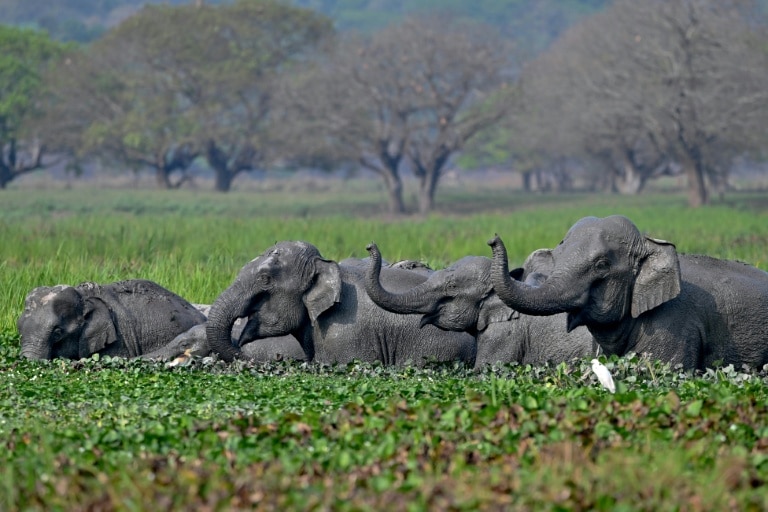
As habitat fragmentation and escalating human-elephant conflict push Asia’s endangered elephant population toward greater risk, India’s highest judicial body has enacted landmark new regulations to safeguard both wild and captive elephant populations across the country. Conservation advocates have broadly praised the ruling as a long-overdue intervention to reverse decades of unregulated habitat destruction.
India hosts roughly 75% of the world’s remaining wild Asian elephants, a species categorized as Endangered on the International Union for Conservation of Nature’s Red List. In recent decades, rapid infrastructure expansion—including new highways, railways, and industrial mining operations—has split apart the large, contiguous habitats these wide-ranging animals require to forage, breed, and migrate between seasonal ranges. This fragmentation has forced increasing numbers of elephants into human settlements, sparking deadly conflict that kills hundreds of people and elephants annually in India.
Issued by the Supreme Court of India on Monday, the new order mandates state governments to clear all existing blockages to critical elephant corridors, the narrow migratory routes that connect fragmented habitats for wandering herds. The ruling explicitly requires an immediate nationwide survey to map and document all man-made obstructions along these corridors, and bans the use of coercive tactics to force elephants off their traditional movement paths. One particularly harmful practice targeted by the ban is the so-called “hulla parties”, where large groups of people chase wild elephants out of farmland or settlements using fireballs and burning wooden stakes.
The Supreme Court noted that federal guidelines mandating unobstructed access to elephant corridors have been in place for years, but widespread non-compliance and weak enforcement have left these critical routes largely blocked across most elephant range states. The public interest case that led to the ruling was led pro bono by prominent Indian wildlife conservationist Prerna Singh Bindra, a former member of the National Board for Wildlife, India’s top wildlife policy body. Bindra’s petition challenged state governments for endorsing the cruel, ineffective practices like hulla parties that do nothing to resolve long-term conflict and instead make encounters more dangerous.
“It becomes a mob situation with thousands of people chasing the elephants using burning spears,” Bindra told reporters from Agence France-Presse. “That does nothing to resolve conflict; science shows it only exacerbates the conflict.”
Current global population estimates place the total number of wild Asian elephants at fewer than 50,000 individuals, with more than 22,000 of those living across India, according to the Indian government’s 2025 national elephant survey. The 2025 survey delivered a stark warning: wild elephants now occupy just 3.5% of their historical range across India, confined to a tiny fraction of the land they once roamed freely. For conservationists, the new court order fills a critical enforcement gap that has allowed unchecked habitat destruction to continue.
“We know where elephant corridors and habitats are — and they are being destroyed and fragmented at an unprecedented pace,” Bindra said. “The will to protect and preserve is markedly absent. We hope with this Supreme Court order, this survey must lead to action.”
Beyond protections for wild herds, the Supreme Court issued a separate ruling on Tuesday mandating enhanced welfare standards for India’s more than 2,600 captive elephants. Once widely used for industrial logging, captive elephants are now kept primarily for religious ceremonies, tourism attractions, and entertainment events. The new regulations require every captive elephant to have up-to-date medical records and mandatory routine health checks to address widespread reports of neglect and abuse.
Animal welfare organizations have welcomed the new captive elephant regulations, though many say the only long-term ethical solution is to end elephant captivity entirely. People for the Ethical Treatment of Animals (PETA) India, a leading animal rights group, applauded the measures to reduce captive animal suffering but reiterated its position that “no elephant belongs in captivity.”
“Whether captured from the wild or bred for a lifetime of confinement, these intelligent, social animals are denied their forest homes, separated from their mothers, stripped of autonomy, enslaved, and controlled through intimidation and weapons,” PETA India director Poorva Joshipura told AFP.
In a country where elephants hold deep cultural and religious significance—they are designated India’s national heritage animal, and revered by followers of the elephant-headed Hindu deity Ganesha—the ruling marks a turning point in balancing rapid economic development with the long-term survival of one of Asia’s most iconic endangered species.