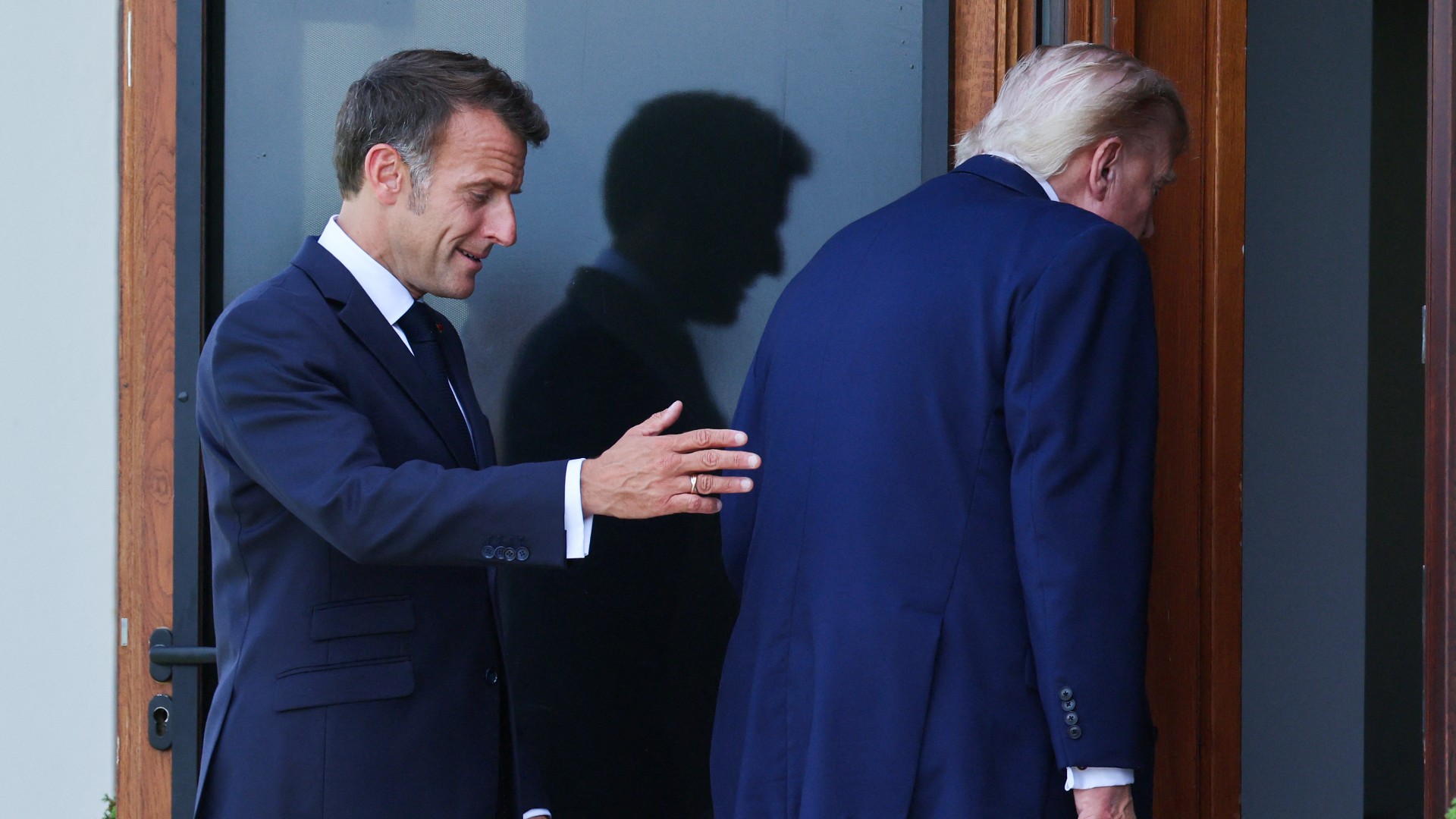
Nearly six months into the US-Israeli military assault on Iran that began in late February, Europe finds itself deeply divided over its involvement, caught between widespread public opposition to the conflict and intense diplomatic and economic pressure from Washington to back the war effort. On March 16, European Union top diplomat Kaja Kallas framed the conflict clearly: “This is not Europe’s war.” The comment underscored widespread discomfort across the continent, where the conflict has already sent fuel prices skyrocketing and drawn sharp public condemnation for documented civilian casualties in Iran. With only a small handful of European leaders openly endorsing the campaign, the degree of quiet and implicit involvement varies sharply from nation to nation. Adding to the pressure, US President Donald Trump has repeatedly threatened to impose new tariffs on uncooperative European states and even floated a potential full US withdrawal from the NATO defensive alliance if allies refuse to align with the war. NATO Secretary General Mark Rutte has pushed back against narratives of European non-participation, revealing in June that European states have cleared takeoff access for between 4,000 and 5,000 US warplanes operating against Iran from the dozens of American military bases permanently hosted across European territory. Meanwhile, Iranian retaliatory strikes targeting Western military facilities in the Gulf have pulled the United Kingdom and France deeper into the conflict against their initial plans. As stalled peace talks offer no near-term path to a ceasefire, independent outlet Middle East Eye has broken down the divergent positions of European nations, from full-throated support to outright opposition. The United Kingdom, which has long emphasized its special transatlantic relationship with Washington, has offered the most substantial backing for the Iran campaign of any European power. In the opening days of the assault, then-Prime Minister Keir Starmer initially rejected US requests to use American-leased bases on UK territory for bombing runs, creating an immediate public rift with Trump. However, Starmer reversed course on March 1, authorizing US operations against Iranian missile sites from UK-based facilities, framing the move as serving a “specific and limited defensive purpose.” This authorization cleared the way for US heavy bombers to deploy from both Diego Garcia – the joint US-UK base in the Indian Ocean’s Chagos Islands – and RAF Fairford in Gloucestershire, the only US-leased base in Europe with a runway long enough to accommodate the heavy bombers used in strikes on Iran. Other UK bases leased to the US, including Suffolk’s RAF Mildenhall and RAF Lakenheath, have also supported the war effort by servicing F-35 stealth jets and refueling combat aircraft operating over Iran. Beyond hosting US operations, the UK has leveraged its own network of military outposts across the Middle East to launch independent strikes on Iranian drones, and has repositioned warships, fighter aircraft and advanced air defense systems in the Gulf region. UK officials maintain these actions fall under “collective self-defense” for its regional allies, including Saudi Arabia, Qatar and the United Arab Emirates. This policy has been fully maintained by new Prime Minister Andy Burnham, who approved additional US strike operations from UK bases immediately after taking office in July. In retaliation for the UK’s involvement, Iran has designated all US-utilized UK bases as legitimate military targets. Iran launched missile attacks against UK bases in Iraq, Qatar and the UAE, and carried out an unsuccessful missile strike against Diego Garcia in March. A drone also struck the UK’s RAF Akrotiri base in Cyprus that same month, though British officials have declined to confirm Iranian responsibility for the attack. Across the Channel, French President Emmanuel Macron has similarly framed any French military involvement as “strictly defensive.” On March 3, Macron publicly condemned the opening wave of US-Israeli strikes on Iran as a violation of international law, saying Paris could not endorse the offensive. Despite this public criticism, France has allowed US military support aircraft to land and refuel at its Istres and Avord air bases. Senior French military commanders insist they have received “full guarantees” that these aircraft are not directly involved in offensive strike missions against Iran. France was nevertheless dragged into direct military positioning after its Abu Dhabi base, Camp de la Paix, which hosts more than 750 French personnel, was hit by an Iranian drone strike in March, prompting Paris to deploy additional fighter jets to patrol UAE airspace. Both Washington and Jerusalem have accused France of obstructing the war effort, pointing to Paris’s decision to block munitions flights bound for Israel from transiting French airspace. Trump labeled France “very unhelpful” in a March 31 post on his Truth Social platform, and Israel retaliated by announcing a full boycott of the French arms industry. Early in the conflict, Macron led negotiations for a European-led escort mission for commercial container ships passing through the Strait of Hormuz, but the proposal never moved forward despite France repositioning several naval vessels to the region. Paris later offered to assist Iran with mine clearance in the strait, a proposal Tehran rejected for violating the terms of the Islamabad Memorandum of Understanding. Among all European nations, Spain has taken the clearest and most uncompromising stance against the US-Israeli war. “The position of the government of Spain can be summed up in four words: no to the war,” Spanish Prime Minister Pedro Sanchez said in a national televised address on March 4, just days after the assault began. “You can’t respond to one illegality with another because that’s how humanity’s great disasters begin,” he added. From the conflict’s opening hours, Sanchez made clear Spain would not grant the US permission to use its two American bases – the Rota naval base and the Morón air base – for any war-related operations. On March 30, Spain went a step further than any other European nation, closing its entire airspace to all US military aircraft, including refueling tankers. Spain’s opposition has drawn fierce pushback from Trump, who has called the country “terrible” and “unfriendly.” The US president imposed new punitive tariffs on Spanish imports in June and threatened to cut off all bilateral trade with the country in July. This is not the first time Trump has clashed with Madrid; he has previously called for Spain to be expelled from NATO over its relatively low military spending, and has criticized Spain’s repeated condemnation of Israel’s military campaign in Gaza. Germany, which hosts more US military personnel than any country outside the United States – with over 36,000 active troops stationed across dozens of bases dating back to the end of World War II – has maintained a deliberately ambiguous stance. The most critical of these facilities is Ramstein Air Base, the largest US Air Force installation outside the US and home to US European Command headquarters. The full scope of Ramstein’s role in the Iran war remains classified, but the base has long served as a key coordination hub for US drone strikes and bombing campaigns in past Middle Eastern conflicts. German Chancellor Friedrich Merz, a conservative leader with longstanding close ties to both Washington and Jerusalem, drew widespread condemnation from German human rights groups when he refused to condemn the initial US-Israeli strikes or the assassination of Ayatollah Ali Khamenei. Instead, in a March 1 statement, Merz said: “Together with the United States and Israel, we share the goal of ending the terror of these regimes.” But Merz later shifted his tone, sparking outrage in Washington when he said on April 27 that the US was being “humiliated by the Iranian leadership” in ongoing ceasefire negotiations. Trump responded by calling Merz’s performance as chancellor “terrible” and announced on May 1 that he would withdraw 5,000 US troops from Germany in retaliation. Italy, which hosts more than 12,000 US troops across dozens of domestic bases, has also walked a fine line, balancing widespread domestic public opposition to the war against Iran against longstanding security ties with Washington. In July, Prime Minister Giorgia Meloni pushed back against NATO Secretary General Rutte’s claim that Italy had allowed roughly 500 US aircraft to use its bases during the war, insisting none of the aircraft had been used for offensive combat missions. “We will not participate in attacks against Iran,” Meloni told attendees at the July 8 NATO summit in Ankara. “We have had a very clear line from the beginning of the conflict.” Meloni faced domestic criticism in March after the US military posted public videos of US military helicopters conducting training flights over Sicily. A procedural dispute later led Italy to temporarily block US aircraft from landing at Sicily’s Sigonella air base. Though Meloni had close ties to Trump in prior years, relations between Rome and Washington have deteriorated sharply over Italy’s war stance. “Italy has not been any help to us,” Trump said on May 1, shortly after threatening to withdraw all US troops from the country. Meloni’s government, which had been a staunch supporter of Israel during its military campaign in Gaza, also announced in April that it would not renew its 2003 bilateral defense pact with Israel. The decision came just days after Israeli forces opened fire on Italian peacekeepers serving with a UN convoy in Lebanon. Since the conflict began in February, Greece has repeatedly stated it is not a participant in the war on Iran, and its involvement remains limited to minor logistical support. The only significant exception came in March, when Greece allowed the US Navy’s USS Gerald R. Ford – the world’s largest aircraft carrier, which played a key role in the opening days of the Iran war – to dock for repairs at Souda Naval Base on Crete, the only deepwater port in the Mediterranean large enough to accommodate the 100,000-ton warship. Greek military personnel stationed in Saudi Arabia also shot down Iranian drones targeting the kingdom in March, a deployment that dates back to 2021, when Athens positioned air defense squadrons in the kingdom to protect its energy imports from the Gulf. Bulgaria, which shares a regional neighborhood with Iran separated only by Turkey, has granted the US full permission to use its domestic military bases throughout the conflict. Like many other European leaders, Bulgarian Prime Minister Rumen Radev has insisted the bases “categorically” will not be used for offensive US operations, claiming American activities are limited to radar operations and refueling. The decision has drawn sharp warnings from Iran, with foreign ministry spokesperson Esmaeil Baghaei stating on July 27 that Bulgaria will “bear responsibility for the dangerous decision.” Trump, by contrast, has publicly praised Bulgaria’s stance, writing on Truth Social the same day: “Thank you, Prime Minister Radev! Bulgaria stands with Trump and supports the deployment of a US Air Force base despite Iran’s threats.” Romania, a NATO member that hosts roughly 1,000 US troops, approved US use of its strategically positioned Black Sea bases for Iran-related missions in March. Romanian President Nicușor Dan has maintained that all US activities in the country are limited to a “strict defensive role.” The decision came after the US announced it would reduce troop numbers in Romania in October, stoking widespread anxiety in Bucharest about the reliability of US security support in the event of an attack from neighboring Russia. Middle East Eye is an independent outlet providing unrivaled original reporting and analysis on the Middle East, North Africa and surrounding regions.