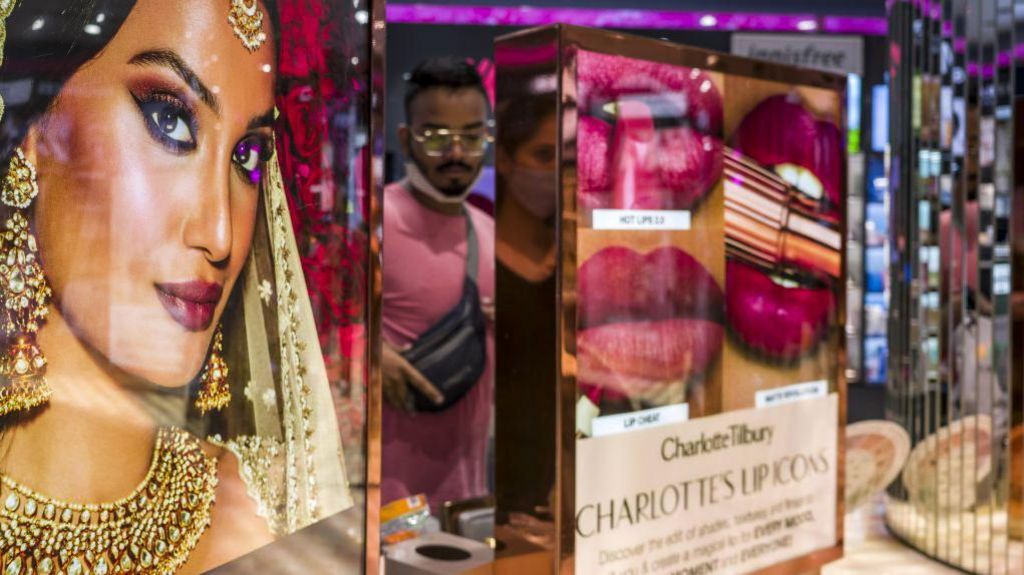
Over the past several years, India’s domestic beauty and personal care sector has emerged as one of the world’s fastest-growing consumer markets, attracting billions in global investment and on track to nearly double its total value before the end of the 2020s. A wave of high-profile acquisitions by global beauty giants underscores just how much international attention this expanding market has drawn. In March of this year, U.S. luxury beauty conglomerate Estée Lauder completed a full acquisition of Forest Essentials, a homegrown Indian beauty brand rooted in traditional ayurvedic practices. Just three months later, French industry leader L’Oréal Group purchased a controlling majority stake in Innovist, a digitally native personal care brand built for Indian consumers. Unilever, another global consumer goods powerhouse, has added four separate Indian beauty brands to its portfolio through its venture capital division in just the last two years.
The trajectory of Forest Essentials, one of India’s breakout homegrown beauty success stories, encapsulates the sector’s explosive expansion. Founded at the start of the 21st century by single mother and entrepreneur Mira Kulkarni in a small garage at the foot of the Himalayas, the brand grew from a tiny startup to a billion-dollar global enterprise over just two decades. Its growth mirrors that of the broader Indian beauty industry, which hit a valuation of $23 billion in 2025 and is projected to climb to $40 billion by 2030 — a growth rate twice that of India’s overall GDP and broader retail market.
Industry analysts point to a confluence of demographic, economic and digital shifts that have combined to create this unprecedented boom. Rising consumer purchasing power is the foundational driver of growth, according to consulting firm Redseer. India’s per capita income crossed the $2,000 threshold in 2019, a key milestone that typically triggers exponential growth in discretionary consumer spending. By 2030, an estimated 155 million Indian households are projected to earn more than $9,500 annually, creating a larger consumer base willing and able to spend on premium beauty and personal care products.
“Historically we’ve underspent on beauty because there was just no purchasing power for anything other than the very basic stuff – such as all-purpose soap or face powder,” explained Kushal Bhatnagar, a partner at Redseer, in an interview with the BBC. “But now, along with more spending power, there is improved access, distribution and product education. The internet broke these barriers, with brands leveraging the power of social media platforms and influencers to reach consumers directly.”
Redseer projects that e-commerce will account for roughly 35% of all Indian beauty spending by 2030, a sharp jump from just 8% half a decade earlier. The COVID-19 pandemic acted as an unexpected catalyst for the sector, accelerating digital adoption and shifting consumer attitudes toward self-care, according to Vaishali Gupta, a founder of two fast-growing Indian beauty brands. Gupta co-launched Hyphen, a vegan skincare brand, with Bollywood star Kriti Sanon in 2023, and also leads mCaffeine, India’s first caffeinated personal care brand known for its scrubs, cleansers and lotions. Both ventures have seen explosive growth since their launches.
“Covid pushed people inward and toward self-care, and it coincided with a massive wave of digital penetration in tier-one, tier-two and tier-three towns,” Gupta told the BBC. “Suddenly Indian consumers had access to beauty and skincare education they’d never had before – such as what was trending in Korea or Europe, or what specific ingredients could do for brightening or acne control. That knowledge base created a consumer who knew exactly what they wanted. And that’s really where the boom in Indian skincare began.”
Over the last 12 months, Gupta’s brands have recorded 100% growth in top-line revenue, and both now rank among the top 10 brands in their respective categories across India. Gupta forecasts continued strong double-digit growth for the foreseeable future. The sector’s momentum has drawn high-profile participation from across Indian popular culture: A slew of A-list Bollywood stars, including Deepika Padukone, Katrina Kaif and Big Brother alum Shilpa Shetty, have launched their own skincare lines in recent years to capitalize on growing consumer demand.
Unlike past growth in India’s consumer sector that was concentrated almost exclusively in major metro areas, today’s beauty boom is being driven by consumers across every region of the country. Most notably, Gen Z is leading the surge in spending: Young Indian consumers devote roughly twice as much of their budget to skincare and personal care as millennials before them. Data from Flipkart, India’s largest e-commerce platform backed by Walmart, confirms this trend: 56% of the platform’s beauty and personal care shoppers are Gen Z, 70% of whom discover new products through social media. Two out of every three beauty product searches on Flipkart originate from non-metro towns and cities. Redseer projects that the combined share of beauty spending from Gen Z and Gen Alpha will rise from 32% in 2024 to nearly 50% by 2030.
For Flipkart’s head of brand strategy Priyanka Bhargav, the current moment marks a clear inflection point for the industry. What was once a niche aspirational category has now become a daily part of self-expression and self-care for millions of young Indians, she says. Moving forward, experts predict consumers will grow increasingly sophisticated, and the next wave of growth will come from niche brands focused on specialized ingredients, dermatologist-backed formulations and evidence-based skin nutrition. While only a small number of domestic Indian beauty brands have achieved large-scale revenue to date, Bhatnagar projects that at the current growth rate, 10 to 15 domestic brands will cross $200 million in annual revenue within the next three to five years. When that milestone is hit, he expects a wave of public listings and increased merger and acquisition activity that will reshape the global beauty landscape. “When that happens, we expect many of them to tap the public markets, and for IPO and M&A activity to really intensify in the sector,” Bhatnagar added.