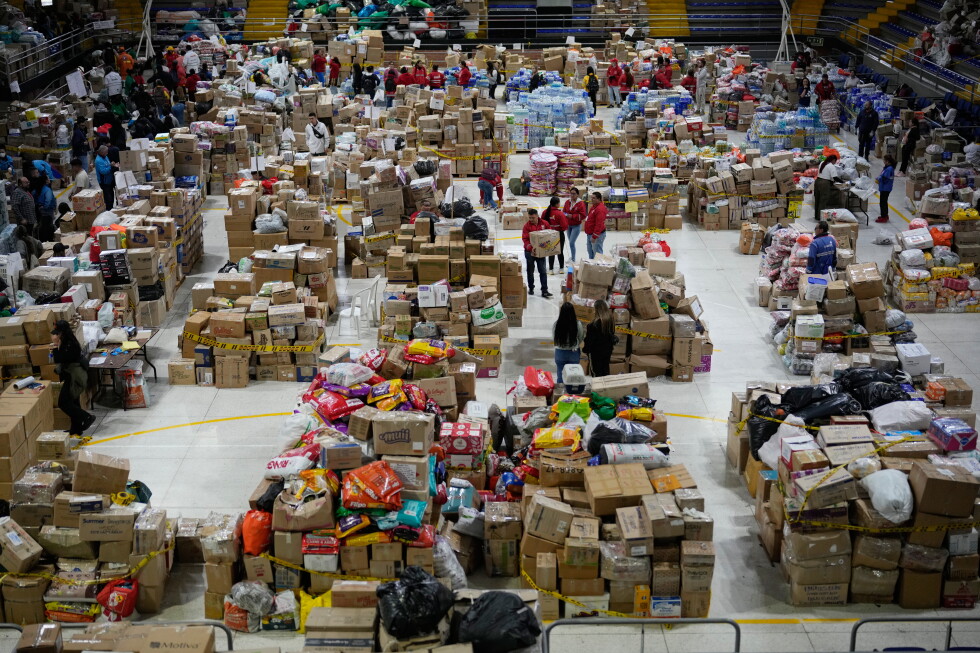
One week after a catastrophic 7.4-magnitude earthquake centered in Colombia’s western, historically marginalized department of Choco left a trail of death and displacement, survivors and aid organizations are grappling with the immense challenge of recovering from a disaster that amplified the region’s long-standing inequities.
For 66-year-old Quibdo-based math teacher Ismael Arias, a routine early trip to the local market last August 10 was the only thing that spared him from the same fate as the two-story home he spent years building and decades paying off. The structure, constructed with his modest teacher’s wages, crumbled entirely when the tremors struck.
“Even if I am helped, I don’t think I will get enough,” Arias shared from temporary shelter at a relative’s home, where he and his partner have stayed since the quake. “It’s not the same. You don’t have the freedom there that you get in your own house.”
Updated official death toll released by Colombia’s central government this week confirms the disaster has killed at least 312 people and destroyed 29,000 residential structures. The United Nations Office for the Coordination of Humanitarian Affairs estimates 69,000 Choco residents — roughly 10 percent of the region’s total population of 600,000 — have been displaced or otherwise affected by the quake. Most of the region’s population identifies as Afro-Colombian or Indigenous, and Choco has remained one of Colombia’s most underfunded and overlooked regions for generations.
Luis Mora, representative of the United Nations Population Fund in Colombia, summarized the overlapping emergency facing the region: “We are facing a triple crisis. You have the humanitarian crisis caused by the earthquake, now joining the under development crisis and the crisis caused by armed conflict in this territory.”
Long before the earthquake struck, Choco struggled with systemic challenges that have made recovery far harder than it would be in better-resourced parts of the country. Covered mostly by steep mountains and dense Amazon-adjacent rainforest, Choco is connected to the rest of Colombia by just two unstable, poorly maintained roads. More than 650 kilometers of Pacific coastline lacks any overland road connections to the region’s interior, leaving most remote communities accessible only by air or river travel — routes that become treacherous during bad weather. For decades, armed rebel groups have also battled for control of illegal mining operations and drug trafficking corridors across large parts of Choco, forcing civilian displacement and imposing arbitrary lockdowns that cut off local families from their farmland and livelihoods for days at a time.
Critical public services were already on the brink of collapse before the disaster. More than 200 schools across the region sustained damage in the quake, and widespread lack of reliable high-speed internet rules out the option of shifting to remote learning for displaced students. The region’s only public hospital, located in the capital Quibdo, was ill-equipped to handle the surge of earthquake-related injuries.
Cristian Maturana, a physician at the Quibdo public hospital, explained that in the immediate aftermath of the tremors, the emergency room was overwhelmed with patients suffering broken bones and crush injuries. Thirty-six patients with severe multiple fractures had to be airlifted to a larger, better-resourced hospital in Medellin, the capital of neighboring Antioquia, because Quibdo’s hospital lacked sufficient staff and specialized equipment to treat them. A power surge after the quake also damaged the facility’s only refrigerator for storing blood donations, halting all blood transfusion procedures for days until a replacement was donated over the weekend by a group of Bogota-based oncologists.
“These have been tough days,” Maturana said, noting that outside support from across Colombia and the international community “has been crucial.” Currently, the emergency room operates at twice its intended capacity, with patients receiving care on stretchers and chairs lined up in hospital hallways. While donations of antibiotics, bandages, and blood pressure monitors have filled some gaps, the facility still faces critical shortages of wheelchairs and additional beds. “These seem like basic things,” Maturana said. “But they are items we have long had shortages of.”
Local humanitarian groups have worked to deliver aid to hard-to-reach communities, relying on donated flight time from private aircraft owners to bypass the impassable road network. Camilo Prieto, a doctor with the Colombian Environmental Movement humanitarian organization, said his group has delivered more than two tons of medical supplies, including portable electrocardiogram and ultrasound machines, to affected areas, flying aid to remote towns via helicopter and small plane. “By land it would be very difficult,” Prieto explained.
UNFPA, for its part, has prioritized supporting women and girls in emergency shelters, distributing personal hygiene kits and establishing dedicated safe spaces for female survivors in temporary accommodation sites. High-profile support has also emerged: global pop star Shakira, who is Colombian, recently made a surprise visit to earthquake-impacted areas and pledged to fund the rebuilding of damaged Choco schools. Colombian President Abelardo de la Espriella has also visited the region twice since the disaster, announcing a sweeping recovery plan that includes billions of dollars in new infrastructure investment, targeted job creation programs, rental subsidies for homeless families, and a dedicated government oversight position to lead recovery efforts.
Colombia’s national statistics agency DANE confirms Choco already held the country’s highest unemployment rate in 2024, with a per capita GDP of just $3,500 — one quarter of the per capita income of the capital Bogota. Wiston Mosquera, the Roman Catholic bishop of the Quibdo diocese and a lifelong Choco resident, said he hopes the global attention brought by the earthquake will finally force action on the region’s decades of structural neglect. “We are decades behind the rest of Colombia’s regions,” Mosquera said, pointing to persistent gaps in healthcare, transportation, and power access that predate the disaster.
But many local survivors remain skeptical of government promises, echoing the region’s long history of broken pledges for investment. For Arias, who took out bank loans totaling roughly $32,000 to build his now-destroyed home, rebuilding is all but out of reach on a teacher’s salary, even with proposed government subsidies. He is far from alone: thousands of homeless survivors across Choco face an uncertain future, as aid groups race to address an emergency that has deepened the Choco region’s decades-long struggle for equity and basic services.