A Palestinian-backed humanitarian organisation, the Hind Rajab Foundation (HRF), has launched a second legal action in India, filing a formal war crimes complaint against an unnamed Israeli soldier accused of intentionally destroying civilian infrastructure in the besieged Gaza Strip. The complaint was submitted to Indian judicial authorities this Tuesday, marking the group’s second high-profile accountability push against an Israeli soldier traveling through the South Asian nation.
HRF’s first complaint came in June 2024, targeting Eitan Gilboa, a soldier with Israel’s 271st Combat Engineering Battalion. Gilboa had publicly shared graphic content to his social media channels, including photos of his unit “turning entire neighbourhoods in Gaza into ash and dust” and personal video of himself celebrating the mass demolitions. After the complaint was filed, Indian national authorities took no investigative or legal action against Gilboa, who departed the country without facing any consequences for his alleged actions.
The new, second case centers on an Israeli soldier whose identity has not been released to the public. According to HRF’s court filing, the soldier directly participated in the systematic, unlawful destruction of civilian residential and community property in Abasan al-Saghira, a town located in Gaza’s southern Khan Younis Governorate, between March and April 2024. The organisation argues that the soldier’s conduct meets the international legal definitions of war crimes, crimes against humanity, and acts of genocide.
The legal team representing HRF in India emphasized that New Delhi is bound by the Geneva Conventions and broader international law to investigate credible allegations of grave humanitarian crimes. Speaking to Middle East Eye on condition of anonymity, the lead lawyer on the case stated: “India cannot become a ‘second home’ where Israeli soldiers accused of grave international crimes travel with impunity, and come to cleanse themselves of accountability after participating in the destruction of Palestinian life in Gaza. The obligation is clear: where there are credible allegations of grave breaches of international humanitarian law, India must act.”
Since the outbreak of hostilities following Hamas’ October 7, 2023 attacks on Israel, the humanitarian catastrophe in Gaza has reached unprecedented scale. Palestinian authorities estimate that approximately 250,000 Palestinians have been killed or injured in Israel’s ongoing military campaign in the enclave. Independent damage assessments confirm that roughly 82 percent of all residential and public structures across Gaza have been destroyed or damaged, while 90 percent of the territory’s critical energy infrastructure has been demolished.
To build its latest case, HRF compiled evidence using a range of open-source intelligence tools, including high-resolution satellite imagery, social media footage posted by Israeli forces, and on-the-ground witness reports. The organisation’s analysis confirms that the targeted buildings in Abasan al-Saghira were deliberately demolished in planned operations, not destroyed as collateral damage during active combat. HRF notes that this pattern of systematic destruction matches independent findings published by Amnesty International regarding the intentional clearing of a “buffer zone” along Gaza’s eastern perimeter, and is consistent with the continuing expansion of Israel’s so-called “Yellow Line” security boundary deeper into Palestinian territory.
Every year, tens of thousands of Israeli veterans travel to India after completing their mandatory military service. Many follow the popular post-service travel route known locally as the “hummus trail”, which crosses multiple popular tourist destinations across India’s states and union territories. HRF director general Dyab Abou Jahjah emphasized in a formal statement that the organisation’s core mission is to pursue accountability for alleged crimes in Gaza, saying “HRF exists to ensure that no one who participates in genocide escapes justice.”
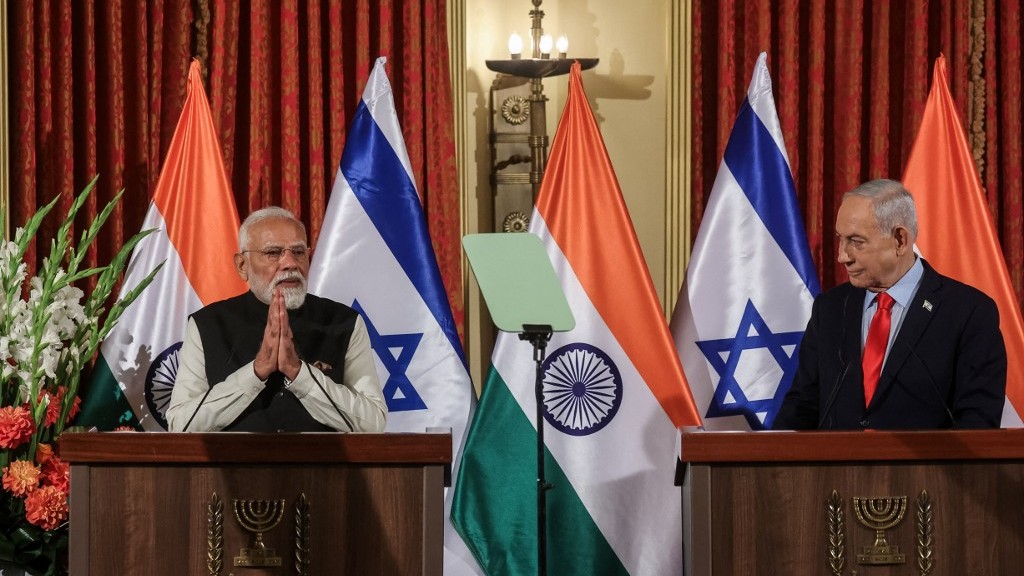
Diplomatic context frames the legal action, as the Israeli government, including Prime Minister Benjamin Netanyahu and senior diplomatic officials, has repeatedly publicly praised India’s diplomatic support for Israel over the past two and a half years. To date, India has declined to back South Africa’s genocide case against Israel at the International Court of Justice, has refused to join international calls for a mandatory arms embargo on Israel, and Indian private firms have continued to supply critical military components to Israeli defense industries.