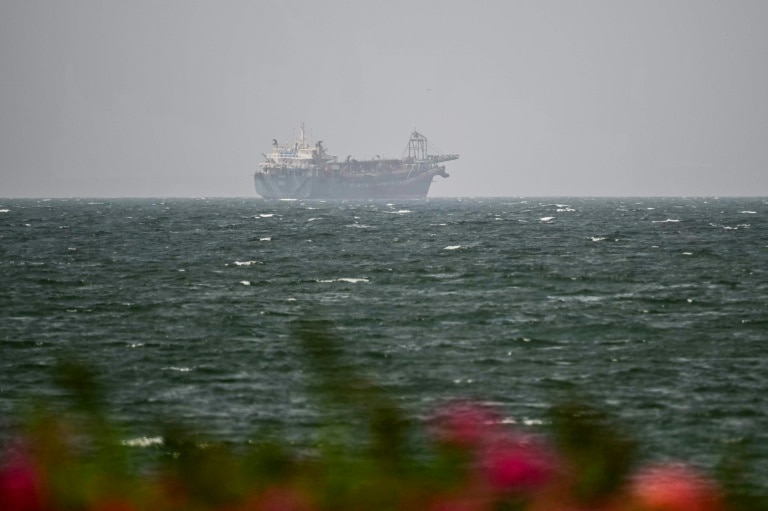
Fresh regional tensions have erupted across the Persian Gulf this week, after the United Arab Emirates announced a full halt to all economic and commercial relations with Iran, prompting a sharp public warning from Tehran’s top military leadership against any cooperation with U.S. forces operating in the area.
The latest escalation began on Tuesday, when UAE authorities confirmed that Iran had launched two ballistic missiles targeting commercial vessels off the Emirates’ coast. In response, the Gulf nation moved to sever all bilateral trade, financial and commercial ties with Iran indefinitely. “In light of regional escalations… all trade, commercial exchanges, and financial transactions with Iran have been halted until further notice,” Afra Al Hameli, communications director for the UAE foreign ministry, confirmed in an official statement.
This move marks a major breakdown in what had been long-standing economic ties between the two neighboring Gulf states. Prior to the outbreak of open regional conflict earlier this year, the UAE – which hosts a large Iranian expatriate community – was one of the largest trading partners for Iran, which has long been subject to sweeping U.S. economic sanctions. Since hostilities began in February, the UAE has already recalled its ambassador from Tehran and closed multiple Iran-linked community institutions including schools and a hospital. ADNOC, the UAE’s state-owned oil giant, has also seen multiple commercial tankers targeted in recent weeks amid the ongoing shipping attacks.
Just hours after the UAE’s trade cut announcement on Wednesday, Ali Abdollahi, chief of staff of Iran’s armed forces, issued a stark warning to all Gulf countries that any support for U.S. military operations in the region would be considered an act of aggression against Tehran, according to Iran’s semi-official Mehr News Agency. “Any assistance or facilitation provided to the aggressor US military amounts to participation in the US military operation,” Abdollahi said.
The Persian Gulf already hosts a sprawling network of permanent U.S. military installations, including multiple bases located within the UAE. While most Gulf states have publicly stated they will not allow the U.S. to use their territory as a staging ground for offensive attacks on Iran, Abdollahi cast significant doubt on these claims. “It seems unlikely that such a large number of military aircraft, particularly refuelling aircraft, could be present at regional bases without knowledge of host countries,” he added, noting that Iranian intelligence has full situational awareness of all military activity across the region. Multiple regional media outlets have reported that Saudi Arabia, the UAE, Kuwait and Bahrain have all launched retaliatory strikes against Iranian targets in recent weeks in response to attacks on Gulf shipping, though all four nations have publicly denied these allegations.
The current standoff centers on the Strait of Hormuz, the critical narrow trade chokepoint through which roughly a fifth of the world’s daily oil and gas shipments pass. While tensions between Washington and Tehran had seen a brief lull in recent weeks, the Strait remains one of the world’s most dangerous flashpoints. Iran imposed a blockade on the waterway months ago, and attacks on commercial transiting vessels have continued nonstop. A preliminary framework deal between the U.S. and Iran to reopen the strategic corridor collapsed earlier this year, and diplomatic efforts to restart negotiations have now fallen apart entirely.
The current cycle of open conflict began on February 28, when joint U.S.-Israeli strikes targeting Iranian assets kicked off major hostilities, to which Iran responded with a wave of missile and drone strikes targeting U.S. and allied assets across the Middle East. After months of military operations, the U.S. has failed to achieve a decisive victory over Iran, and U.S. media reports have indicated that the prolonged conflict has severely drained stockpiles of critical U.S. munitions – a claim both the Trump administration and the Pentagon have publicly denied.
In a dramatic reversal of comments made by his own senior envoy just one day earlier, U.S. President Donald Trump confirmed on Tuesday that all diplomatic talks with Iran are off the table. Trump also reiterated his extraordinary claim to the Strait of Hormuz, posting a viral social media graphic that labeled the strategic waterway “NEW U.S. Territory” – echoing a previous threat to formally annex the global energy conduit. “There are no talks or conversations going on, or scheduled, with the Islamic Republic of Iran. The Naval Blockade remains in full force and effect,” Trump wrote on his social media platform, referring to the U.S.’s own counter-blockade of all Iranian commercial ports.
Just one day before Trump’s announcement, Jared Kushner, Trump’s special envoy and son-in-law, had claimed that the two sides were holding “very positive and active conversations” to de-escalate the conflict. Trump also insisted that the Strait of Hormuz is open for commercial traffic, despite multiple shipping industry reports confirming that the Iranian blockade has cut traffic through the corridor by more than half for months.
U.S. Secretary of State Marco Rubio spoke by phone with the UAE’s national security adviser on Tuesday, reaffirming U.S. support for the Emirates and discussing joint efforts to “hold Iran and its terrorist proxies accountable” for the ongoing shipping attacks. The two sides also reaffirmed their shared commitment to ensuring unimpeded free passage through the Strait of Hormuz.
Amid the escalating standoff, Iranian officials have maintained a uniformly defiant stance against U.S. threats. Last week, Iranian parliament speaker and chief nuclear negotiator Mohammad Bagher Ghalibaf conducted an official visit to neighboring Iraq, framing the trip as an effort to build a new regional order independent of foreign interference. “The trip was aimed at strengthening the new order in the region” and boosting bilateral cooperation “without foreign interference,” Ghalibaf said. He also added that “Resistance in Iraq is also one of the elements of this country’s power,” a comment widely seen as a public endorsement of pro-Iranian armed groups operating within Iraqi territory.