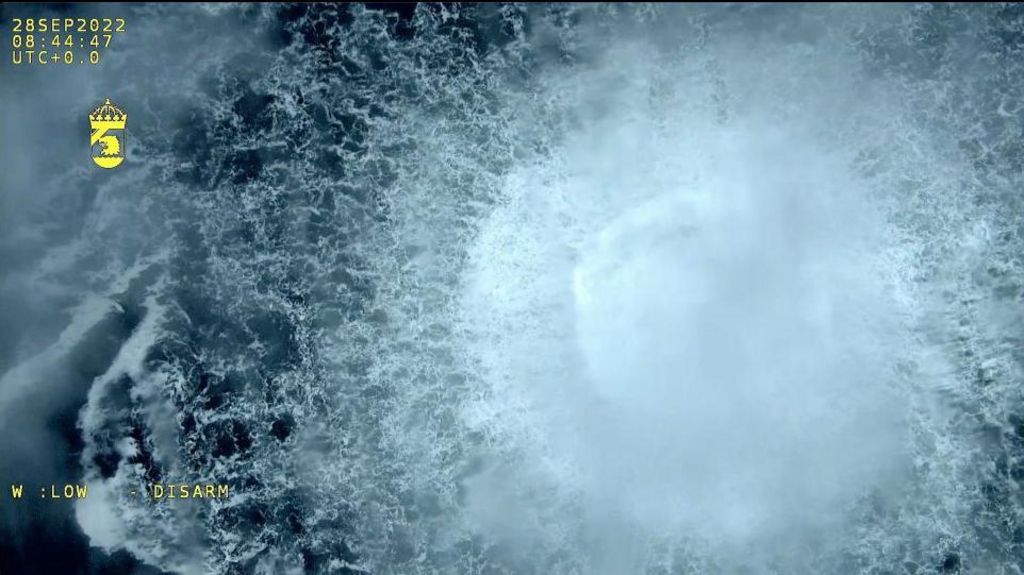
Nearly three years after coordinated explosions shattered three of the four Nord Stream undersea gas pipelines linking Russia and Germany, a second Ukrainian suspect has been taken into custody in Croatia in connection with the 2022 sabotage attack, German law enforcement authorities have confirmed.
German federal prosecutors allege the detained man — identified only as trained scuba diver Vladimir Z, widely reported to be Volodymyr Zhuravlyov — was one of the underwater specialists who placed explosive devices on the pipelines in September 2022, just months after Russia launched its full-scale invasion of Ukraine. “The suspect participated in the necessary dives” to carry out the sabotage, prosecutors stated in an official release, confirming they have formally submitted a request to Croatian authorities for the suspect’s extradition to Germany.
Zhuravlyov’s path to this latest arrest dates back to 2025, when he was first detained by Polish authorities in connection with the same plot. At that time, a Polish judge rejected Germany’s extradition request, controversially ruling that if Ukraine was behind the attack, it constituted a “just” act. Zhuravlyov was subsequently released from custody, a decision that drew audible surprise from courtroom observers and left the suspect smiling as he exited the dock.
He is the second individual taken into custody in the ongoing investigation. The first, former Ukrainian military officer Serhiy Kuznetsov, was arrested in Italy in August 2025 and later extradited to Germany to stand trial. Kuznetsov has repeatedly denied any involvement in the bombings, and made his first public court appearance in Hamburg earlier this year in June.
Per the prosecution’s narrative of the plot, Kuznetsov allegedly led a small team that chartered a civilian yacht from the German port of Rostock, sailing to the pipelines’ location off the Danish Baltic Sea island of Bornholm to plant the explosives. At the time of the attack, Nord Stream 1 was actively transporting Russian natural gas to Western Europe, while Nord Stream 2 — a second parallel pipeline system — had completed construction but had not yet entered commercial operation.
If extradited from Croatia, Zhuravlyov will be brought before an investigating judge in Germany to formalize charges of sabotage and intentionally causing explosive damage. The blasts, which permanently disabled the controversial energy infrastructure project that had divided European policymakers for decades, initially triggered widespread speculation that Moscow was responsible. That narrative shifted in recent years as investigators uncovered increasing evidence pointing to possible Ukrainian involvement.
Ukrainian officials have repeatedly and unequivocally denied any connection to the attack. The case has created unanticipated diplomatic friction between Kyiv and Berlin, one of the most steadfound military and political backers of Ukraine’s defense against Russia’s full-scale invasion.
Long before the 2022 attack, the Nord Stream projects faced fierce opposition from a bloc of countries including Poland, Ukraine, and the United States. Poland was particularly vocal in its criticism, arguing the pipeline would increase Germany’s dangerous energy dependence on Russia while cutting Warsaw out of lucrative transit fees for Russian gas shipped to Western Europe.