Overnight, a coordinated wave of Ukrainian drone strikes hit one of Russia’s largest retail logistics hubs just outside Moscow, leaving the massive warehouse engulfed in flames hours after the attack, with thick black smoke billowing into the sky over the region.
The operation was just one part of a rapidly expanding, strategically focused component of Ukraine’s war effort: a stepped-up long-range drone campaign designed to carry conflict deep into Russian territory, far from the front lines of the full-scale invasion that began nearly four and a half years ago. Rarely observed by international media, a Sunday morning launch by Ukraine’s newly formed 413th “Raid” Unmanned Systems Regiment was witnessed by a team of Associated Press journalists in a sunflower field in southern Ukraine, offering an unprecedented look at this evolving tactic.
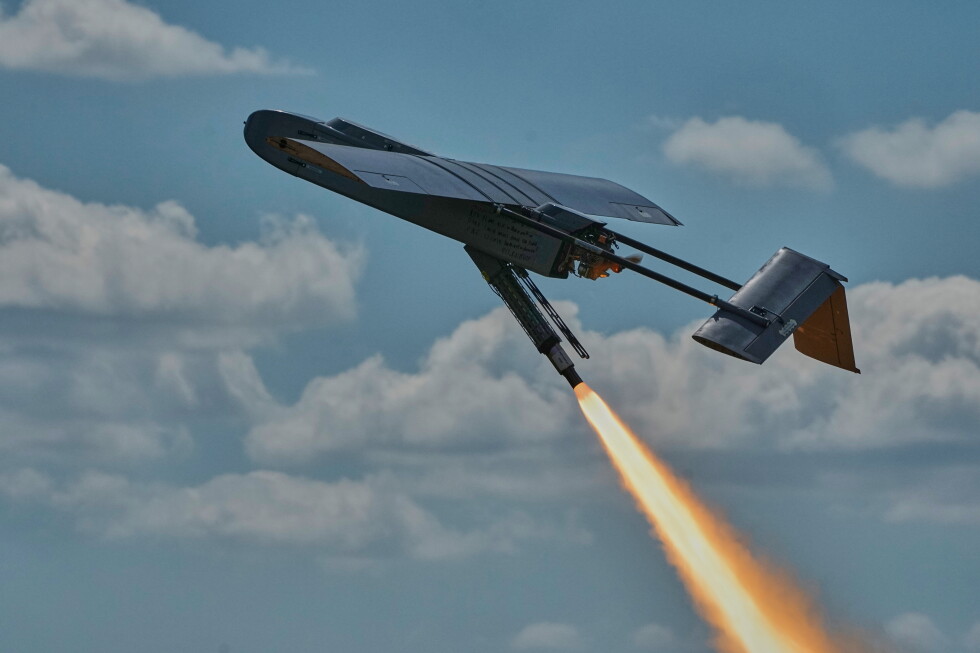
Only hours after participating in the overnight strike on the Wildberries warehouse, a major logistics facility for Russia’s top online retail giant located roughly 28 miles south of Moscow – one of Ukraine’s largest single attacks on Russian soil to date – a small contingent of the regiment’s troops assembled in the open field. Working quickly to avoid detection, they prepared 20 small, explosive-laden drone aircraft for launch, targeting new objectives inside Russia before moving out immediately once the drones were airborne. The entire operation left almost no trace of their presence, as the unit relocated to its next planned launch site.
This long-range drone initiative marks Kyiv’s most aggressive shift in strategy in 2024, following a year of increasing strikes that combine long-range missiles and drone swarms to target Russian military production facilities, critical energy infrastructure, and commercial logistics hubs. Wildberries depots in particular have become repeated high-priority targets, with attacks destroying merchandise valued at billions of US dollars.
For Ukrainian military planners, the strategy serves two core goals: first, it brings the tangible consequences of the war directly to the Russian public, rather than limiting destruction to Ukrainian territory. Second, it forces Russia’s military to redistribute and stretch its air defense systems across a much larger geographic area, creating vulnerabilities along the front lines while disrupting civilian and commercial operations across Russia. To date, the campaign has forced widespread airport disruptions, sparked regional fuel shortages, and eroded public morale inside Russia.
“The bigger casualties they have, the sooner they will go for peace,” said Yevhen Karas, commander of the 413th Regiment, in an interview after the Sunday launch. Karas, a 38-year-old former philosophy student who volunteered for service alongside his brother Volodymyr on the first day of Russia’s 2022 full-scale invasion, has personal stakes in the conflict. His brother was killed in the early defense of the Kyiv region, and Karas worked his way through the ranks of Ukraine’s Special Operations Forces before being appointed to lead the new drone regiment in 2024.
What began as a reconnaissance-focused unit has evolved dramatically alongside advancing drone technology, with domestic Ukrainian FP-1 drones now boasting a range of more than 1,000 miles, allowing strikes deep into central Russia. The regiment’s ranks draw from a cross-section of pre-war Ukrainian society: alongside former soldiers are a former opera singer, a professional computer programmer, a rapper, and a professional cellist, all now trained to follow a tight, repetitive operational cycle: prepare, check systems, move into position, launch, await strike results, then repeat for the next mission.
Before Sunday’s launch, Karas marked one of the drone fuselages with a handwritten message in black marker: “Moscow burns under the sky, red flame rises so warm and high, dark smoke moves above the town, fire lights the night all around.” The regiment’s official challenge coin bears this mission’s ethos too: one side displays a three-pronged arrow insignia, while the reverse features an engraving of the Kremlin engulfed in flames, with a drone flying overhead.
Kyiv’s official strategy aims to ramp up public pressure on Russian President Vladimir Putin by making ordinary Russians feel the daily costs of the invasion, pushing Putin to enter good-faith peace negotiations after months of stalled U.S.-brokered talks. To date, Putin has shown no public indication of willingness to end the conflict or withdraw Russian forces from occupied Ukrainian territory. But Karas says the cumulative economic and infrastructure damage from the drone campaign is already shifting perceptions inside Russia.
“In this phase of the war, Moscow should fear the skies,” Karas said. “Muscovites should spend their nights in their wonderful metro, just as residents of Kyiv have spent years going underground to escape Russian missile and drone attacks.”