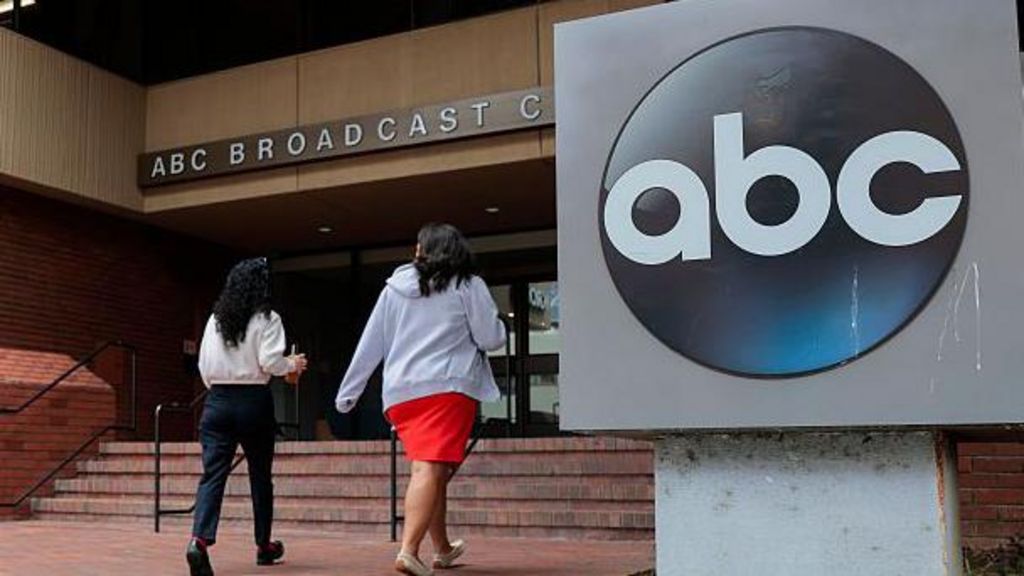
A high-stakes legal battle over press freedom and government overreach has erupted in the United States, after media conglomerate Disney and its eight ABC owned-and-operated stations filed a lawsuit against the Federal Communications Commission (FCC) and its chairman Brendan Carr, challenging an unprecedented order to launch early broadcast license renewal proceedings. The media company alleges the move is a deliberate retaliatory campaign orchestrated by the Trump administration to punish ABC for its critical editorial coverage of the president and his administration.
In the court filing submitted Tuesday, Disney calls the FCC’s order a historically unprecedented break from decades of regulatory practice. The company notes that the commission has not forced any broadcast network to complete early license renewals in more than 50 years, and this marks the first time the agency has demanded rushed renewal applications for an entire batch of commonly owned stations from a single major network. Ordinarily, preparing license renewal applications takes months of work, but the FCC gave Disney just 30 days to submit the completed paperwork – a timeline Disney describes as unnecessarily burdensome and intentionally punitive.
The lawsuit lays out a clear paper trail to back up its retaliation claims, pointing directly to public statements and social media posts from President Donald Trump himself. Trump has repeatedly complained that ABC’s coverage of his administration is almost 100% negative, and in one public social media post he openly questioned whether the network’s broadcast licenses should be terminated, answering his own question with a clear “Yes!”. The timing of the FCC’s order has also fueled suspicion: the early renewal notice was issued just one day after ABC late-night host Jimmy Kimmel delivered a on-air joke about first lady Melania Trump. Prior to that, Disney had already faced scrutiny from the administration over its internal diversity, equity and inclusion (DEI) practices, as well as content on ABC’s popular daytime talk show *The View*.
The FCC and its chairman have pushed back against the allegations, framing the early renewal process as a measure focused on upholding the public interest, not political retaliation. “If broadcasters don’t like that, that’s okay,” Carr told CNBC in an earlier July interview. “They can become a cable channel, they can become a podcast, they can stream online. But if you want to uniquely be on the public’s airwaves, you have to comply with those obligations.” The BBC has reached out to the FCC for additional comment on the ongoing lawsuit, but has not yet received an official response.
This confrontation is the latest escalation of a long-running tense standoff between the Trump administration and ABC that stretches back months. Carr, who President Trump once publicly praised as a “warrior for free speech”, has long positioned himself at the center of the administration’s combative approach to critical media outlets, and has made clear since before taking the chairman role that he intends to interpret the FCC’s regulatory authority broadly. As early as September 2025, Carr openly threatened regulatory action against Disney after Kimmel made public remarks about the murder of conservative activist and prominent Trump ally Charlie Kirk. Speaking to conservative podcaster Benny Johnson, Carr issued a blunt ultimatum: “We can do this the easy way or the hard way. These companies can find a way to change conduct and take action, frankly, on Kimmel, or you know there’s going to be additional work for the FCC ahead.”
Under immediate pressure from Carr, Disney temporarily pulled Kimmel off the air, but the decision sparked massive public backlash over accusations of violating free speech principles – even from prominent Republican Senator Ted Cruz – leading Disney to reverse course and restore Kimmel to his hosting role just a short time later. This is not the first legal clash between Trump and ABC: earlier this year, Trump successfully sued ABC News and anchor George Stephanopoulos for defamation after Stephanopoulos incorrectly stated that Trump had been found “liable for rape” in the E. Jean Carroll civil case, when the jury had actually found him liable for sexual abuse and defamation. ABC ultimately settled the suit, agreeing to pay $15 million to Trump’s presidential foundation and museum, plus an additional $1 million to cover his legal fees.
In their current lawsuit, Disney and ABC are asking the court for a speedy hearing on the dispute, as well as a temporary restraining order to block the FCC’s early renewal requirement. At its core, the suit argues that the administration’s pressure campaign through the FCC amounts to unconstitutional government censorship, writing in its filing, “Government censorship is deeply un-American. This case concerns the Administration’s sustained effort to do just that.”