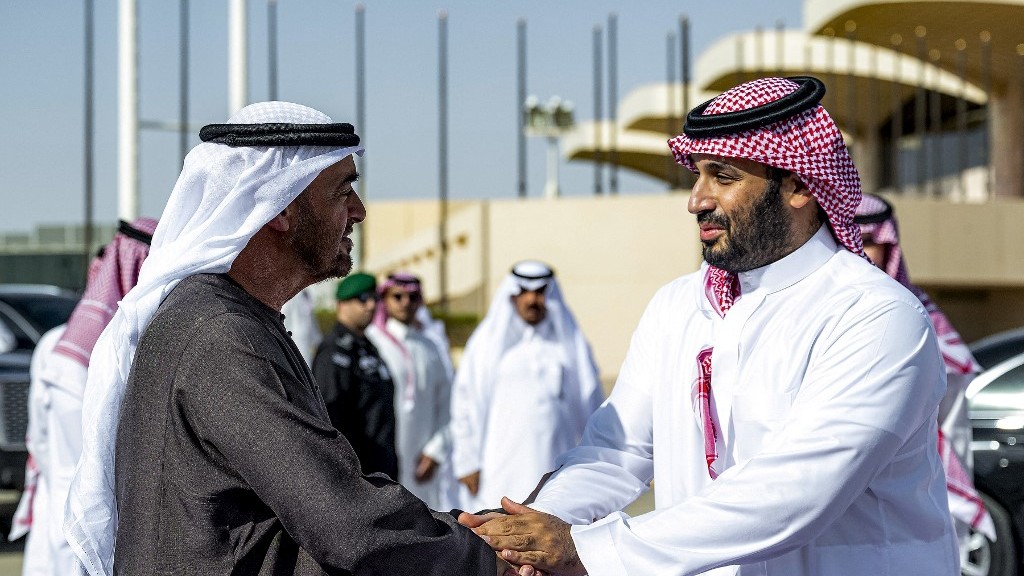
Growing diplomatic and economic tensions between the two Gulf powerhouse neighbors Saudi Arabia and the United Arab Emirates have spilled into the financial sector, with Riyadh quietly implementing enhanced regulatory scrutiny on cross-border money transfers to the UAE, multiple sources with direct knowledge of the situation have confirmed. Per reporting from international news outlets including Reuters and The Financial Times, these unpublicized new measures place the UAE on Saudi Arabia’s list of high-risk jurisdictions for financial crime — a designation normally reserved for nations linked to elevated risks of illicit money flows. At present, this list counts more than half a dozen regional states. Multiple business operators told Reuters they have already encountered significant disruptions to their transactions: cross-border transfers denominated in a range of currencies have been held for extended delays or flat-out rejected by Saudi financial institutions, with no official reasoning provided for the actions. Both Saudi and Emirati authorities have pushed back against reports of targeted restrictions. When contacted for comment by Reuters, the Saudi Central Bank stated there are “no direct restrictions on specific countries.” A UAE government spokesperson also noted the nation’s economy ministry has not received any formal complaints from private sector entities about unusual delays or barriers to inter-country bank transfers. The current financial friction is the latest escalation of a years-long rift marked by increasingly divergent national priorities that has grown sharper in recent months. Tensions first flared into open view late last year, when Saudi aircraft carried out an airstrike on a shipment of UAE military supplies bound for the Southern Transitional Council, a separatist Yemeni faction that Abu Dhabi backs politically and militarily. Following the strike, the public rift deepened: prominent Saudi and Emirati social media influencers, political pundits, and state-aligned media outlets engaged in a series of heated public feuds, and by March, the UAE moved to block the X account of Saudi-owned major news network Al Arabiya. Disagreements have since widened across three core policy areas: the Yemen conflict, the 2024 Israel-Iran war, and global oil policy. On the Iran front, the two states have adopted starkly opposing stances: the UAE has emerged as a far more hawkish actor, carrying out dozens of unacknowledged air strikes against Iranian targets — a level of direct participation in the conflict that was not made public until recently. Saudi Arabia, by contrast, has pursued a more balanced hedging strategy: it has condemned Iranian attacks on Gulf allies and granted the U.S. military access to the King Fahd Air Base in Taif, while simultaneously working through Islamabad to open diplomatic channels for negotiations with Tehran. In the energy sector, the rift boiled over in May when the UAE announced its withdrawal from OPEC, the Riyadh-led oil producers’ cartel it had been a member of for nearly 60 years. Shortly after exiting the group, the UAE moved to sharply ramp up its crude oil production, a move that directly conflicts with Saudi Arabia’s ongoing strategy of production cuts to support global oil prices. Following reports of delayed and blocked money transfers as early as May, multiple international outlets confirmed the pattern of financial disruptions. A Western executive working for a Dubai-based healthcare firm told the Financial Times that starting in mid-May, Saudi banks had rejected and returned multiple payments from a long-standing Saudi client of the company. By July, independent regional outlet Middle East Eye framed the ongoing standoff as the two neighbors “embroiled in an economic war of attrition,” with business leaders across both nations already drafting contingency plans to prepare for further escalation of the bilateral feud.