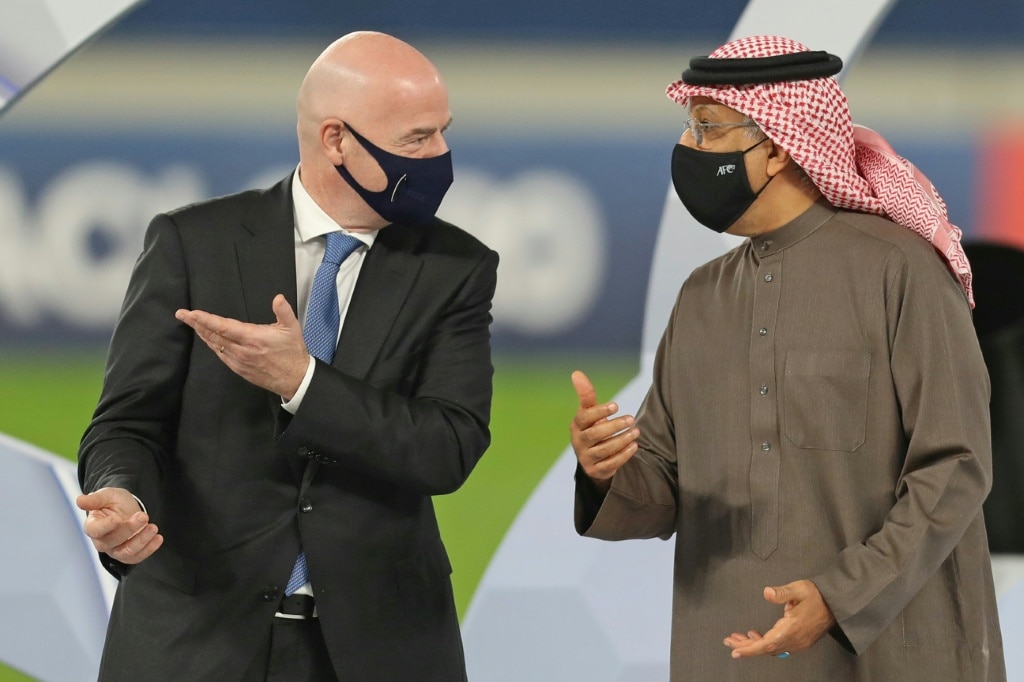
FIFA, the global governing body of football, is facing deep internal turmoil after embattled president Gianni Infantino oversaw the departure of Kevin Lamour, one of his most prominent critics within the organization. Lamour, a French executive who held the chief operating officer role for less than two years, broke ranks with senior leadership last month to publicly denounce Infantino’s poorly executed proposal to bring private investment into flagship FIFA competitions, including the men’s World Cup.
According to reporting from The New York Times, Lamour refused to endorse the plan just ahead of last month’s World Cup final, when five senior FIFA directors were first briefed on the proposal. Lamour publicly dismissed the initiative as “the project of one person”, a direct rebuke of Infantino’s centralized, untransparent approach to pushing the policy through. The French executive’s open criticism quickly isolated him from top leadership; he was notably absent from an emergency leadership meeting held in Morocco two weeks ago, where the rest of the senior directors present publicly reaffirmed their “full support” for Infantino.
Lamour’s exit is the latest in a string of high-profile resignations tied to the controversial investment proposal. Carlos Cordeiro, Infantino’s special advisor and a former investment banker with close ties to former U.S. President Donald Trump, also stepped down in protest, calling the plan “a bad deal for FIFA’s member associations, a bad deal for football, and a bad deal for the long-term future of the game.” Two other senior FIFA executives also joined the opposition, forcing the initiative — which was first launched on July 28 — to be scrapped just four days later.
Internal communications from FIFA leadership have attempted to frame the upheaval as a minor disruption to the organization’s core mission. In an internal email to staff, FIFA Secretary General Mattias Grafstrom downplayed the controversy, saying, “Individuals, unstable moments and unfortunate episodes come and go. The institution, its mission and its responsibility towards world football continue.” Arsene Wenger, FIFA’s head of global football development, also supported scrapping the plan, calling it “absolutely necessary”. Despite both leaders claiming they had no advance knowledge of the private investment proposal, both are named in a letter from UEFA’s U.S. legal counsel that bars them from destroying any documents related to the plan. UEFA, European football’s governing body, has already publicly called for Infantino to step down.
Infantino’s handling of the investment proposal has created sharp rifts across football’s six continental confederations, just months ahead of the FIFA presidential election scheduled for next March in Rabat. Last week, the presidents of UEFA, the Asian Football Confederation (AFC), and CONCACAF (the governing body for North, Central America and the Caribbean) released an unfiltered joint statement attacking the proposal as a “shabby, back room, opaque deal” and criticizing Infantino’s leadership. “Leadership in football is not a possession. It is not about holding — or demanding — power to be held. When an individual places himself above the collective that entrusted him with authority, that duty has been abandoned,” the statement read.
CONCACAF chief Victor Montagliani, who signed the statement, is widely regarded as the leading challenger to Infantino’s bid for a fourth and final term as FIFA president. The unified opposition front, however, has already fractured along regional lines. Mexico, one of the co-hosts of this year’s 2026 World Cup, broke ranks with CONCACAF despite not launching an open attack on the confederation’s stance. In Asia, Qatar — host of the 2022 World Cup — has publicly blasted the AFC for failing to consult its member associations before releasing the joint statement.
Qatar Football Association president Hamad bin Khalifa al-Thani has publicly demanded an explanation for the lack of consultation, questioning the AFC’s authority to speak on behalf of all 47 of its member associations, including Qatar. Qatar is not alone in backing Infantino; Kuwait, Lebanon, Sri Lanka and the Philippines have also issued public statements of support for the Swiss incumbent. AFC president Sheikh Salman bin Ebrahim al-Khalifa, who lost the 2016 FIFA presidential election to Infantino, pushed back against the criticism on Tuesday, telling AFP, “I categorically reject any suggestion that my participation in the joint statement exceeded my authority or that the AFC erred in participating in it.”
Support for Infantino remains solid in the African Football Confederation (CAF) and South America’s CONMEBOL. The Oceania Football Confederation (OFC) has refused to join calls for Infantino’s departure, but New Zealand, one of OFC’s member associations, has broken ranks and withdrawn its support for his re-election bid. As the March election approaches, the departure of Lamour has only deepened uncertainty about the future of FIFA’s leadership and the future of governance in global football.