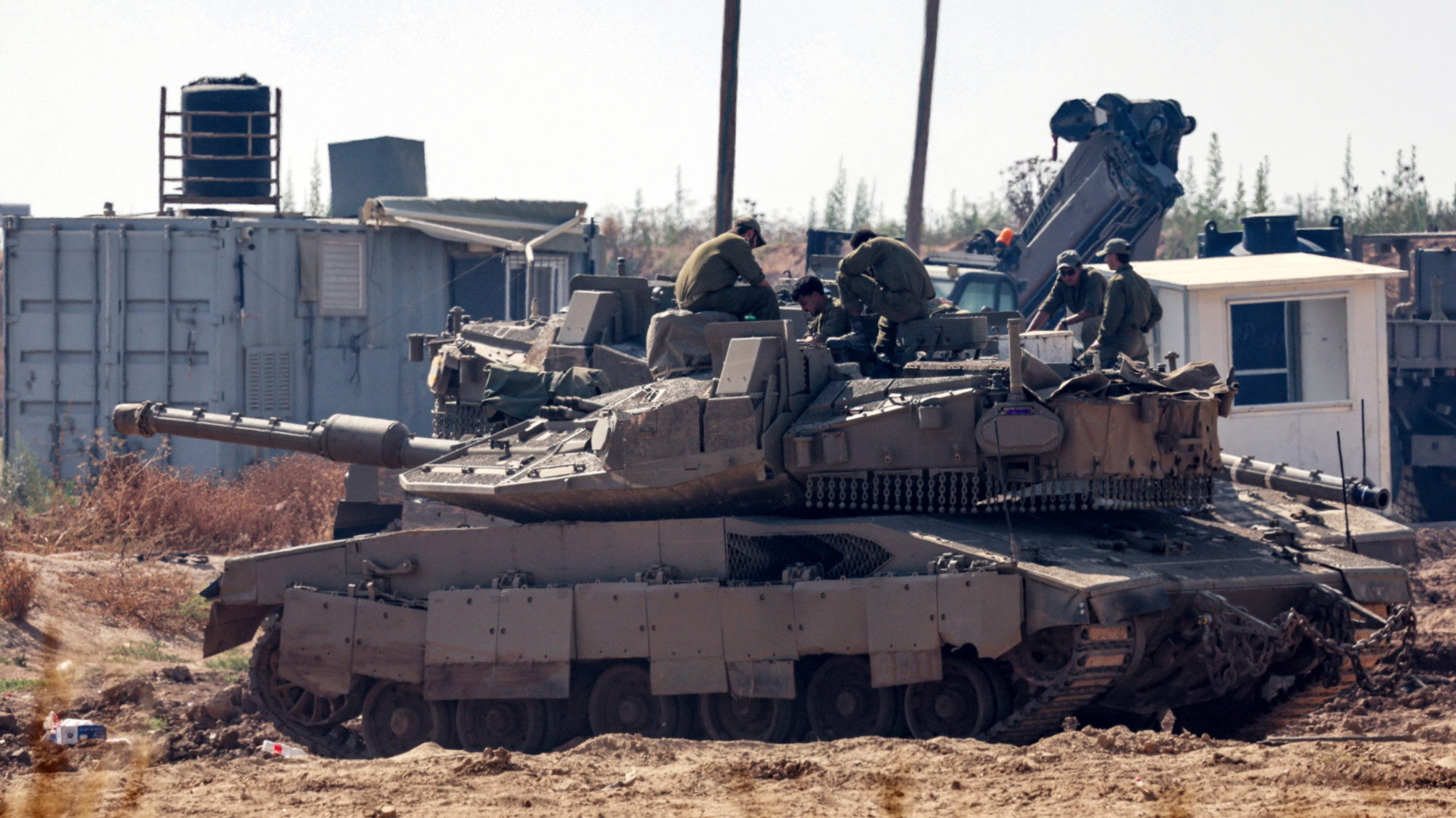
A new economic investigation published by Israeli outlet *TheMarker* on Sunday has delivered staggering projections for the total financial cost of Israel’s ongoing military campaign in the Gaza Strip, with the current toll already hitting 420 billion shekels ($114 billion) and on track to surpass 500 billion shekels in the near future.
The findings come alongside sharp internal criticism of Israeli military strategy ahead of planned long-term defense budget increases. A former Israeli army chief speaking to *TheMarker* linked the massive costs to the military’s high-profile failure to prevent the October 2023 Hamas-led attack, arguing that the security gap created by that failure has forced major budget expansions. “If we had received enough security, there would probably be no need to double the defence budget over the coming decade,” one senior economic expert told the outlet. Defense budget data shows the ministry’s annual allocation has already surged to more than 175 billion shekels for 2026, marking the third consecutive year of spending above that threshold and a more than 100% increase from the 84 billion shekel budget allocated in 2022.
While analysts have yet to draw a definitive link between the increased defense spending and improved long-term security for Israel, senior officials acknowledged to *TheMarker* that “similar or better results could have been achieved in a shorter war.” The report specifically calls out the Israeli military’s unnecessarily costly and wasteful operational approach in the early months of the conflict: the campaign opened with an unprecedented barrage of aerial and artillery bombardment, and the military mobilized roughly 220,000 reserve troops – a deployment that drove a massive surge in operational costs. “In the first weeks, too much fire was used,” a retired senior Israeli army officer stated, referring to the opening phase of the war that has killed tens of thousands of Palestinian civilians in Gaza. The officer also confirmed that the intensive early bombardment quickly left Israeli forces with critical shortages of tank ammunition and aerial bombs.
Separately, on the same day the cost report was released, Israeli Prime Minister Benjamin Netanyahu’s ruling Likud party launched a high-stakes public billboard campaign framing the upcoming election as a battle against foreign leaders the party labels enemies of Israel. Netanyahu himself shared an image of the massive Tel Aviv billboard via the social platform X, confirming the list of figures featured: Iran’s Supreme Leader Mojtaba Khamenei, Turkish President Recep Tayyip Erdogan, Hezbollah Secretary-General Naim Qassem, and even recently elected New York City mayor Zohran Mamdani. The billboard’s slogan reads directly: “They want Netanyahu to lose. Don’t let them win.” The following day, Netanyahu followed up the campaign rollout with a video clip highlighting past comments from Erdogan and Mamdani, where Erdogan compared Netanyahu to Nazi leader Adolf Hitler and Mamdani labeled the Israeli prime minister a war criminal. Netanyahu repeated the campaign’s core slogan in the video’s caption.
In another development spanning the Israeli-Palestinian conflict, Israeli newspaper *Haaretz* reported Monday that the Jerusalem municipality has seized control of a large UN Relief and Works Agency for Palestine Refugees (UNRWA) complex containing a school and clinic in the Shuafat refugee camp in occupied East Jerusalem. According to Roland Friedrich, UNRWA’s director for the occupied West Bank, municipal officials changed the locks on the complex and began repair work without prior authorization from the UN agency. Friedrich emphasized that the complex is UN property that holds legal immunity under international law, which strictly prohibits unauthorized entry or seizure of UN assets.
Both the school and clinic at the site were shut down by Israeli authorities over the past year, with the municipality promising it would replace the UN-run services for the camp’s 20,000 residents. But *Haaretz* confirmed that the municipality has yet to open a new school to serve the camp’s school-aged children, leaving hundreds of students without access to formal education. “Over the years, UNRWA has invested enormous sums in establishing and developing these buildings,” Friedrich added, expressing deep concern over what he calls a deliberate violation of international law by the municipal government. For its part, the Jerusalem municipality rejected Friedrich’s claims, arguing that UNRWA constructed the complex on privately owned Israeli land without compensation and that it plans to build a new public school for camp residents on the seized site.
In a piece of positive archaeological news also reported Sunday by *Haaretz*, researchers from the Israel Antiquities Authority (IAA) have uncovered a remarkably well-preserved large-scale Islamic-era commercial and industrial complex beneath a football stadium car park in Ramat Gan, a city just east of Tel Aviv. The 2,500-square-metre site dates to the late seventh or early eighth century CE, a period when the region was under early Muslim rule.
Excavations at the site have uncovered paved streets, ceramic kilns, retail shopfronts, and large storage warehouses, all laid out in a clear planned grid. IAA researchers say the site’s uniform construction indicates it was planned and funded by a central regional authority with substantial resources. “The main phase at the site was planned in detail and in advance by engineers. It was built with the knowledge of the regional authorities, and perhaps even at their initiative and with their funding,” a lead IAA researcher told *Haaretz*. The site is believed to have served as a key economic hub for travelers and merchants moving along the main trade route between Jerusalem and Ramla, which was the regional administrative capital at the time.
While researchers have not yet uncovered the site’s original name or detailed information about the communities that used it, dating analysis confirms it was first abandoned in the ninth century, briefly repopulated as a residential neighborhood in the 10th century, and permanently abandoned by the 11th century. The discovery offers unprecedented new insight into early Islamic economic and urban development in the historic Palestine region.