In a move that signals shifting educational and diplomatic dynamics in the Middle East, an Israel-founded research organization has lauded Saudi Arabia for sweeping changes to the kingdom’s K-12 school curricula that alter long-held narratives about Jerusalem, Israel, and religious minorities. Impact-se, an institution closely tied to the Israeli state and Zionist organizations, published its long-awaited review of updated Saudi teaching materials at the end of July, framing the changes as a meaningful step toward moderation while still criticizing remaining content that it says rejects Israeli legitimacy.
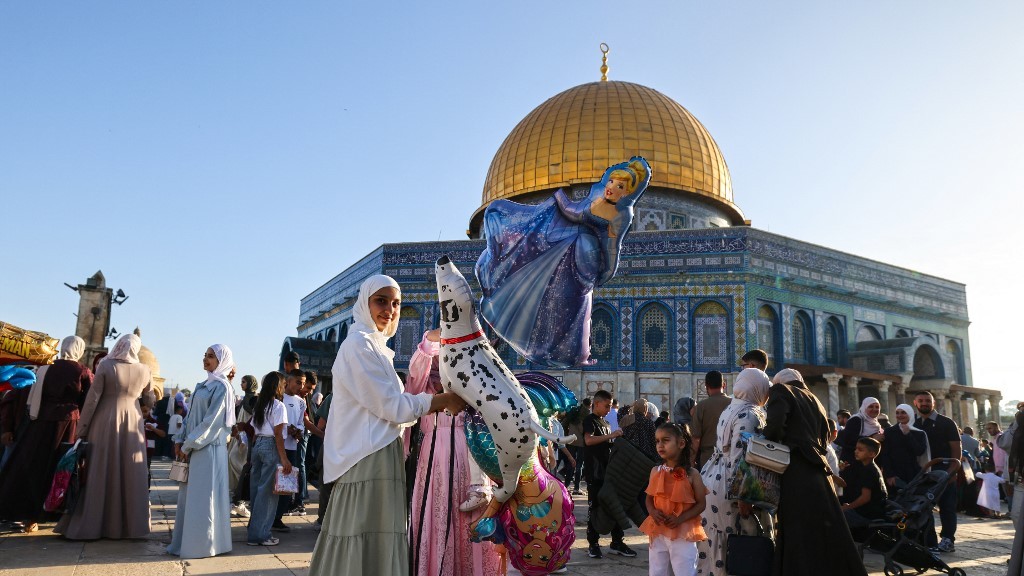
Among the most significant changes highlighted in the report is the removal of the iconic phrase “the Muslims will never give up Jerusalem” from Saudi textbooks. Impact-se’s analysis notes that the original wording implied Muslim sovereignty over the city was under ongoing threat, a framing that could be read as casting Jerusalem as a permanent site of conflict between Muslims and Israel. This development comes at a time of escalating provocative actions by Israeli authorities against the status quo at Jerusalem’s holy sites: just this week, Israeli officials formally allowed Jewish settlers to conduct organized prayers inside the Al-Aqsa Mosque compound in occupied East Jerusalem, breaking a decades-old understanding that restricted non-Muslim worship at the site, which is the third-holiest location in Islam. It also follows repeated calls by far-right Israeli politicians to destroy the existing mosque to construct a Jewish Third Temple on the site, even as Israeli settlers continue expanding illegal settlements on Palestinian land across the occupied West Bank and East Jerusalem to shift the region’s demographic makeup in favor of Israel.
Impact-se also highlighted the removal of what it classifies as all antisemitic content from Saudi curricula, including the excision of select passages from the Quran and Hadith, the collected teachings of the Prophet Muhammad. One notable removal is a well-known hadith that recounts Muhammad visiting a sick Jewish child who ultimately converted to Islam. The organization framed this deletion as an improvement to how religious minorities are portrayed, arguing it means students are no longer taught that rejection of Islam leads to eternal damnation. Impact-se also praised the truncation of Quranic verses that address disbelief and sin, though it criticized Saudi curricula for retaining the framing of Islam as humanity’s natural religion, a common theological positioning found across most major world faiths that the organization still objects to in this context.
The report also documented sweeping changes to how maps and terminology related to the conflict are presented. Previously, Saudi maps did not label Israel and marked the entire territory between the Jordan River and Mediterranean Sea as Palestine. In the updated 2024-2025 curricula, the “Palestine” label has been removed entirely. While the new maps still do not explicitly identify Israel, Impact-se noted that the change eliminates the explicit claim to the full territory. A grade 11 history textbook also replaced the anti-Zionist phrase “the Zionist Enemy” with the term “the Israeli Occupation.” Even this moderate shift did not satisfy Impact-se, which argued that because the term is applied broadly rather than only to territories occupied after 1967, it still reflects a Saudi position of non-recognition of the State of Israel. This criticism comes amid the explicit public rejection of Palestinian statehood by Israeli Prime Minister Benjamin Netanyahu, who stated clearly in November 2023 that “There will not be a Palestinian state. It’s very simple: it will not be established.”
Impact-se also objected to remaining passages that describe Zionists as “cunning and devious,” specifically calling out an account of a 1900s meeting between Zionist leader Chaim Weizmann, who later became Israel’s first president, and Saudi Arabia’s founding monarch King Abdulaziz (Ibn Saud). The textbook recounts that Weizmann attempted to bribe Ibn Saud to abandon support for the Palestinian cause and step aside for the Zionist movement’s ambitions, a move the king dismissed as “criminal audacity.” Impact-se argued that this account promotes a conspiratorial, negative view of Zionism as a movement. Notably, the core claims of the textbook account are corroborated by declassified historical records: a February 1940 U.S. State Department memorandum confirms Weizmann offered to raise three to four million British pounds in exchange for Ibn Saud’s support for a plan to “voluntarily transfer” the Palestinian population to Transjordan and Iraq. This language echoes recent statements by current Israeli ministers who have promoted “voluntary migration” of Palestinians from Gaza and the occupied West Bank, a policy widely labeled as ethnic cleansing by international observers.
Impact-se, which was founded by leaders with close ties to Israeli government institutions and Zionist organizations, operates across the Middle East pushing for curriculum changes that align with the Israeli official narrative of regional history. The organization has long demanded that all Arab and Palestinian textbooks explicitly recognize the State of Israel, but neither Impact-se nor its founders have publicly called for equivalent recognition of Palestinian statehood. The campaign for these curriculum changes has received active backing from the U.S. government through diplomatic pressure, led in part by Israeli-born U.S. Special Envoy to Monitor and Combat Antisemitism Rabbi Yehuda Kaploun.
Following the publication of its review, Impact-se wrote on social platform X that it “appreciates Saudi Arabia’s continued efforts to improve school curricula, including work to address concerning themes in textbooks. The portrayal of Israel and Zionism continues the gradual moderation documented in previous IMPACT-se reports.”