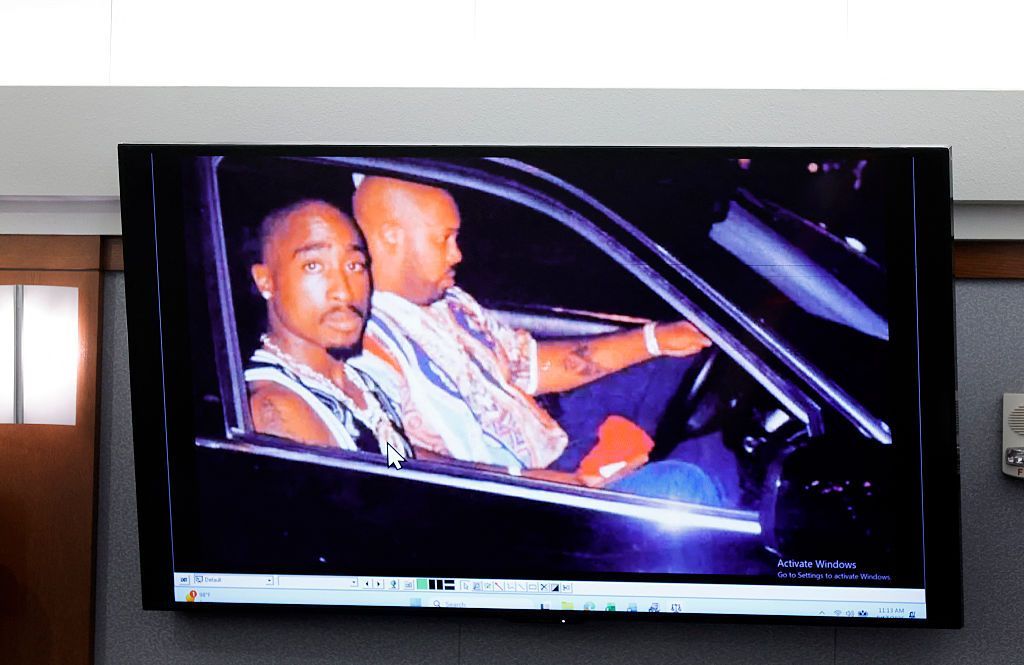
Thirty years after the unsolved drive-by shooting that claimed the life of iconic hip-hop artist Tupac Shakur at just 25 years old, the murder trial of Duane “Keffe D” Davis, a 63-year-old former South Side Compton Crips leader, officially got underway in Las Vegas this week, following a completed week of jury selection.
On the opening day of proceedings, Chief Deputy District Attorney Binu Palal laid out the prosecution’s core narrative for the assembled jury: while Davis did not pull the trigger that ended Shakur’s life, he was the on-ground, on-site commander who planned and ordered the 1996 killing as an act of revenge. Prosecutors allege the attack was retaliation for a beating Davis’ nephew, Orlando Anderson, received at the hands of Shakur and his entourage just hours before the shooting, outside a Las Vegas hotel where a Mike Tyson boxing match was being held that evening.
The case is rooted in the high-profile 1990s East Coast-West Coast rap rivalry, paired with long-standing turf wars between Los Angeles street gangs the Bloods and Crips. Prosecutors explained to jurors that for nearly three decades, the case remained cold due to a pervasive culture of silence in gang circles—where, as prosecutors put it, “silence means survival”—and widespread distrust of police that left investigators without cooperation from witnesses. That breakthrough finally came, prosecutors argue, from Davis himself, who has spoken publicly about his role in the killing on multiple occasions, beginning in statements given between 1998 and 2003, then expanding to a 2019 co-authored memoir where he detailed his involvement in the night’s events. In the memoir, Davis admitted he was a passenger in the white Cadillac from which shots were fired, and that he supplied the murder weapon to Anderson, who he claims fired the fatal shots into Shakur’s vehicle. Palal told jurors that Davis’ own accounts of the night would serve as key evidence against him, noting “you will learn that from Duane Davis himself.”
The first witness called by the prosecution was Garry Dale, a retired officer with the Las Vegas Metropolitan Police Department who responded to the shooting in 1996. Dale testified that he rode in the ambulance with the wounded rapper, and that Shakur refused to share any information about the shooting or the attackers, only telling officers “We’ll take care of it.” A second early witness, Ingrid Stokes, who was in Las Vegas the night of the shooting, recalled that she and her friends were trailing Shakur and Death Row Records co-founder Marion “Suge” Knight when a white Cadillac pulled behind them, trying to overtake their vehicle. When they pulled over at a red light to switch drivers, Stokes testified, “we were head down, taking our seat belts off, when we heard the gunshots. All hell broke loose.”
For the defense, Davis’ legal team has pushed back hard against the prosecution’s narrative, dismissing it as outright fiction and framing the entire case as the product of 30 years of flawed, incomplete investigative work. Davis has pleaded not guilty to the murder charge, and has distanced himself from the 2019 memoir, arguing that large portions of the text were fictionalized by his co-author to boost book sales. Defense attorney Michael Sanft questioned the prosecution’s lack of corroborating evidence, asking jurors “What facts do they have after 30 years?”
The defense has further argued that the case is undermined by missing police reports, disputed forensic evidence, and what they call “biased, sloppy and incomplete” detective work. They contend prosecutors rely heavily on testimony from unreliable witnesses with criminal records, financial motivations, and inconsistent accounts, noting many witnesses have changed their versions of events over decades, often influenced by promises of payment, media attention, or coaching from investigators. While Davis’ legal team argued the memoir should be excluded from trial, a judge previously ruled the text can be entered as evidence.
Over the coming weeks, the trial is expected to hear testimony from dozens of witnesses, including investigators, forensic experts, and potentially even high-profile celebrity witnesses connected to the case. The trial marks the first time any defendant has faced formal charges for Shakur’s killing, a case that has remained one of the most high-profile unsolved murders in American popular culture for 30 years.