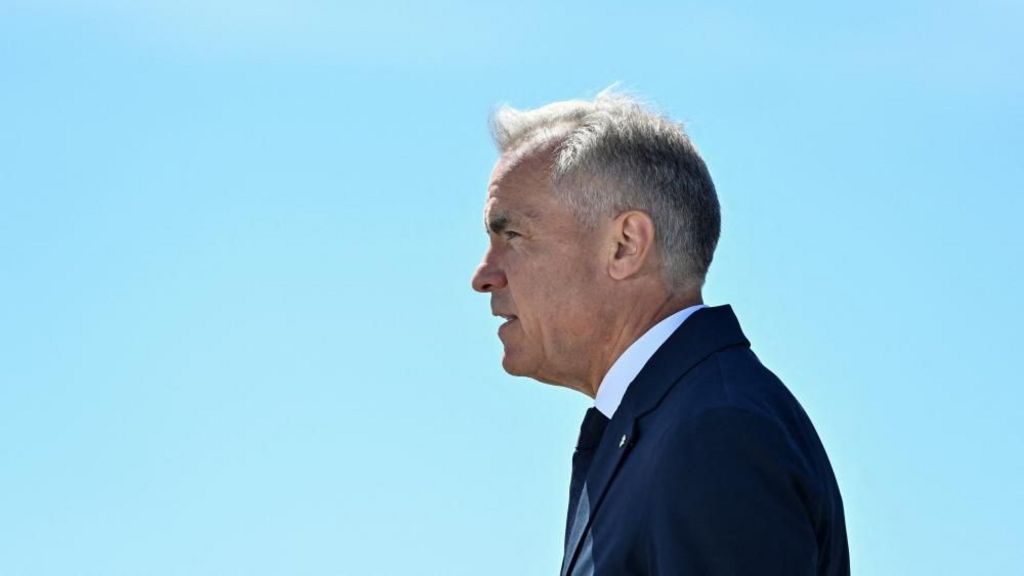
With less than 48 hours remaining before a new wave of US tariffs targeting Canadian goods takes effect, high-stakes trade negotiations between Canadian and American negotiators are entering a final, frantic stretch in Washington. Canadian bargaining teams have been stationed in the US capital for a full week, racing to lock in a breakthrough agreement that can block the planned 50% tariffs on roughly $20 billion in Canadian imports scheduled to go into force this Wednesday.
Facing relentless questions from reporters on Monday, Canadian Prime Minister Mark Carney refused to disclose any details of the closed-door discussions, noting that the currently “very delicate and intense” negotiations leave no room for public bargaining. While Carney emphasized that Canada enters the talks from a position of strength, the stakes could not be higher for his government: the new tariffs would cover approximately 5% of all Canadian imports, delivering a fresh blow to already strained cross-border commerce.
In spite of a packed schedule of meetings between Canadian negotiators and US Trade Representative Jamieson Greer over recent days, the two sides have so far failed to reach a final consensus. Leaving Greer’s office on Monday, Canadian Minister of US-Canada Trade Dominic LeBlanc acknowledged plainly that “Our job is not yet done.” Both sides have openly acknowledged the difficult nature of the talks. Former US President Donald Trump, whose administration is driving the new tariff push, has publicly labeled Canada “nasty” on trade — a description Carney did not fully reject, and Trump has already warned he will escalate trade pressure if no deal is reached by the deadline.
Even if negotiators do hammer out a last-minute agreement, Carney faces significant domestic headwinds to sell any compromises to a Canadian public already frustrated and deeply skeptical of US trade policy. He will also need formal approval from Canada’s provincial governments for any deal that touches on areas under provincial jurisdiction.
The United States has tabled a list of key demands for Canada, including the full removal of Canada’s remaining retaliatory tariffs on American automobiles, adjustments to Canada’s dairy import quota system, and the elimination of provincial bans on US alcohol sales. Those bans were implemented by most Canadian provinces early last year in direct retaliation for Trump’s earlier steel and aluminum tariffs, and authority over alcohol policy rests entirely with provincial governments, meaning any change requires provincial buy-in.
Ontario Premier Doug Ford, who has long positioned himself as a hardliner on US trade, confirmed last week that any agreement to roll back the alcohol ban would be conditional on the US delivering meaningful concessions for Canadian key sectors. “If we get a fair deal that will protect our steel sector, our auto sector, our forestry sector, our agriculture sector, our manufacturing sector, then we’d be happy to bring booze back on the shelves,” Ford said.
Canada, for its part, is seeking a deal that would see the US eliminate or roll back existing tariffs on Canadian steel, aluminum, automobiles and lumber — duties that have already caused significant damage to Canada’s national economy. Carney also faces major domestic pushback on any dairy concessions, particularly in Quebec, where Premier Christine Fréchette has reaffirmed that Canada’s supply management system for dairy is non-negotiable. Trump has repeatedly attacked the system, which sets production quotas, fixed domestic pricing, and import limits for dairy, eggs and poultry, arguing it is unfair to American farmers seeking greater access to the Canadian market.
Public opinion in Canada leans heavily against offering major concessions to the US, even as most Canadians acknowledge a desire for greater trade stability. A recent poll from Abacus Data found that 74% of Canadian respondents say the ongoing trade dispute has impacted their household finances. Thirty-six percent support Canada responding to new US tariffs with new counter-tariffs, even if that brings additional domestic economic pain, while just 18% back concessions such as lifting the provincial alcohol ban to secure tariff reductions.
Canadian media reports have also indicated that Canada’s chief negotiator Janice Charette has formally warned US counterparts that enacting the new tariffs this Wednesday would put future broader trade negotiations at serious risk. Carney has repeatedly stated he will not sign any deal that is not clearly beneficial to Canada, though he has declined to outline specific parameters for what qualifies as a good deal. On Monday, he only noted that “We’ll have opportunities over the next 48 hours to discuss in more detail as the negotiations go forward,” confirming he plans to speak directly with Trump before the Wednesday deadline and that his government has “plans for any situation that may arise” if talks collapse.
Opposition Conservative trade critic Shuvaloy Majumdar released a statement Monday calling for an end to ongoing economic uncertainty for Canadian households. “We have grown tired of seeing our country used as a punching bag,” he said, adding that “Yet we share a common hope that Prime Minister Carney will deliver a genuine win at the negotiating table.”