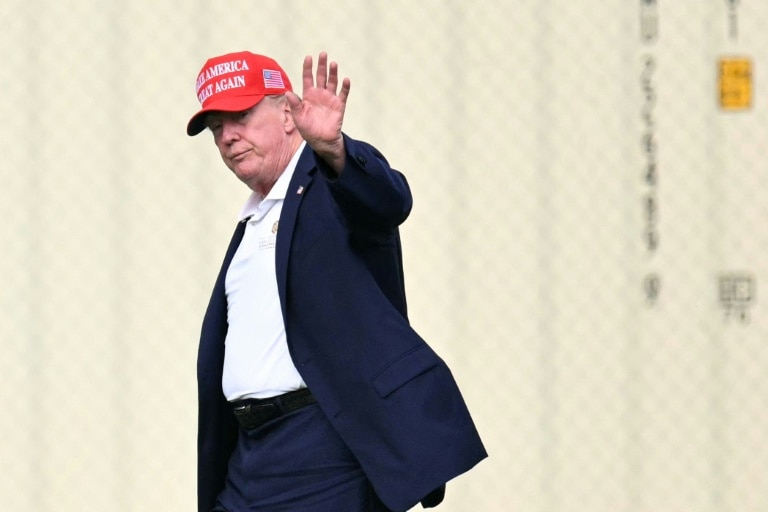
Just days ahead of the annual Ulchi Freedom Shield joint military exercise between the United States and South Korea, former and current US President Donald Trump has announced sweeping cutbacks to the long-planned drills, opening a new chapter of friction in alliance politics and reshaping regional security dynamics on the Korean Peninsula.
In a public post shared to his Truth Social platform Sunday, Trump laid out his rationale for the order, tying the decision directly to his self-proclaimed positive personal relationship with North Korean leader Kim Jong Un. “Based on my very good relationship with Kim Jong Un, of North Korea, I am not happy with the fact that the United States has, long ago, agreed to participate in Joint Military Exercises with South Korea,” he wrote.
Trump argued that the costly drills, which the US has shouldered a large share of the financial burden for for decades, send an unnecessarily hostile signal to Pyongyang, which he claimed has remained unthreatening and respectful during his current presidential term. With the exercise set to kick off Monday, Trump said a full cancellation was no longer logistically feasible, so he directed Defense Secretary Pete Hegseth to implement a substantial scaling back of the drill’s scope.
The 11-day Ulchi Freedom Shield exercise is a core annual defense training event for South Korean and US forces, designed to prepare troops to defend against potential aggression from nuclear-armed North Korea. This year’s iteration, which was already planned to involve around 18,000 South Korean troops alongside US forces stationed in the country, was set to place an unprecedented focus on emerging modern threats, including drone warfare, GPS jamming, and large-scale cyber attacks. When contacted for comment following Trump’s announcement, South Korea’s defense ministry confirmed that the drills would “proceed as previously notified and scheduled,” leaving unclear how the US cutbacks will impact on-the-ground execution.
North Korea has for decades decried these joint drills as invasion dress rehearsals, routinely responding with heightened military posturing and diplomatic outrage. The current presence of roughly 28,500 US troops in South Korea dates back to the 1950-1953 Korean War, which concluded with an armistice agreement rather than a formal peace treaty, leaving the Korean Peninsula technically divided in a state of ongoing conflict.
Trump’s announcement is not an isolated shift, but rather part of a broader pattern of challenging long-standing US alliance commitments that has defined his second term. Just as he has repeatedly criticized NATO allies for failing to meet defense spending commitments and aligned his foreign policy against Iran in an ongoing military conflict that has dragged on for six months without any path to a negotiated resolution, Trump used Sunday’s post to publicly call out South Korea for declining to join the US-led effort to denuclearize Iran. “I recently asked the President of South Korea if they would like to join us in the Denuclearization of the Islamic Republic of Iran, and they said, ‘No thanks!’” he wrote.
Regional security experts note that North Korea has significantly expanded its nuclear and missile capabilities since Trump’s first-term talks with Kim collapsed, with their last in-person meeting taking place in 2019. In the years since that breakdown, Pyongyang has also deepened its strategic partnership with Russia, following Moscow’s full-scale 2022 invasion of Ukraine. Analysts widely confirm that North Korea has supplied thousands of troops and large stockpiles of munitions to support Russia’s stalled war effort, in exchange for much-needed economic aid, food supplies, energy exports, and advanced military technology.
Weeks ahead of the exercise, Combined Forces Command spokesman Colonel Ryan Donald noted that this year’s drill would specifically prepare troops to counter North Korean forces that have gained combat experience through their deployment alongside Russian troops in Ukraine. The shift in training priorities comes as new South Korean President Lee Jae Myung, who took office in June 2025 after defeating his hawkish predecessor, has made outreach to Pyongyang a core policy priority. Lee has repeatedly offered to hold unconditional denuclearization and peace talks with North Korea, but as of yet, Pyongyang has not responded to these overtures.