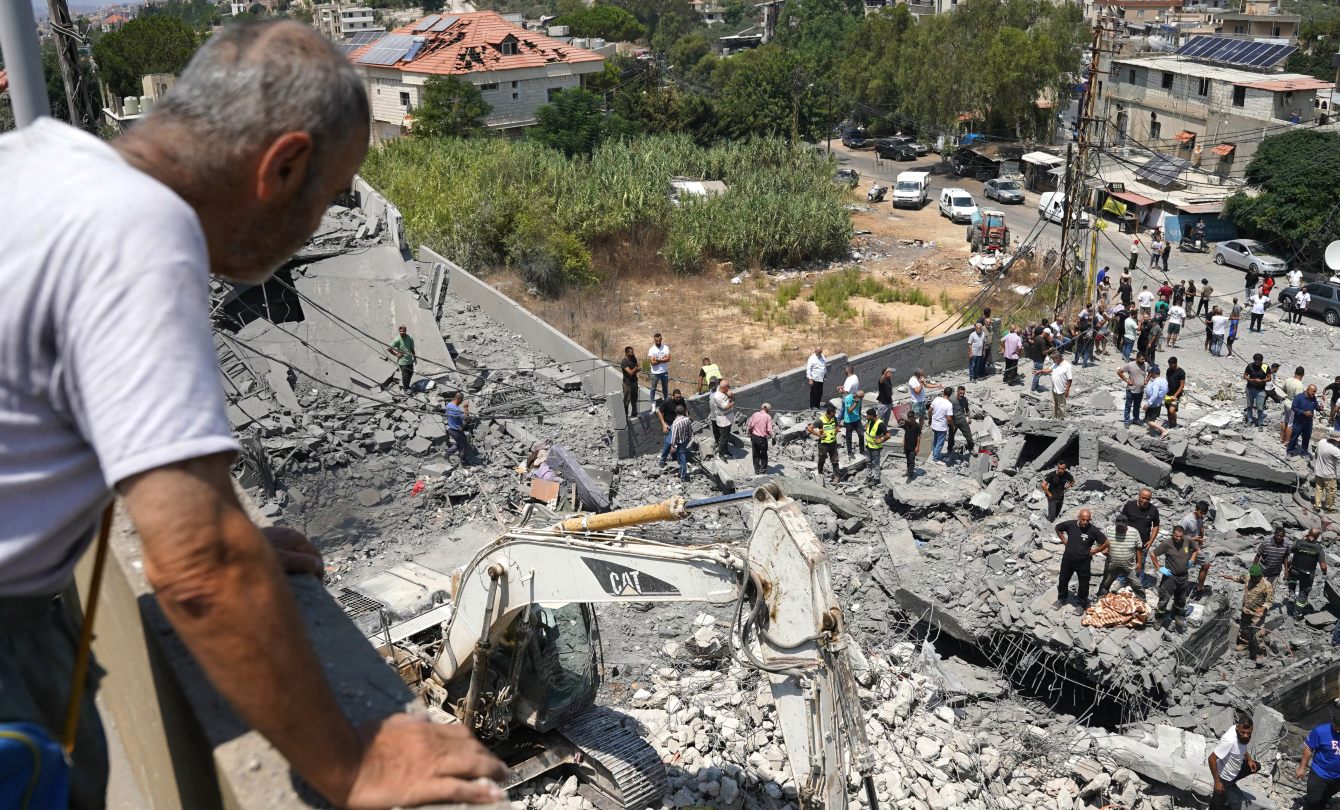
In a sudden escalation of cross-border violence early Saturday, pre-dawn Israeli air strikes targeting multiple towns and villages across southern Lebanon have left at least nine people dead and more than a dozen injured, according to Lebanese state media reports. Multiple local outlets have confirmed the details of the deadliest bombardment the region has seen since a US-brokered truce framework took effect in June.
The deadliest single strike hit a residential home on the outskirts of Ansar, a community located in Lebanon’s southern Nabatieh district, where seven people lost their lives. Al Jazeera’s on-the-ground reporting confirmed that children and multiple members of a single family were among the fatalities, a revelation that has deepened widespread anxiety among already displaced local residents. A second Israeli strike in the nearby town of Deir al-Zahrani killed an additional two people and wounded several more. Beyond these two fatal attacks, Lebanese media documented widespread artillery fire and additional strikes across other southern Lebanese areas, including Ali al-Taher Heights near Nabatieh al-Fawqa, Kfar Tebnit, and Zawtar al-Sharqiya. The overwhelming intensity of the overnight bombardment forced hundreds of civilian residents to flee their homes in search of safer ground, local reports confirmed.
The Israeli Defense Force issued a statement justifying the operation, claiming the strikes targeted Hezbollah military infrastructure in the Nabatieh and Ansar regions. The military added that the attacks were launched in direct response to prior hostile actions against Israeli soldiers. This narrative has been firmly rejected by top Lebanese political leaders, who have condemned the strikes as unlawful attacks on innocent civilians.
Lebanese Prime Minister Nawaf Salam labeled the sudden escalation across Nabatieh, Ansar, Deir al-Zahrani and surrounding villages “extremely dangerous” in an official statement, arguing the attacks are actively undermining international and diplomatic efforts to stabilize the border region. “The seven people killed in the Israeli strike on Ansar are not ‘military infrastructure’, and the children and women killed in it are not military targets,” Salam emphasized. He added that any responsibility for addressing potential military infrastructure on Lebanese territory, should it exist, falls exclusively to the Lebanese state through its official army and other state institutions. “Its presence does not give Israel the right to violate Lebanese territory or put civilians at risk,” Salam said.
Lebanese President Joseph Aoun also joined in condemning the attacks, noting that the escalation in Nabatieh and its surrounding areas constitutes a repeated violation of the existing truce framework designed to reduce hostilities and protect civilian populations. Aoun pointed out that the Ansar strike killed an entire family, framing the escalation as “a clear message” intended to undermine ongoing negotiations and US-led efforts to fully implement the June border agreement.
Hezbollah, the Lebanese armed group that has been at the center of the border dispute, issued a vow that all Israeli attacks will be met with an “appropriate” response. The group also called on Lebanese national authorities to abandon what it described as “humiliating” negotiations with Israel. “Israel must clearly understand that its attacks, violations and attempts to impose a fait accompli cannot continue, and will be met with an appropriate response,” Hezbollah said in its statement. The group added that Lebanese authorities “must not insist on continuing along the humiliating path of direct negotiations and providing the enemy with free concessions.”
The latest outbreak of deadly violence comes even after a significant reduction in cross-border hostilities followed a June memorandum of understanding between the United States and Iran, and a subsequent US-sponsored truce agreement between Lebanon and Israel. The terms of the framework call for Hezbollah’s full disarmament, the gradual withdrawal of Israeli forces from occupied southern Lebanese territory, and the deployment of the Lebanese army across southern border areas. However, major disagreements over the implementation of the deal have stalled progress for weeks.
Just two days before Saturday’s strikes, Israeli Defense Minister Israel Katz stated that Israel would not withdraw from the territory it currently controls in southern Lebanon until Hezbollah is fully disarmed and what he categorized as the threat posed by the group is eliminated. A day before the strikes, Hezbollah leader Naim Qassem criticized Lebanese authorities over their handling of the agreement’s implementation, accusing officials of placing unfair pressure on the Lebanese army while Israeli attacks continue unabated. “How can you accept this ongoing humiliation of the Lebanese army, exposing it to bombardment and Israeli pressures, instead of acting as its protectors?” Qassem asked.
Diplomatic observers note that Saturday’s Ansar strike ranks among the deadliest single Israeli attacks in Lebanon since the June agreement first brought a reduction in large-scale hostilities, and it has thrown new doubt on the future of the fragile truce process. As of Saturday afternoon, no new diplomatic breakthrough has emerged to de-escalate the situation, with both sides holding firm to conflicting positions and violence threatening to spiral further.